Decline of Naxalism in India showcases a powerful model of security, rehabilitation, tribal empowerment and development, offering crucial insights into India’s internal security strategy and governance.
Syllabus Areas:
GS II - Governance
GS III - Internal Security
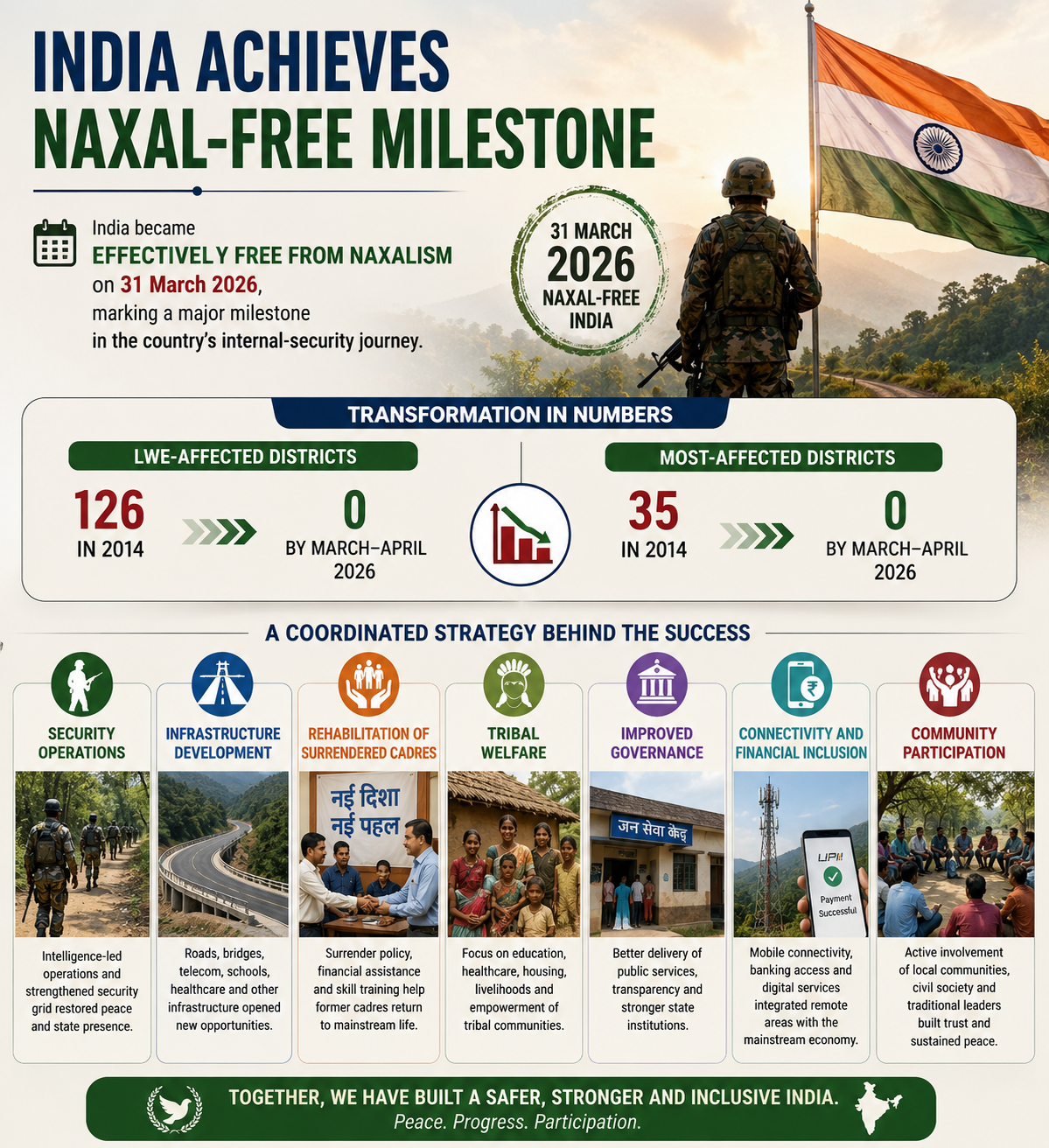
India has reached a significant milestone in its internal-security journey: no district in the country remains classified as Left-Wing Extremism (LWE)-affected. The transformation is attributed not merely to security operations, but to an integrated approach combining security, development, rehabilitation, tribal welfare, infrastructure, technology and improved governance.
Origin of Naxalism:
What is Left-Wing Extremism (LWE)?
Left-Wing Extremism (LWE) refers to violent extremist movements that seek to achieve radical political and socio-economic change through armed struggle and violence, rather than through India's constitutional and democratic processes.
In the Indian context, LWE is primarily associated with Naxalism/Maoism. The movement originated with the Naxalbari uprising in West Bengal in 1967, influenced by Maoist ideology and the idea of armed revolution. Several extremist organisations later merged to form the CPI (Maoist) in 2004.
-
It was inspired by Maoist ideology and the doctrine of armed revolution.
-
The movement was based on the violent principle that power flows from the barrel of the gun.
Major Policy Shift After 2014
In 2015, India adopted the National Policy and Action Plan on LWE, replacing fragmented responses with a whole-of-government approach focused on security, development, rehabilitation, governance.
Its three pillars were Dialogue, Security and Coordination: addressing tribal concerns, strengthening intelligence operations, improving infrastructure and Centre–State cooperation, building trust, enabling development and outreach.
Integration of Specialised Security Forces
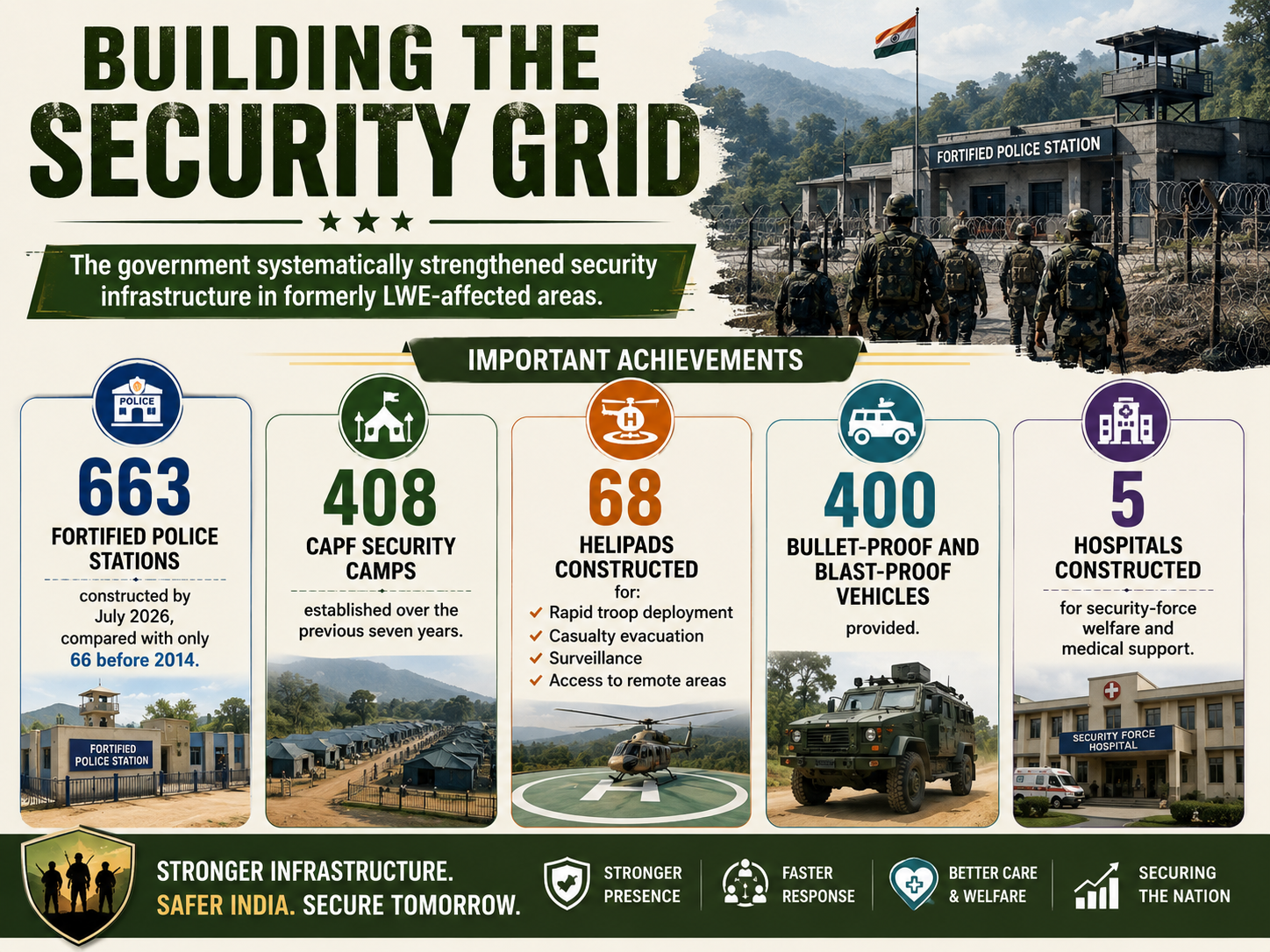
A layered security architecture brought together:
-
CoBRA – Commando Battalion for Resolute Action
-
CRPF – Central Reserve Police Force
-
DRG – District Reserve Guard
-
STF – Special Task Force
-
State-level specialised forces such as:
-
Jharkhand Jaguar
-
Chhattisgarh Police units
-
Andhra Pradesh Greyhounds
Joint training helped create an integrated and interoperable security structure with clearer command arrangements.
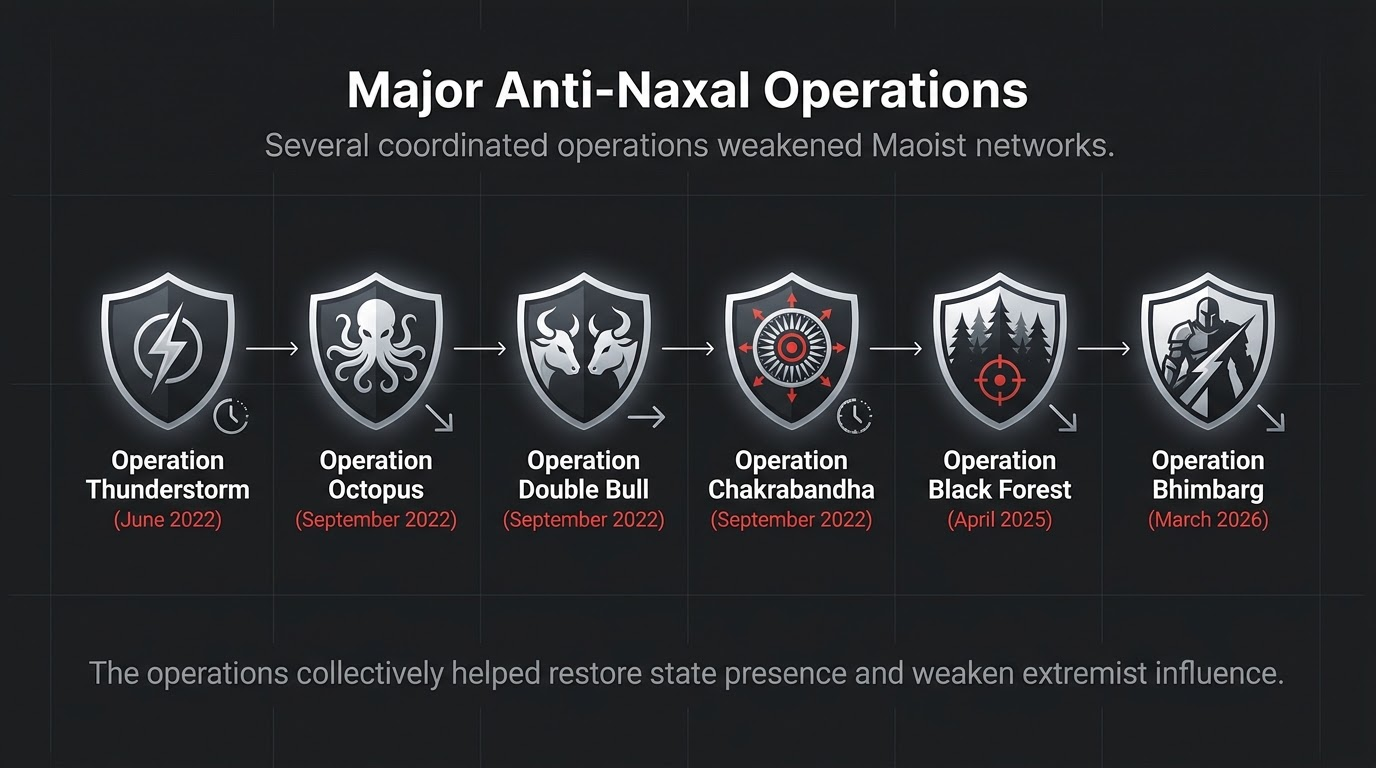
Operation Black Forest
Operation Black Forest as a particularly significant operation.
Key points:
-
More than 30 Maoists neutralised.
-
It included the neutralisation of Basavaraju, described in the backgrounder as a top Maoist leader.
-
It was significant because a general secretary-ranked leader of the Naxal organisation was neutralised for the first time in three decades.
Infrastructure & Connectivity
-
15,189 km roads constructed under RRP and RCPLWEA.
-
9,497 mobile towers commissioned; 96% of villages in most LWE-affected areas connected.
-
1,804 bank branches, 1,321 ATMs, 74,720 Banking Correspondents and 6,025 post offices established.
-
These measures strengthened connectivity, financial inclusion and access to government services.
Education, Youth & Community Development
-
259 EMRS sanctioned; 179 functional, along with 47 ITIs and 49 Skill Development Centres.
-
Nearly ₹800 crore invested; 90,000+ youth and women received skill training.
-
37,655 tribal youth participated in the Tribal Youth Exchange Programme.
-
₹221.88 crore released under the Civic Action Programme for medical camps, sports and community engagement.
-
Tribal welfare measures focused on education, healthcare, housing, livelihoods and rehabilitation, helping integrate affected communities into mainstream development.
Significance for India's Internal Security
The Naxal-free milestone has several implications:
1. Strengthening State Capacity: Improved security infrastructure and administrative presence demonstrate greater state capacity in difficult geographical regions.
2. Better Centre–State Coordination: LWE is a complex internal-security challenge requiring cooperation between the Union and State governments.
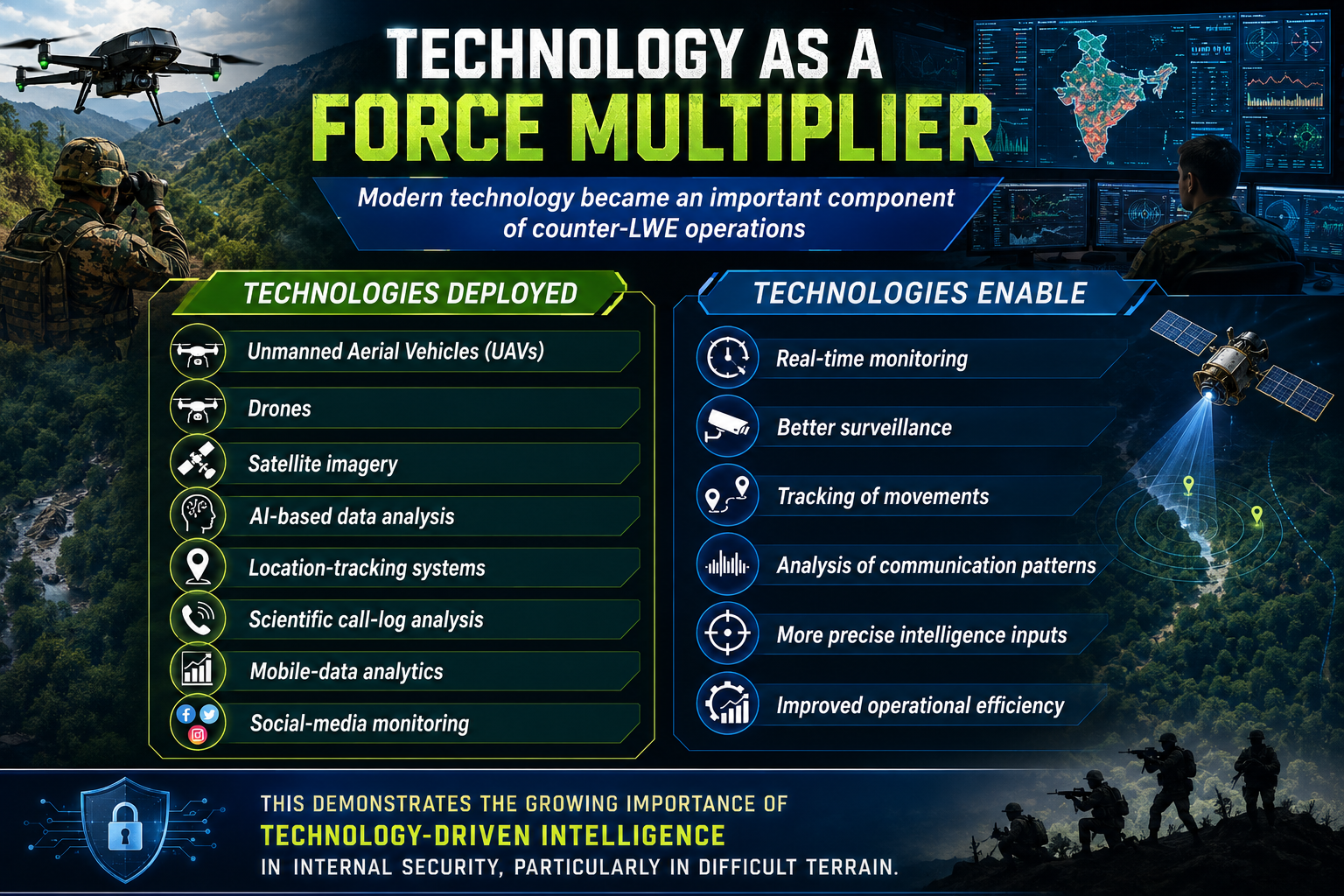
3. Intelligence-Based Policing: Technology, data analytics, drones and satellite imagery have enhanced precision in counter-insurgency operations.
4. Financial Disruption: Targeting extremist financing weakens the organisational ecosystem supporting armed groups.
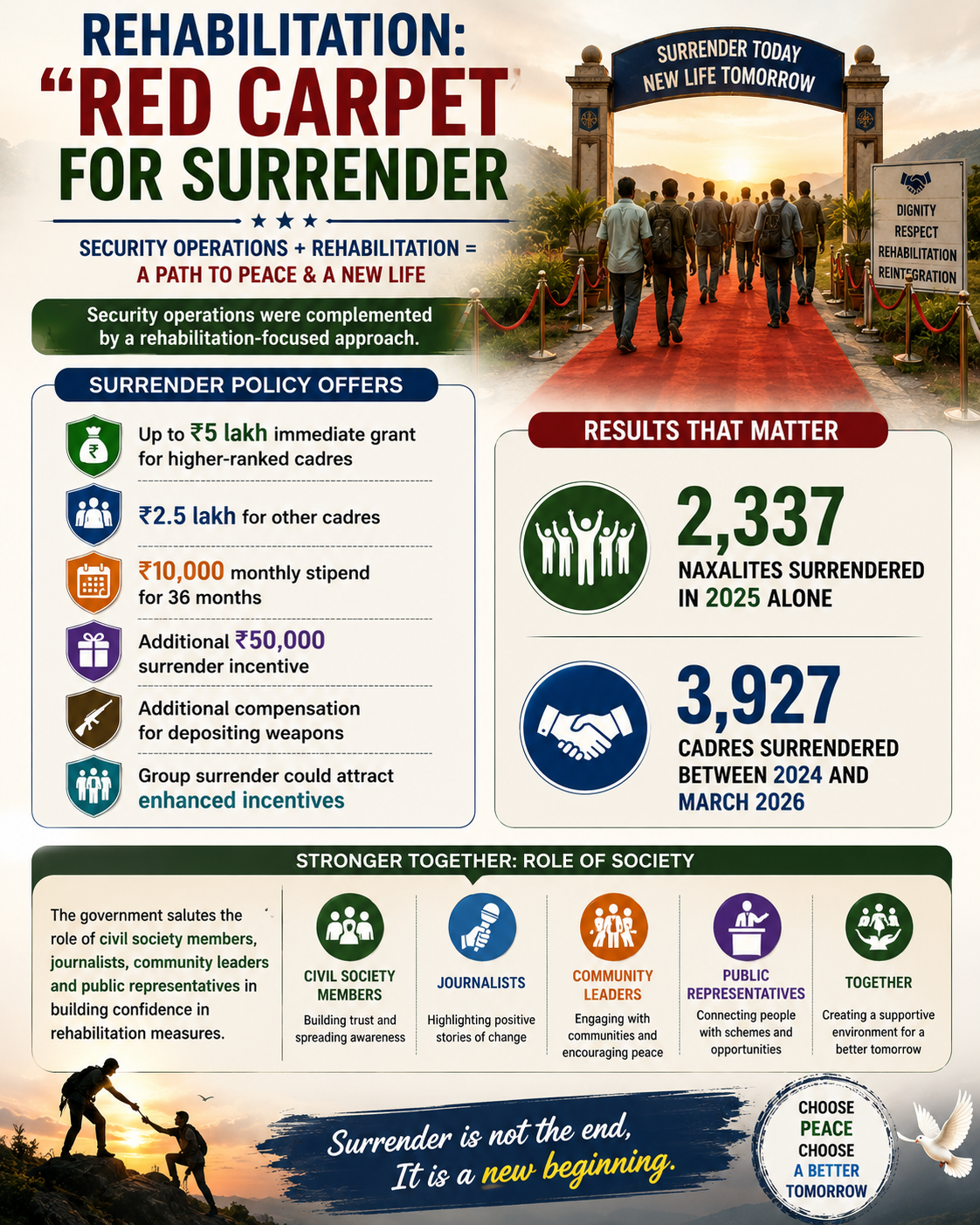
5. Rehabilitation: Surrender and rehabilitation policies provide a pathway for cadres to return to mainstream society.
6. Inclusive Development: Roads, telecom, banks, schools, healthcare and livelihoods reduce the structural vulnerabilities that can facilitate extremist influence.
7. Tribal Participation: Local recruitment and community participation improve trust between state institutions and tribal populations.
India's journey towards a Naxal-free nation demonstrates that durable internal security is achieved not through security operations alone, but through the convergence of security, good governance, tribal empowerment, infrastructure, rehabilitation, technology and inclusive development.