Discover how India transformed its tourism sector through infrastructure, digital reforms, sustainable initiatives, and flagship schemes, driving economic growth while emerging as a leading global destination.
Syllabus Areas:
GS III - Economy, Environment and Tourism
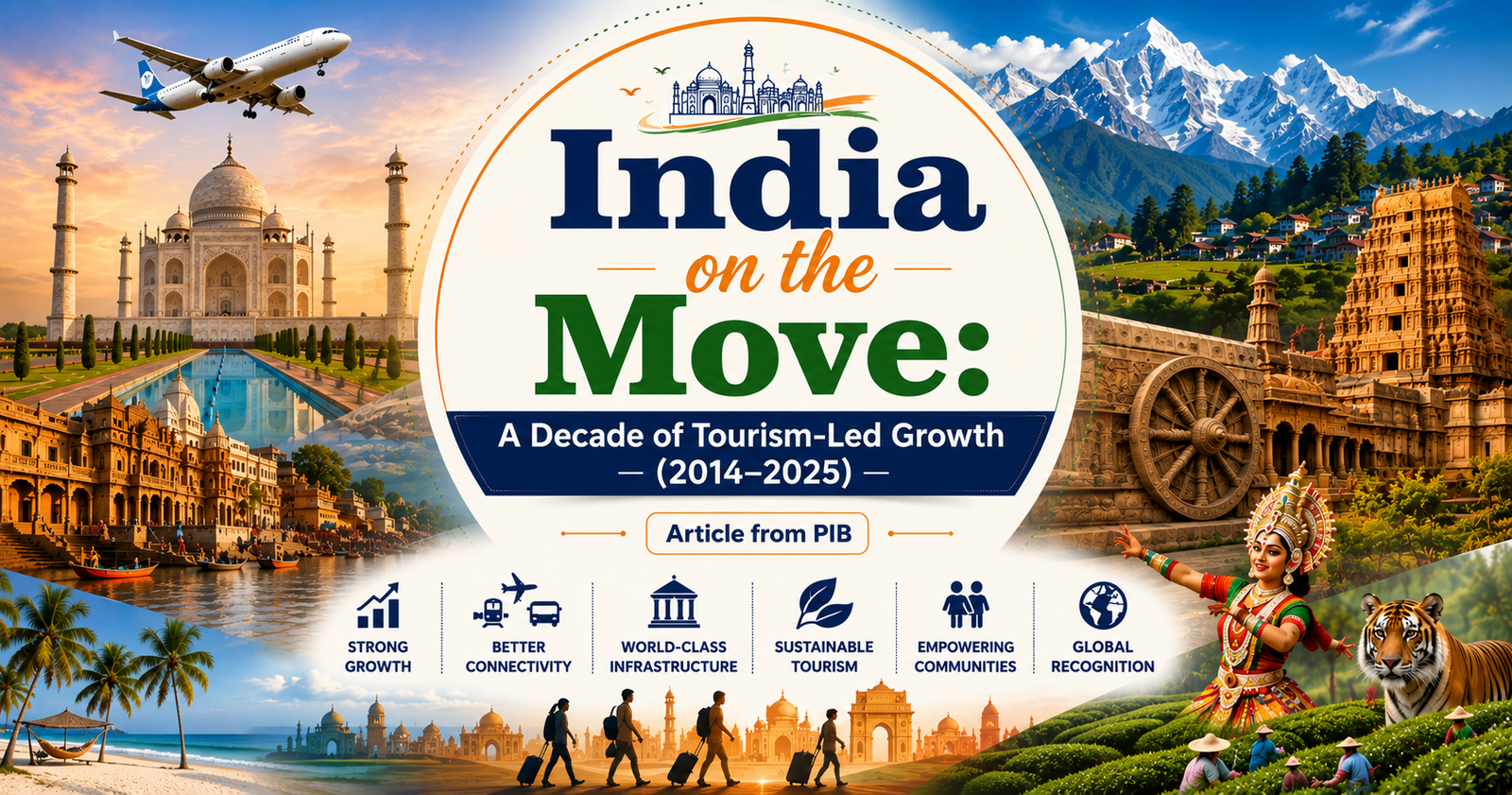
The Press Information Bureau (PIB) has released a backgrounder titled "India on the Move – A Decade of Tourism-Led Growth", highlighting the remarkable transformation of India's tourism sector over the last decade. The report showcases the Government's initiatives to strengthen tourism infrastructure, improve connectivity, promote sustainable tourism, enhance digital services, and position India as a leading global tourism destination.
Tourism: A Driver of Inclusive Economic Growth
Tourism has evolved into a powerful engine of economic development, employment generation, regional growth, and cultural exchange.
Every tourist visit creates economic opportunities across multiple sectors, including:
-
Hotels and hospitality
-
Restaurants and local food businesses
-
Transport services
-
Tour guides
-
Handicrafts and artisans
-
Rural enterprises
-
Small and medium businesses
Tourism also promotes entrepreneurship, strengthens local economies, and enhances India's cultural diplomacy by showcasing the country's heritage and traditions to the world.
India's Tourism Growth in Numbers (2014–2025)
-
India has witnessed significant growth in both domestic and international tourism over the last decade.
-
Domestic Tourism: Approximately 2,277 crore domestic tourist visits were recorded during the period.
-
International Tourism: Between 2014 and 2025:
-
181.25 million International Arrivals (including NRIs and foreign nationals)
-
93.35 million Foreign Tourist Arrivals (FTAs)
-
Foreign Exchange Earnings: Tourism generated approximately ₹21.61 lakh crore making it one of India's major sources of foreign exchange earnings.
Infrastructure Development:
1. Strengthening Tourism
Recognising that infrastructure forms the backbone of tourism, the Government has undertaken major investments in improving connectivity and visitor facilities.
Key developments include:
-
Expansion of national highways
-
Modernisation of railway stations
-
Construction of modern airports
-
UDAN regional air connectivity
-
Introduction of Vande Bharat trains
-
Improved last-mile connectivity
These initiatives have made tourist destinations more accessible while contributing to the vision of Viksit Bharat@2047.
2. Swadesh Darshan Scheme
About the Scheme
Launched in 2014, the Swadesh Darshan Scheme aims to develop integrated tourism infrastructure across identified tourist circuits.
Major Achievements
-
76 projects sanctioned
-
Investment exceeding ₹5,000 crore
-
Spread across 15 thematic tourist circuits
-
75 projects physically completed
Key Outcomes
-
Improved tourist amenities
-
Better road connectivity
-
Modern visitor facilities
-
Strengthened destination infrastructure
-
Enhanced tourism competitiveness
3. Swadesh Darshan 2.0
Introduced in 2022, Swadesh Darshan 2.0 shifts the focus from infrastructure creation to experience-based and sustainable tourism development.
Major Features
-
Sustainable destination development
-
Experiential tourism
-
Local community participation
-
Destination branding
Notable Projects
Tehri Lake, Uttarakhand
-
Floating log huts
-
Lakefront tourism experiences
Kurukshetra, Haryana
-
Mahabharata-themed attractions
-
Immersive cultural storytelling
4. PRASHAD Scheme
Pilgrimage Rejuvenation and Spiritual Heritage Augmentation Drive (PRASHAD)
-
The objective is to develop and rejuvenate important pilgrimage destinations across India.
-
Achievements 54 projects sanctioned, Investment exceeding ₹1,700 crore
-
Major destinations include Somnath, Srisailam, Govardhan, Several other iconic pilgrimage centres
Benefits
-
Better pilgrim amenities
-
Improved safety and accessibility
-
Preservation of cultural heritage
-
Employment generation for local communities
Tourism Aligned with National Development
Tourism is increasingly being integrated with broader national development priorities.
Major focus areas include:
-
Development of the North-East
-
Rural tourism
-
Purvodaya States
-
Employment generation
-
Regional economic development
Recent Union Budget announcements have further strengthened investments in iconic tourism destinations.
Special Assistance to States for Capital Investment (SASCI)
To create globally competitive tourism destinations, the Government launched the Special Assistance to States for Capital Investment (SASCI) programme.
Achievements
-
40 projects sanctioned
-
Across 23 States
-
Total investment of ₹3,295.76 crore
Objectives
-
Develop world-class tourism hubs
-
Improve visitor experiences
-
Enhance destination competitiveness
-
Generate local employment opportunities
Sustainable Tourism: A New Growth Model
The Government is promoting tourism that balances economic growth with environmental conservation.
Major Focus Areas
-
Biodiversity conservation, Heritage preservation, Responsible tourism, Eco-friendly travel practices
Niche Tourism Products
-
Himalayan trekking trails, Birdwatching circuits, Turtle tourism, Eco-tourism destinations
Travel for LiFE
-
The Travel for LiFE initiative encourages tourists, businesses, and local communities to adopt environmentally responsible tourism practices and reduce ecological footprints.
Green Destination Initiatives
India's sustainable tourism efforts are receiving international recognition.
Major Achievement
Mamallapuram (Mahabalipuram) became the first UNESCO World Heritage Site in South Asia to receive the Green Destinations Silver Certification.
Challenge-Based Destination Development (CBDD)
-
38 projects approved
-
Total investment of ₹697.94 crore
Important projects include:
-
Panidihing Bird Sanctuary (Assam)
-
Nizam Sagar Eco-tourism Project (Telangana)
Tourism as an Instrument of Global Engagement
-
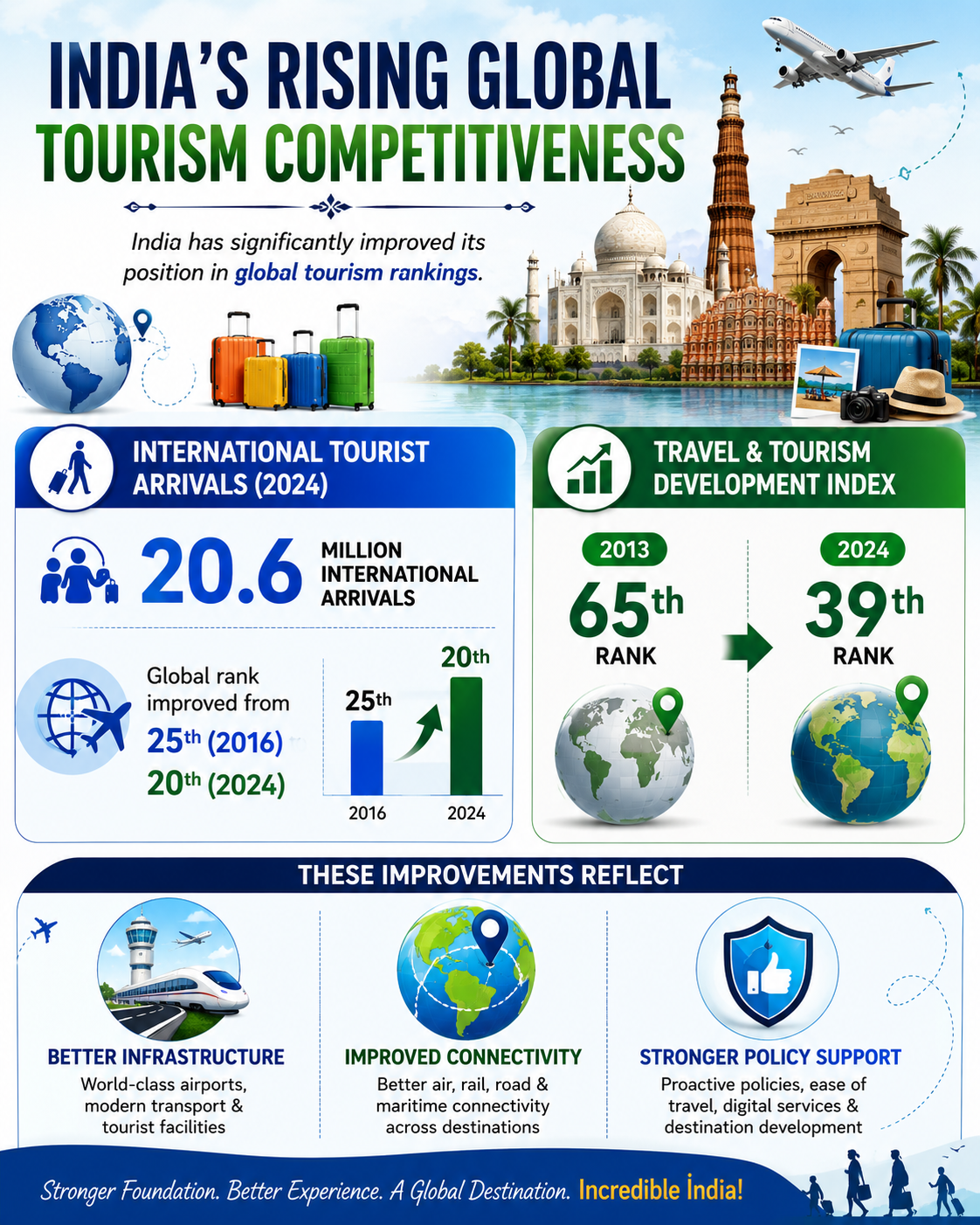
India's G20 Presidency highlighted the country's tourism potential before the international community.
-
The event showcased: India's heritage, Rich cultural traditions, Handicrafts, Tourism destinations
-
It also strengthened India's position in MICE Tourism, which includes: Meetings, Incentives, Conferences, Exhibitions
-
Tourism is increasingly serving as a tool for international cooperation, diplomacy, and cultural exchange.
India's Tourism Vision for the Future
India aims to become one of the world's leading tourism destinations.
Key Highlights
-
Ranked 8th among the world's top tourism economies
-
Tourism contributes approximately US$231.6 billion to India's economy
-
World Travel & Tourism Council (WTTC) projects India to become the 4th largest tourism economy over the next decade
-
More than 100 destinations upgraded through tourism infrastructure schemes
-
50 key destinations proposed for world-class development
-
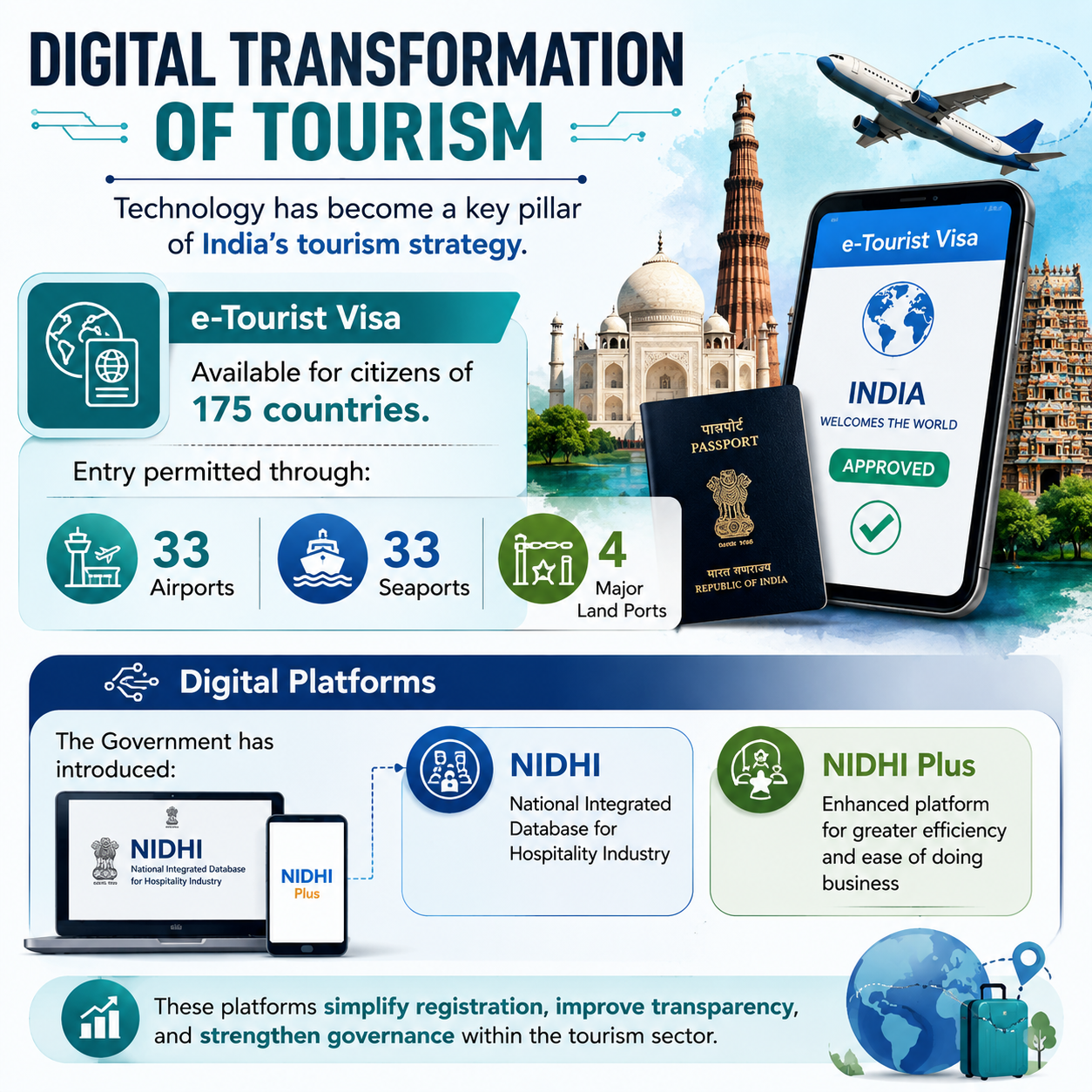
Revitalisation of the Incredible India campaign through digital promotion, international roadshows, and strategic partnerships
These initiatives seek to make India's tourism sector more resilient, globally competitive, sustainable, and inclusive.
India's tourism sector has undergone a remarkable transformation over the past decade through sustained investments in infrastructure, improved connectivity, digital governance, sustainability, and destination development. Programmes such as Swadesh Darshan, PRASHAD, SASCI, CBDD, and Travel for LiFE have expanded tourism opportunities while preserving India's rich cultural and natural heritage.
With ambitious plans under Viksit Bharat@2047, enhanced global outreach, and continued investments in human capital and infrastructure, India is steadily positioning itself as one of the world's most attractive and competitive tourism destinations.