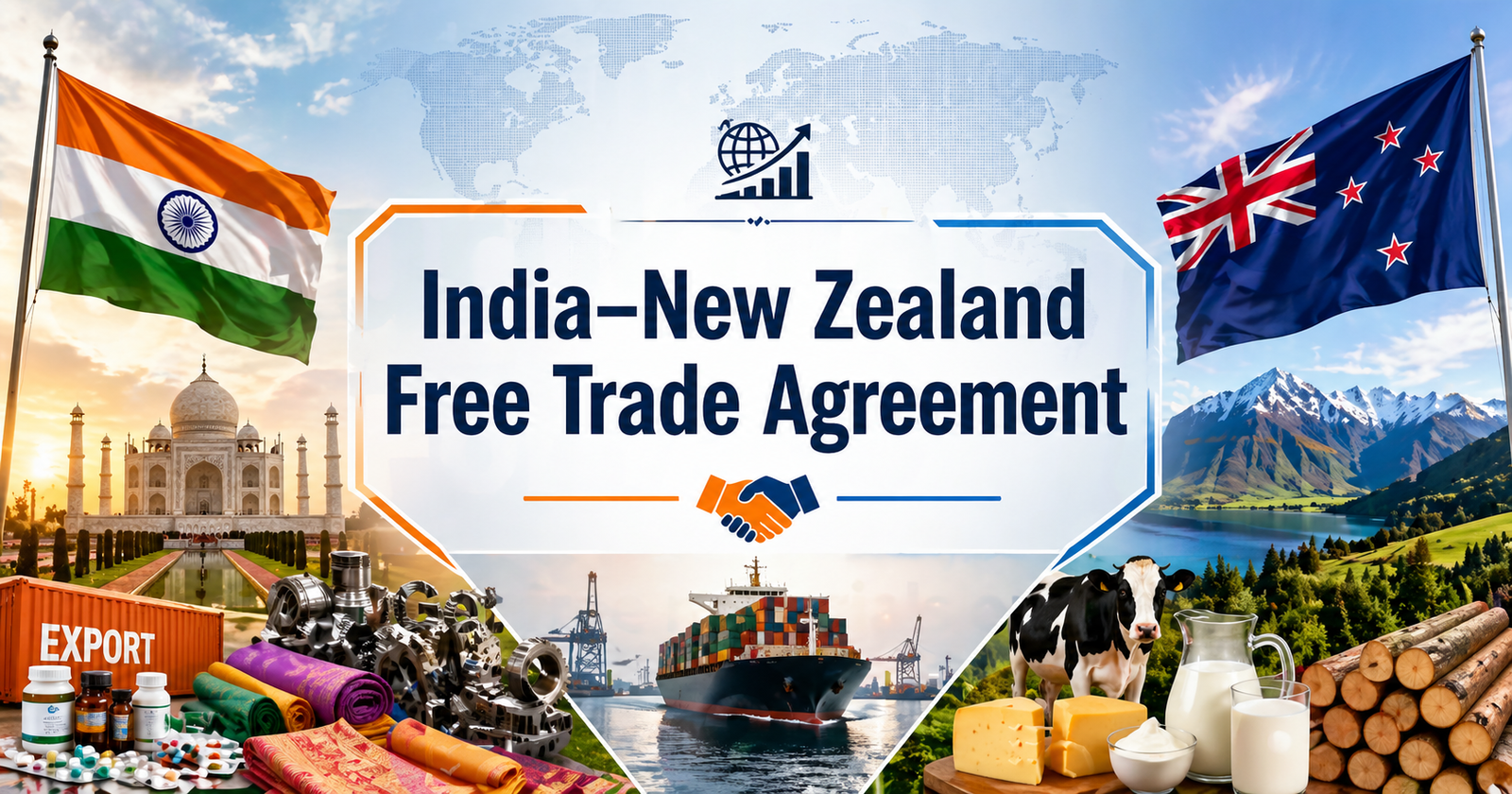
India–New Zealand FTA explained: opportunities, risks, trade impact, strategic significance, and what it means for India’s economy and global positioning.
Syllabus Areas:GS II - International Relations |
The proposed FTA between India and New Zealand represents a strategic shift in India’s trade policy. It aims to boost exports, attract investments, and integrate India into global value chains. However, FTAs also affect domestic industries, employment, and policy autonomy, making a balanced evaluation essential.
Background of India–New Zealand Trade Relations
-
Bilateral trade between India and New Zealand remains relatively limited compared to India’s major partners like the US and EU.
-
The trade structure is largely complementary:
-
India exports pharmaceuticals, textiles, and engineering goods.
-
New Zealand exports dairy products, agricultural goods, and forestry items.
-
Earlier FTA negotiations stalled mainly due to concerns over dairy sector access.
-
Recent global economic shifts have revived negotiations and interest in concluding the agreement.
Key Features of the Proposed FTA
-
Tariff Reduction: Gradual reduction or elimination of tariffs to enhance trade competitiveness.
-
Market Access: Improved access for Indian goods/services in New Zealand markets.
-
Increased entry for selected New Zealand products into India.
-
Services Sector Focus: Expansion opportunities in IT, education, healthcare, and skilled labour mobility.
-
Investment Facilitation: Creation of a stable and predictable environment to encourage bilateral investments.
Opportunities for India
-
Export Expansion: Lower tariffs can increase competitiveness of Indian exports like pharmaceuticals, textiles, and engineering goods.
-
Growth in Services Sector: India can leverage its strength in IT and skilled workforce.
-
Potential gains in digital services, education, and healthcare exports.
-
Trade Diversification: Helps reduce dependence on traditional markets such as the US, EU, and China.
-
Enhances India’s economic footprint in the Indo-Pacific region.
-
Integration into Global Value Chains: Facilitates technology transfer, innovation, and productivity improvements.
-
Encourages participation in global production networks.
Concerns and Challenges
-
Impact on Agriculture: New Zealand’s strong dairy and meat sectors may outcompete Indian farmers.
-
Risk of income loss in vulnerable rural sectors.
-
Trade Imbalance Risk: Imports may grow faster than exports, widening India’s trade deficit.
-
Pressure on MSMEs: Small industries may struggle due to cheaper imports and lack of competitiveness.
-
Non-Tariff Barriers: Differences in quality standards and sanitary regulations may restrict real gains.
Strategic Significance
-
Indo-Pacific Engagement: Strengthens India’s presence in the Indo-Pacific region.
-
Aligns with Act East Policy.
-
Counterbalance to China: Promotes alternative trade partnerships.
-
Reduces dependence on Chinese supply chains.
-
Economic Diplomacy: Enhances India’s credibility as a global trade partner.
-
Reflects willingness to engage in rule-based trade systems.
Way Forward
-
Protection of Sensitive Sectors: Provide safeguards or phased tariff reductions for dairy and agriculture.
-
Strengthening Domestic Competitiveness: Invest in infrastructure, technology, and skill development.
-
Safeguard Mechanisms: Use anti-dumping measures and emergency tariffs when required.
-
Focus on Services Negotiation: Ensure better mobility for professionals and students.
The FTA presents a balance between economic opportunity and domestic risk. While it can boost exports, strategic engagement, and global integration, it also poses challenges to vulnerable sectors. The success of the agreement will depend on India’s ability to balance liberalisation with safeguards and align trade policy with national interests.
Mains Question:Q. “Free Trade Agreements can accelerate economic growth but may harm domestic sectors. Discuss in the context of India–New Zealand FTA.” 250 Words |