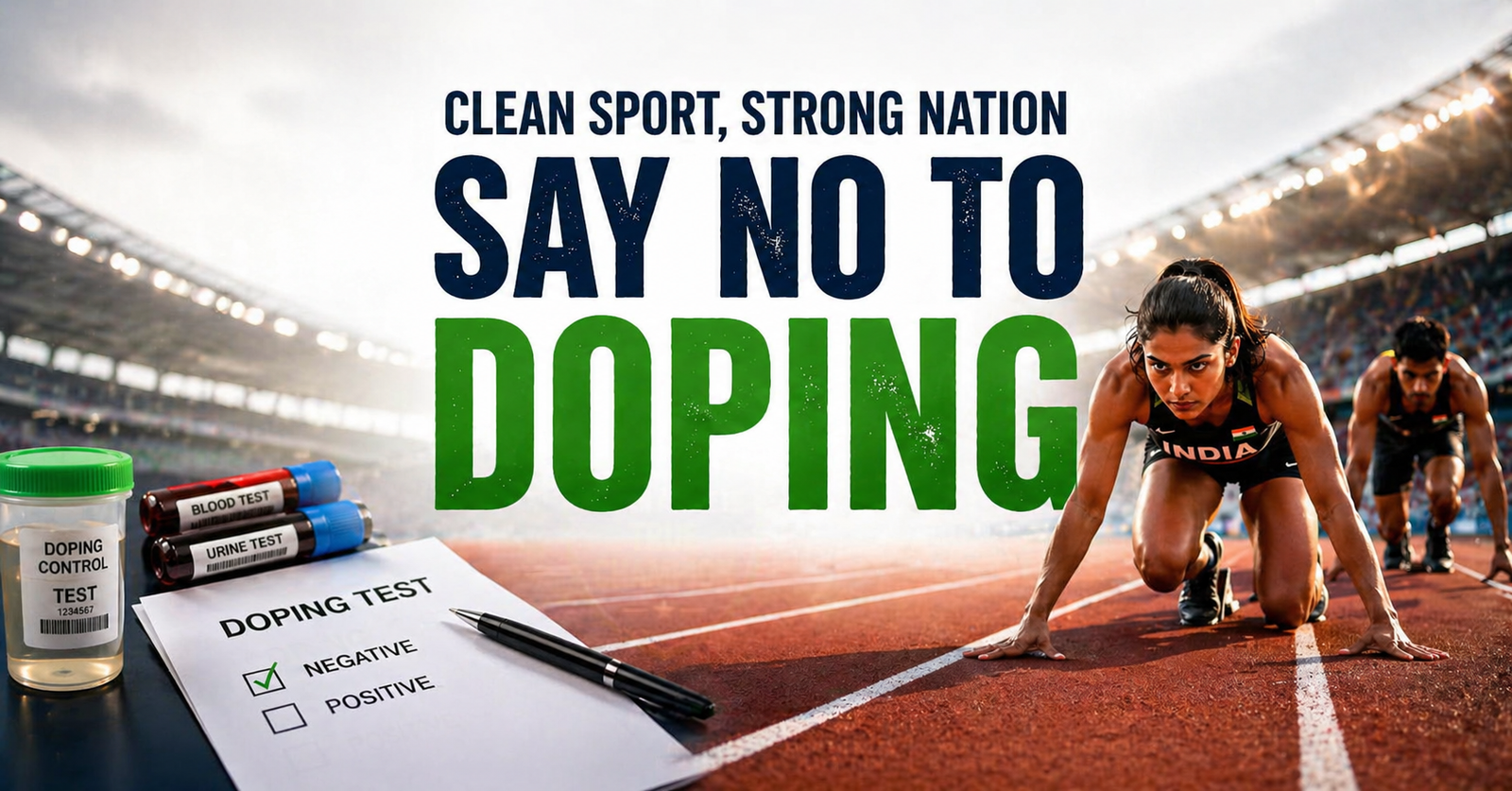
Explore WADA’s role in fighting doping in sports, ensuring fair competition, athlete safety, and ethical sports governance. Learn why clean sport matters for India’s future.
Syllabus Areas:GS II - Governance |
India’s rise in global sports has been remarkable over the past decade, with increased participation and success in events like the Olympics, Asian Games, and Commonwealth Games. However, this progress is increasingly overshadowed by a persistent and troubling issue—doping. The recurrence of doping violations raises serious concerns about the integrity of Indian sports, the effectiveness of regulatory institutions, and the ethical foundations of athletic competition.
The issue is not merely about rule-breaking; it reflects deeper structural weaknesses in governance, awareness, and accountability.
Understanding Doping and Its Implications
Doping refers to the use of prohibited substances or methods to enhance athletic performance. It is regulated globally by the World Anti-Doping Agency and domestically in India by the National Anti-Doping Agency.
Why Doping is a Serious Concern
-
Undermines Fair Play: It violates the core principle of equal competition.
-
Health Risks: Athletes often suffer long-term physical and psychological harm.
-
Reputational Damage: Repeated violations tarnish India’s global sporting image.
-
Loss of Opportunities: Clean athletes are unfairly deprived of recognition and rewards.
Current Scenario in India
India has consistently ranked among the countries with a high number of doping violations in reports released by WADA. This trend indicates that the problem is systemic rather than incidental.
Key Patterns Observed
-
High incidence among young and grassroots athletes
-
Frequent violations in strength-based sports like weightlifting and wrestling
-
Limited awareness about banned substances and supplements
WADA:World Anti-Doping Agency (WADA) is the World Anti-Doping Agency, an international organization created in 1999 to promote, coordinate, and monitor the fight against doping in sports worldwide. What WADA Does1. Creates Global Anti-Doping Rules WADA publishes the World Anti-Doping Code, the main framework followed by sports federations, Olympic bodies, and national anti-doping agencies. 2. Publishes the Banned Substances List Every year, WADA releases a list of prohibited:
3. Supports Testing & Investigations WADA works with countries and sports bodies to ensure athletes are tested fairly and consistently. 4. Education & Awareness It runs programs to teach athletes, coaches, and officials about clean sport and ethical competition. Why It MattersWithout WADA, each country could follow different rules. WADA creates a common global standard, helping ensure fairness in events like the Olympic Games. India ContextIndia’s anti-doping body, National Anti-Doping Agency, works in line with WADA rules. |
Root Causes of Doping in India
-
Lack of Awareness: Many athletes, especially at the grassroots level, are unaware of prohibited substances. Often, they consume contaminated supplements without proper guidance.
-
Weak Institutional Oversight: While NADA exists, its reach and enforcement capacity remain limited. Testing infrastructure and follow-up mechanisms need strengthening.
-
Pressure to Perform: The growing commercialization of sports and expectations of quick success push athletes towards unethical shortcuts.
-
Coaching and Support Deficiencies: In some cases, coaches and support staff either lack knowledge or fail to guide athletes properly, sometimes even encouraging doping.
-
Inadequate Regulation of Supplements: The supplement industry in India is poorly regulated, increasing the risk of inadvertent doping.
Governance and Ethical Dimensions
1. Crisis of Sports Governance
-
Doping exposes weaknesses in institutional accountability, coordination, and transparency. It raises questions about whether regulatory bodies are proactive or merely reactive.
2. Ethical Decline in Competitive Sports
-
The normalization of “winning at any cost” undermines the spirit of sportsmanship and integrity.
3. Youth Vulnerability
-
Young athletes, driven by ambition and limited guidance, become easy targets for unethical practices. This is a serious concern for India’s demographic dividend.
Global Best Practices
Countries that have successfully reduced doping emphasize:
-
Strong education programs at early stages
-
Strict testing and penalties
-
Transparent and independent anti-doping agencies
-
Collaboration with international bodies like WADA
Way Forward:
1. Strengthening NADA
-
Enhance autonomy and funding
-
Expand testing infrastructure
-
Improve coordination with international agencies
2. Athlete Education Programs
-
Mandatory anti-doping education at school and academy levels
-
Awareness campaigns in regional languages
3. Regulation of Supplements
-
Strict quality checks and certification systems
-
Accountability for manufacturers
4. Coach Accountability
-
Certification programs with ethical training
-
Penal provisions for complicity in doping
5. Technological Integration
-
Use of digital tracking for athlete testing history
-
Data-driven identification of high-risk zones
6. Cultural Shift in Sports
-
Promote values of fair play and long-term excellence
-
Reward clean athletes more visibly
India’s ambition to become a global sporting powerhouse cannot rest solely on medals—it must be grounded in integrity. Doping is not just a violation of rules; it is a failure of systems, values, and governance.
A comprehensive approach combining awareness, regulation, accountability, and ethical reform is essential. Only then can India ensure that its sporting success is both sustainable and credible.