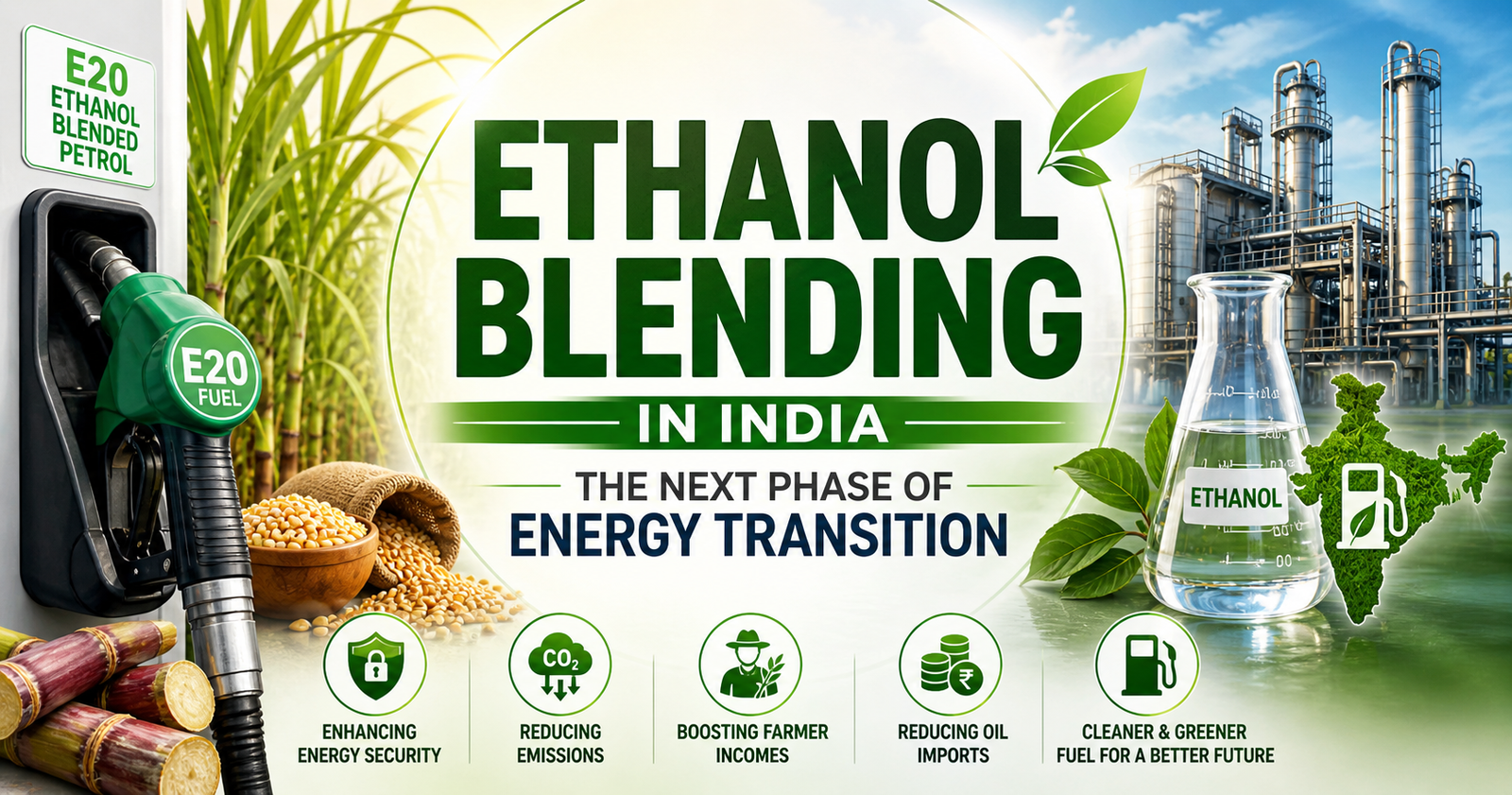
India’s ethanol blending push (E20 target) is reshaping energy security, agriculture, and sustainability. Explore benefits, challenges, and its role in India’s energy transition.
Syllabus Areas:GS III - Environment, Energy Security |
India is accelerating its ethanol blending programme, targeting 20% ethanol blending (E20) in petrol by 2025–26, as part of its broader strategy to reduce crude oil imports and transition toward cleaner energy sources.
India’s energy security has long been shaped by its heavy dependence on imported crude oil, which accounts for nearly 85% of total consumption. This dependence exposes the economy to global price volatility, geopolitical disruptions, and fiscal stress. In this context, ethanol blending has emerged as a strategic policy tool that simultaneously addresses energy security, environmental sustainability, and rural economic growth.
The Ethanol Blended Petrol (EBP) Programme, initiated in the early 2000s, has gained renewed momentum in recent years, positioning ethanol as a key pillar in India’s transition toward cleaner fuels.
Understanding Ethanol Blending
Ethanol is an alcohol-based biofuel produced primarily from sugarcane, molasses, and food grains like maize and rice. When blended with petrol, it reduces harmful emissions and improves combustion efficiency.
-
E10: 10% ethanol blending
-
E20: 20% ethanol blending (target by 2025–26)
India has already achieved over 12–13% blending levels in recent years, marking significant progress compared to less than 2% a decade ago.
Objectives of Ethanol Blending Policy
1. Energy Security: Reducing dependence on imported crude oil is the primary objective. Even a modest increase in blending can save billions in foreign exchange.
2. Environmental Benefits
Ethanol is a cleaner-burning fuel:
-
Reduces carbon monoxide and hydrocarbon emissions
-
Contributes to India’s climate commitments under global agreements
3. Farmer Income Support: Ethanol production creates an additional market for agricultural produce, especially sugarcane and surplus grains, thereby stabilizing farm incomes.
4. Waste Utilization: Damaged food grains and agricultural residues can be converted into ethanol, reducing wastage.
Progress and Policy Push
The government has adopted a multi-pronged strategy:
-
Financial incentives for ethanol production
-
Expansion of feedstock sources (including maize and rice)
-
Interest subvention schemes for distilleries
-
Long-term procurement pricing for ethanol
The shift from molasses-based ethanol to grain-based ethanol reflects an attempt to diversify raw materials and ensure steady supply.
Economic Implications
Positive Outcomes
-
Reduction in oil import bills
-
Boost to rural economy and agro-industries
-
Employment generation in distilleries and supply chains
Industrial Growth
The ethanol ecosystem is driving investments in:
-
Bio-refineries
-
Storage and blending infrastructure
-
Logistics networks
Key Challenges and Concerns
1. Food vs Fuel Debate
Diverting food grains for fuel production raises concerns about:
-
Food security
-
Price inflation
Particularly critical in a country where nutritional challenges persist.
2. Water-Intensive Crops
Sugarcane, a major ethanol source, is highly water-intensive:
-
Leads to groundwater depletion
-
Encourages unsustainable cropping patterns
3. Regional Imbalance
Ethanol production is concentrated in a few states, leading to logistical challenges and uneven benefits.
4. Vehicle Compatibility
Transitioning to E20 requires:
-
Engine modifications
-
Infrastructure upgrades
Without which efficiency losses may occur.
5. Environmental Trade-offs
While ethanol reduces emissions, large-scale cultivation of feedstock crops may:
-
Increase fertilizer usage
-
Cause land degradation
Global Context
Countries like Brazil have successfully implemented high ethanol blending levels due to:
-
Favorable agro-climatic conditions
-
Advanced flex-fuel vehicle technology
India, however, must tailor its strategy considering:
-
Population pressure
-
Resource constraints
-
Food security priorities
The Way Forward
A balanced and sustainable approach is essential:
1. Diversification of Feedstock
Shift toward:
-
Second-generation (2G) ethanol from agricultural waste
-
Non-food biomass
2. Sustainable Agriculture
Promote:
-
Water-efficient crops
-
Crop diversification policies
3. Technological Innovation
Encourage:
-
Flex-fuel vehicles
-
Advanced biofuel technologies
4. Policy Coherence
Ensure alignment between:
-
Energy policy
-
Agricultural policy
-
Environmental sustainability
5. Strengthening Infrastructure
Invest in:
-
Storage facilities
-
Transport networks
-
Blending systems
Ethanol blending represents a strategic convergence of energy, agriculture, and environmental policy. While it offers a promising pathway toward reduced oil dependency and cleaner fuel usage, its long-term success depends on addressing structural challenges related to resource use, food security, and sustainability.
India’s energy transition cannot rely solely on ethanol, but it can certainly serve as a critical bridge fuel in the journey toward a diversified and resilient energy future.