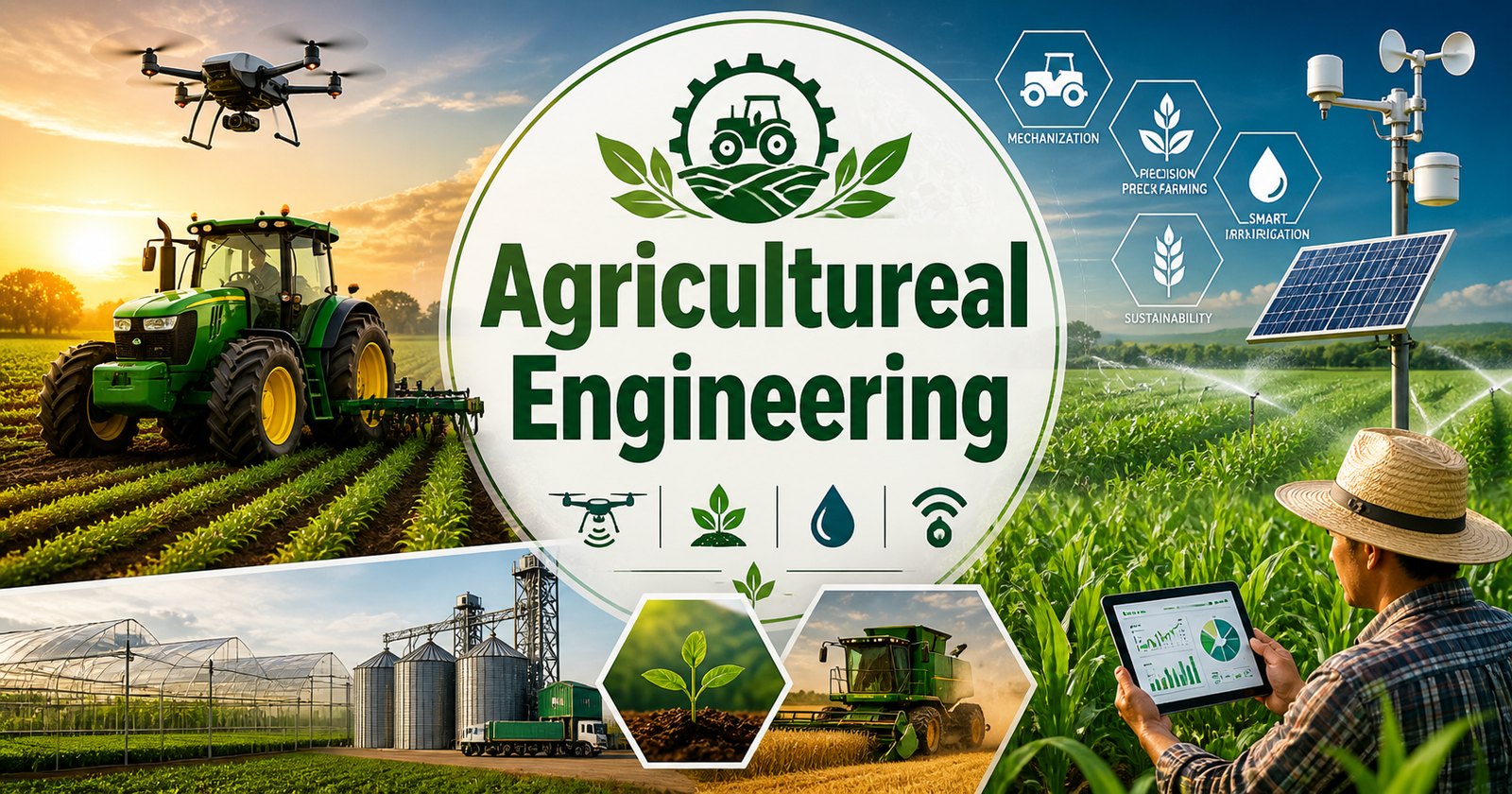
Modern agricultural engineering in India: precision farming, mechanisation, smart irrigation, and digital tools to improve productivity and farmer incomes.
Syllabus Areas:GS III - Economy (Agriculture) |
India stands at a critical turning point in its agricultural journey. For decades, the focus remained on increasing production to ensure food security. While this objective has largely been achieved, the next frontier is far more complex—enhancing efficiency, sustainability, and farmer incomes through technology.
At the heart of this transformation lies Agricultural Engineering, a field that integrates engineering principles with agricultural practices to modernise farming systems. However, the real challenge today is not the absence of technology—but unequal access to it.
What is Agricultural Engineering?
Agricultural engineering involves the application of science and technology to improve farming practices. It includes:
-
Farm mechanisation (tractors, harvesters, irrigation systems)
-
Precision farming (use of sensors, GPS, and data analytics)
-
Post-harvest technology (storage, processing, transportation)
-
Soil and water conservation techniques
In essence, it aims to make farming more productive, efficient, and climate-resilient.
Why India Needs Agricultural Engineering Now
India’s agriculture faces structural challenges that traditional methods alone cannot solve:
-
Declining Farm Productivity Growth: While production has increased, the rate of productivity growth is slowing, especially in major crops.
-
Labour Shortage: Rural-to-urban migration has created a shortage of agricultural labour, increasing the need for mechanisation.
-
Climate Change Pressures: Erratic rainfall, heatwaves, and soil degradation demand smart and adaptive farming techniques.
-
Low Farmer Incomes: Small and marginal farmers struggle with profitability due to rising input costs and inefficient practices.
Emerging Technologies in Agriculture
1. Precision Farming
-
Farmers use GPS, sensors, and data to understand which part of the field needs what
-
Instead of treating the whole field the same, they give water, fertilizers only where needed. This helps save money and increase crop yield
2. Farm Mechanisation
-
Use of machines like tractors, harvesters, and seed drills for farming work
-
Reduces dependence on manual labour and speeds up operations. Farmers can do more work in less time with less effort
3. Smart Irrigation Systems
-
Techniques like drip and sprinkler irrigation supply only the required amount of water
-
Water goes directly to plant roots instead of being wasted. This ensures water saving and better crop growth
4. Digital Agriculture
-
Farmers use mobile apps and AI tools for weather updates, crop advice, and market prices
-
Helps them decide when to sow, irrigate, or sell crops. Leads to better decision-making and higher income
The Core Problem:
Despite these advancements, a fundamental issue persists:
Key Barriers:
-
Small Landholdings: Over 85% of Indian farmers are small and marginal
-
Mechanisation becomes economically unviable on tiny plots
-
High Cost of Technology: Advanced equipment and digital tools are expensive
-
Lack of affordable financing options
-
Limited Awareness: Farmers often lack knowledge of available technologies
-
Infrastructure Gaps: Poor rural connectivity restricts digital adoption
Policy and Institutional Efforts
The government has taken several initiatives to promote agricultural engineering:
-
Promotion of Custom Hiring Centres (CHCs) for shared machinery use
-
Support for micro-irrigation under various schemes
-
Encouragement of agri-startups and digital platforms
However, implementation remains uneven, and benefits are not reaching all farmers equally.
The Way Forward:
-
Expand Custom Hiring Centres at the village cluster level and manage them through FPOs or Panchayats, so that small and marginal farmers can access expensive machinery on a rental basis, reducing their cost burden and increasing mechanisation.
-
Shift from capital subsidies to usage-based Direct Benefit Transfers (DBT), where farmers are incentivised for actually using technologies like drip irrigation or precision tools, ensuring real adoption rather than mere purchase of equipment.
-
Develop local language, voice-enabled digital agriculture platforms with village-level advisories, which will improve accessibility and help farmers make timely, informed decisions based on local conditions.
-
Make micro-irrigation systems mandatory in water-stressed regions by linking them with subsidies and MSP incentives, which will promote efficient water use and improve long-term sustainability of agriculture.
-
Reform the agricultural extension system by linking officer performance to measurable outcomes like technology adoption rates, ensuring accountability and better last-mile delivery of innovations.
-
Establish village-level storage and processing units to reduce post-harvest losses and enable value addition, thereby increasing farmers’ incomes and reducing dependence on middlemen.
India’s agricultural transformation is no longer just about producing more—it is about producing smarter and more equitably. Agricultural engineering provides the tools, but the real question is whether these tools can reach every farmer.
The future of farming in India will be defined not by how advanced our technology is, but by how inclusive its access becomes.
Prelims Questions:1. Custom Hiring Centres (CHCs) are promoted to: A) Replace agricultural labour entirely Answer: C 2. Consider the following statements regarding precision farming:
Which of the statements given above is/are correct? A) 2 and 3 only Answer: A |