Zealandia: The Hidden Continent Beneath the Waves
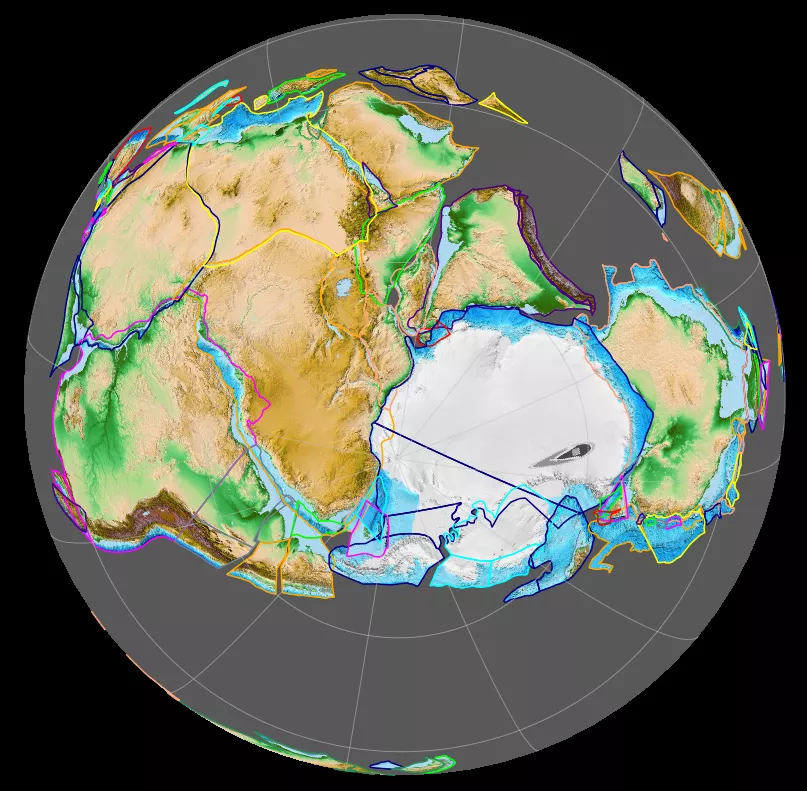
Far beneath the rolling waters of the South Pacific lies a world long forgotten by the human eye — Zealandia, often called Earth’s eighth continent. Once part of the great southern supercontinent Gondwana, this submerged landmass stretches nearly 4.9 million square kilometers — about two-thirds the size of Australia. What makes Zealandia remarkable is not just its size, but the quiet story it tells of Earth’s restless crust, of creation, drift, and disappearance.
Birth from Gondwana
Roughly 85 million years ago, during the Late Cretaceous period, Zealandia was joined to Gondwana — the massive supercontinent that also hosted Antarctica, Australia, Africa, South America, and India. Around this time, the tectonic plate carrying Zealandia began to thin and stretch due to forces deep within the Earth’s mantle.
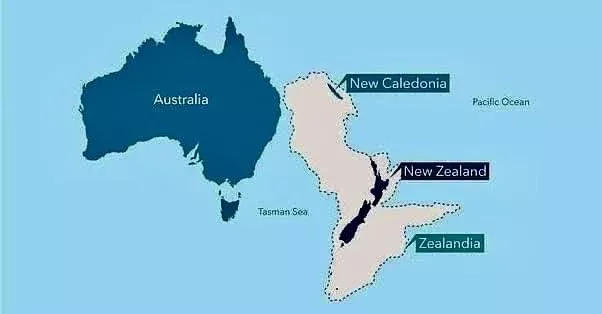
This process — continental rifting— slowly tore Zealandia away from Antarctica and eastern Australia. Instead of breaking cleanly like a cracked shell, Zealandia was stretched like soft dough, becoming unusually thin — in places, only one-fourth the thickness of normal continental crust.
As it drifted northeast, the newly formed Zealandia began to sink, weighed down by its reduced buoyancy. By about 23 million years ago, most of it had slipped beneath the sea, leaving only the highlands above water — modern New Zealand and New Caledonia.
Why Zealandia Disappeared Beneath the Ocean
The disappearance of Zealandia was not sudden, but a slow descent shaped by the interplay of plate tectonics and isostatic balance. As its crust stretched and thinned, it could no longer “float” high on the denser mantle beneath. Over millions of years, the continent gradually subsided.
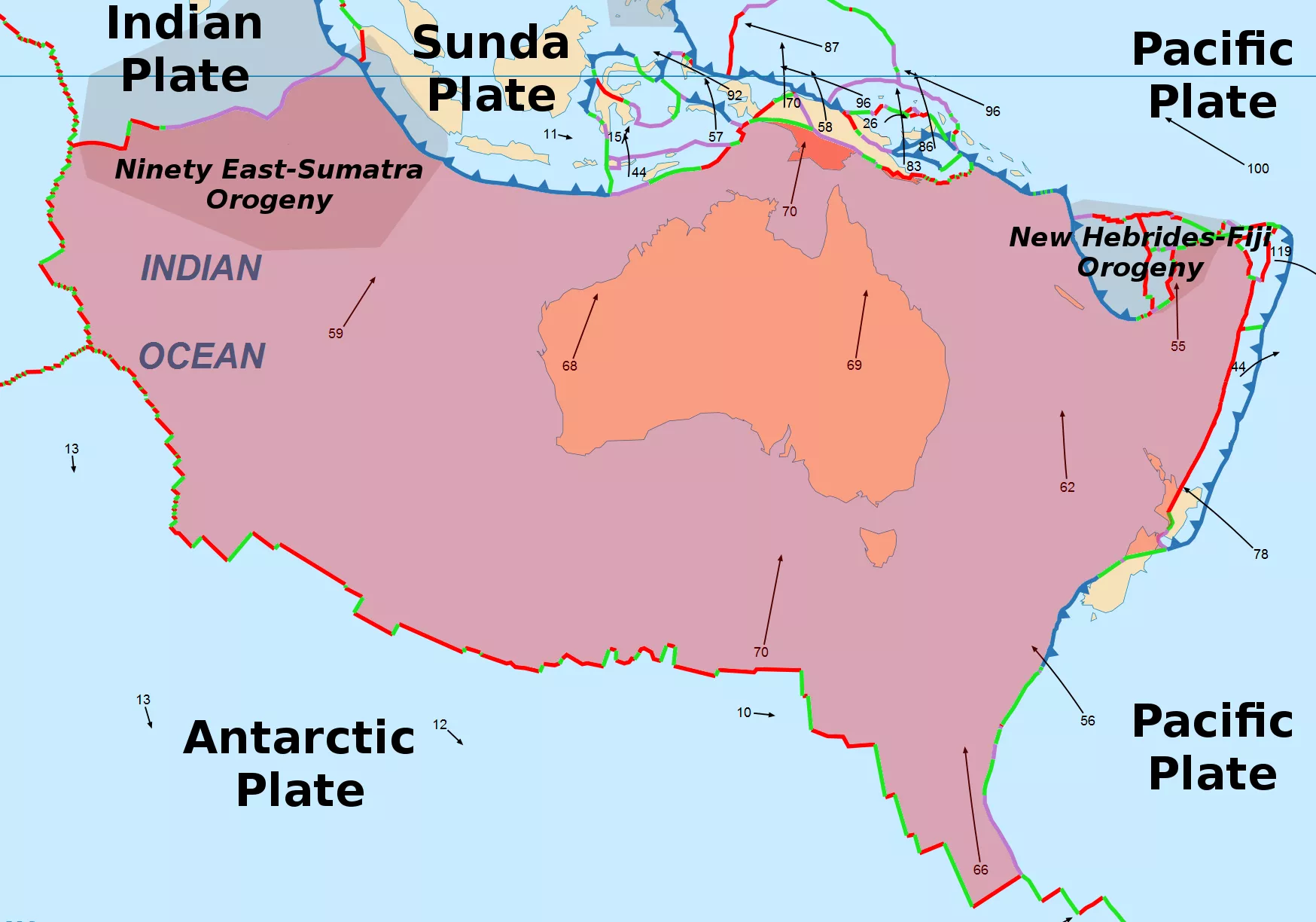
Scientists now believe that volcanic and tectonic forces further fragmented its crust. The Pacific Plate and the Australian Plate — two massive slabs of Earth’s lithosphere — continued to jostle and collide near Zealandia’s edges, bending and fracturing it. The subduction zones along these boundaries caused parts of the continent to sink deeper, sealing its fate as a submerged continent.
Scientific Rediscovery
For decades, Zealandia was dismissed as a curiosity — an underwater plateau or a group of continental fragments. But modern geophysical data changed everything. Satellite gravity mapping, ocean floor drilling, and rock samples revealed the unmistakable fingerprints of continental crust — granite, sedimentary, and metamorphic rocks — not the basaltic material typical of ocean floors.
In 2017, a team of geologists formally recognized Zealandia as a distinct continent. Their case was built not on geography, but on geology: its composition, structure, and the thickness of its crust all matched the criteria for continental status.
A Living Laboratory of Plate Tectonics
Today, Zealandia sits astride the boundary between the Pacific and Australian plates — one of the most active tectonic zones on Earth. The same movements that once submerged it continue to shape its fate. New Zealand’s mountains, volcanoes, and frequent earthquakes are direct results of this restless interaction.
Zealandia’s story serves as a reminder that continents are not eternal. They bend, stretch, and sometimes drown, driven by the slow yet relentless currents of plate tectonics. Beneath the ocean’s calm surface lies a monument to that hidden dynamism — a continent that rose, drifted, and sank, yet still breathes through the islands that bear its name.
Zealandia’s emergence, submergence, and rediscovery form a poetic loop in Earth’s geologic story — from the glory days of Gondwana to its present life beneath the sea. It challenges our fixed idea of continents as stable and enduring, revealing instead a planet in motion — a planet that keeps rewriting its own map.
Hidden, yet not lost, Zealandia whispers a quiet truth of geology: nothing on Earth truly disappears; it only changes its form.