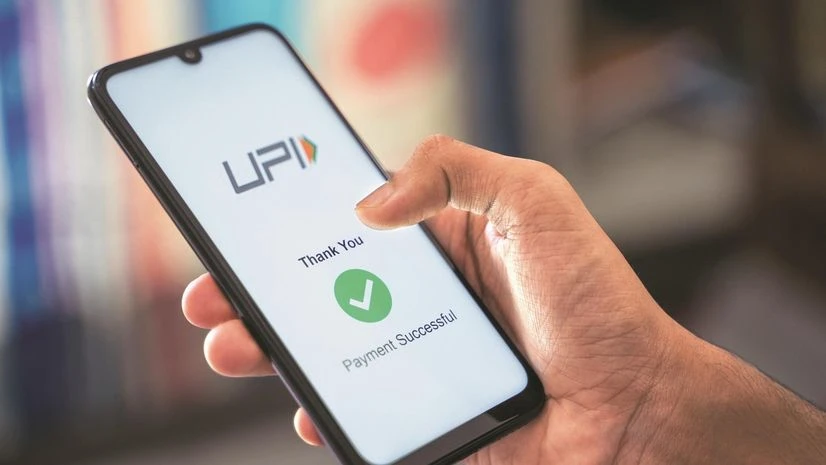
UPI Revolution in India
Syllabus Areas:
GS III - Economy
General Essay
A recent IMF paper observes a sharp decline in cash usage in India, closely associated with the rise of UPI (Unified Payments Interface) since its launch in 2016.
UPI Growth and Dominance
- Exponential Growth: Since its launch in 2016 by the NPCI (National Payments Corporation of India), UPI has scaled rapidly to become the most used digital payment platform in India. By 2024, it processes over 18 billion transactions every month, far outpacing traditional digital payment tools like NEFT, IMPS, credit/debit cards.
- Retail Payment Leadership: Among all modes of electronic retail payments, UPI dominates due to its real-time functionality, ease of use, and zero-cost model for users.
- Global Benchmark: The IMF notes that India leads the world in fast payment systems, overtaking even advanced economies in volume, speed, and accessibility. This reflects a technological leapfrogging enabled by public digital infrastructure (India Stack).
Proxy Indicators of Declining Cash Usage
- The IMF paper uses proxies (indirect indicators) to show a
reduction in cash dependency:
- ATM Cash Withdrawals:There has been a steady decline in the volume and frequency of ATM withdrawals, indicating that people increasingly prefer digital modes over physical currency.
- Currency in Circulation as % of GDP:While India once saw rising cash levels (especially post-demonetisation recovery), the IMF notes a declining trend in cash as a share of GDP. This points to a broader shift toward digital economy behavior.
- These trends suggest behavioral changes at scale, especially among urban and semi-urban populations, influenced by convenience and incentives.
Interoperability – The Game Changer
- Definition:Interoperability means that users can transfer money across banks and apps regardless of the platform they use. For example, a Google Pay user can send money to someone on Paytm or access accounts from multiple banks in one app.
- Impact on Ecosystem:
- It led to seamless switching and freedom of choice, driving competition and innovation.
- Today, over 600 banks and 200+ apps are integrated into UPI, making it one of the most inclusive payment platforms in the world.
- Strategic Significance:The paper argues that interoperability fosters user trust, higher adoption rates, and financial democratization, especially in a country as diverse as India.
Shift from Bank Apps to FinTech Apps
- Initial Phase (2016–2018):When UPI was launched, users preferred to access it through their bank’s official app, primarily due to trust and familiarity with their banks.
- FinTech Surge (Post-2018):Over time, FinTech apps like
Google Pay, PhonePe, and
Paytm attracted users through:
- Better user interface (UI/UX)
- Faster transactions
- Cashback and reward schemes
- Ease of linking multiple bank accounts
- Private vs Public Sector Banks:
- Users of private sector banks have been more likely to stay with their bank’s app.
- Public sector bank apps lag behind in terms of user experience, causing their customers to shift more readily to third-party apps.
- This transition highlights how user-centric design and private innovation are shaping the future of financial services in India.
Why the Rise of UPI Matters to India’s Economy
- Promotes Financial Inclusion
- UPI enables real-time, low-cost banking access even in remote areas.
- Voice-enabled UPI (e.g., UPI123Pay) benefits feature phone users.
- Reduces Cash Dependency
- Decline in ATM withdrawals and currency circulation as % of GDP indicates behavioral shift.
- Reduces cost of printing, transporting, and managing cash.
- Strengthens Tax Compliance
- Digital trails help curb cash-based transactions and black money.
- Expands the tax base by formalizing micro and small businesses.
- Boosts Formalization of the Informal Economy
- Small vendors, gig workers, and MSMEs now have digital income histories.
- Facilitates access to credit, insurance, and government schemes.
- Increases Efficiency in Transactions
- UPI allows instant, 24x7 payments across banks and apps.
- Lowers transaction costs for both consumers and merchants.
- Fosters Innovation and Competition
- Interoperable infrastructure supports 200+ apps and 600+ banks.
- Encourages fintech startups, leading to improved financial services.
- Enhances Economic Transparency
- Digital payments make financial flows more trackable and accountable.
- Aids in targeted delivery of welfare and subsidies (e.g., DBT).
- Elevates India’s Global Digital Leadership
- India now leads the world in fast payment systems, as per IMF.
- UPI is being exported to countries like UAE, Singapore, and France.
Prelims Questions:
- Which of the following best explains the concept of interoperability in
digital
payments?
- One user can open multiple bank accounts
- Payments can be made only within one bank’s app
- Seamless payments across different apps and banks
- UPI transactions need internet connectivity
- According to the IMF, which of the following is a proxy for measuring cash
usage?
- Currency in circulation (% of GDP)
- ATM withdrawals
- Number of bank branches
- Number of POS machines
Answer: C
Answer: 1 and 2 only
Mains Question:
- “UPI is not just a digital payment tool; it is an instrument of economic democratization and fiscal transparency.” Explain. 150 words 10 marks