UNFCCC - COP30
Syllabus Areas:
GS III - Environment and Ecology
The Belém Summit has opened in the
Brazilian
Amazon ahead of the upcoming 30th United Nations Climate
Change
Conference (COP30). This event is significant because world
leaders
are meeting to reaffirm their commitment to urgent climate action
in one of
the most ecologically crucial regions on Earth — the Amazon
rainforest.
Brazilian leadership has framed this as the “COP of
Truth”,
emphasizing that the time for speeches has passed and that only
tangible,
measurable actions will restore global confidence in multilateral
climate
processes.
The summit marks a return to Brazil, the host of the historic 1992 Earth Summit in Rio de Janeiro, which laid the foundation for modern environmental governance. Now, 33 years later, the world has again turned to Brazil to renew global solidarity against climate change.
The Purpose of the Belém Summit
The Belém Summit serves as a prelude to
COP30, bringing
together
global leaders, diplomats, scientists, and civil society to discuss the
direction of
future climate policy.
The purpose is to shift global climate
discussions
from rhetoric to reality, emphasizing action-oriented
commitments. The summit highlights that without concrete outcomes,
public faith in COPs and multilateral institutions may decline,
threatening the credibility of global climate governance.
The Call for Urgent, Science-Based Action
- The speech draws parallels with past instances of global cooperation — such as the Montreal Protocol (which protected the ozone layer) and the collective response to COVID-19 — to stress that humanity is capable of decisive, unified action when guided by science and political will.
- The underlying message is that the climate crisis requires similar collective courage, as delayed action will make adaptation costlier and impacts irreversible.
Brazil’s Historical Role in Global Environmental Governance
Brazil’s leadership in global environmental diplomacy dates
back to the
1992 Earth Summit (Rio Conference).
At that summit, three
landmark international conventions were adopted:
- UNFCCC (United Nations Framework Convention on Climate Change) – addressing greenhouse gas emissions.
- CBD (Convention on Biological Diversity) – for conservation and sustainable use of biodiversity.
- UNCCD (Convention to Combat Desertification) – for combating land degradation.
These conventions laid the groundwork for sustainable development principles, including the principle of common but differentiated responsibilities (CBDR) — a key concept still central to climate justice debates today.
By hosting COP30 in 2025, Brazil is reclaiming this legacy and asserting itself as a bridge between developed and developing nations in climate negotiations.
Significance of Holding COP30 in the Amazon
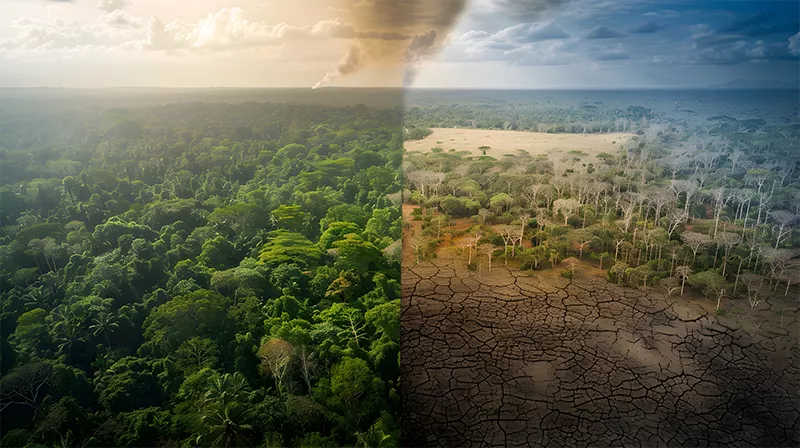
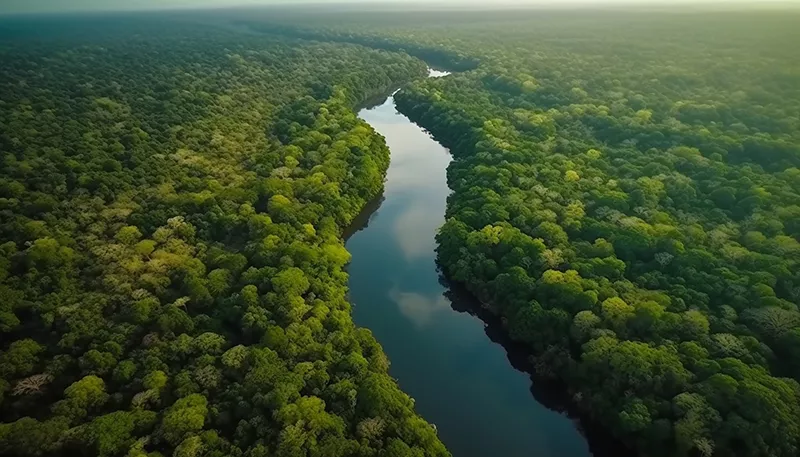
- The Amazon rainforest is often called the “lungs of the planet” because it absorbs nearly 2 billion tonnes of CO₂ annually. However, deforestation, mining, and illegal logging have pushed it close to a tipping point, where it could shift from a carbon sink to a carbon source.
- Hosting COP30 in the Amazon underscores the urgency of protecting this ecosystem. The event aims to bring world leaders face-to-face with the ground realities — including biodiversity loss, indigenous communities’ challenges, and the socio-economic dependencies on forest resources.
- This move symbolizes a shift from climate conferences being abstract negotiations to becoming immersive, reality-driven engagements.
Principle of Common but Differentiated Responsibilities (CBDR)
CBDR remains the cornerstone of international climate negotiations. It recognizes that:
- All nations share responsibility for addressing climate change.
- However, historical responsibility for emissions lies primarily with developed countries that industrialized first.
The Global South, led by Brazil and other
developing nations,
argues
that climate finance and technology transfer must be scaled up
not as
charity but as justice.
This principle underpins calls
for
equitable access to climate funds, adaptation finance, and the
fulfillment of the $100 billion annual climate finance pledge
by
developed countries.
Brazil’s Achievements in Forest and Emission Control
- Brazil has made remarkable progress in reducing deforestation, cutting it by nearly 50% within two years.
- This achievement highlights that with strong governance, enforcement, and incentives, environmental restoration is possible without hindering economic growth.
- The country’s proactive stance also strengthens its moral authority to demand stronger commitments from other nations.
Launch of the Tropical Forests Forever Facility (TFFF)
One of the central outcomes of the Belém Summit is the launch of the Tropical Forests Forever Facility (TFFF).
- The TFFF is a global investment fund, not a donation mechanism.
- It seeks to reward nations and communities that conserve forests, thereby creating financial incentives for preservation.
- Brazil has already pledged $1 billion to the fund, urging other nations to make comparable contributions.
The innovative aspect lies in linking financial
returns with
ecological
stewardship — a market-based mechanism promoting
sustainability
through investment rather than aid.
This marks a shift toward
“green
capitalism”, where conservation becomes economically
rewarding.
Brazil’s New and Ambitious Nationally Determined Contribution (NDC)
Brazil has become the second country globally to present a revised and enhanced NDC under the Paris Agreement.
- The new target aims to reduce greenhouse gas emissions by 59–67% by 2030.
- The commitment covers all sectors, including energy, transport, agriculture, and industry.
This move reflects Brazil’s whole-economy approach to decarbonization and calls upon other nations to match its level of ambition.
The Energy Transition Agenda
Brazil’s energy matrix is already one of the cleanest in the world, with:
- 88% of its electricity coming from renewable sources such as hydropower, biofuels, solar, and wind energy.
- Significant advances in green hydrogen and ethanol-based biofuels.
Brazil also emphasizes the need to redirect oil
revenues toward
financing a just and equitable transition.
It envisions a
global
future where oil companies evolve into diversified energy
corporations,
contributing to long-term climate stability.
This
reflects a
practical path for transitioning fossil-fuel-dependent
economies
without abrupt economic shocks.
People-Centric Climate Policy and the “Just Transition”
The article highlights that climate change is deeply
social, not
merely
environmental.
Vulnerable populations — small farmers, indigenous
peoples,
and the urban poor — face the harshest consequences of extreme weather,
food
insecurity, and displacement.
Hence, climate action must ensure a just transition that:
- Creates green jobs and sustainable livelihoods.
- Reduces inequality.
- Integrates adaptation and social welfare policies.
Brazil is also linking climate policy to the fight
against hunger and
poverty, acknowledging that environmental degradation and social
deprivation are interlinked.
At the Belém Summit, Brazil announced
the
“Declaration on Hunger, Poverty and Climate”,
reaffirming
that climate justice cannot be separated from human
development.
Reforming Global Climate Governance
Brazil’s proposal to create a UN Climate
Change Council,
under the
UN General Assembly, is aimed at addressing the institutional
paralysis
seen in the UN Security Council.
The proposed council
would:
- Oversee the implementation of climate pledges.
- Hold countries accountable for their NDCs.
- Strengthen the legitimacy and enforcement capacity of international climate law.
This reflects a growing call for democratizing global governance, giving greater voice to the Global South and climate-vulnerable nations.
The Vision of “COP of Truth”
- Brazil frames COP30 as the “COP of Truth”, signaling the end of the era of symbolic declarations.
- The world is expected to shift from promises to proof, from ambition to action, and from rhetoric to responsibility.
- The Belém Summit thus marks a transformational moment in global climate politics — an attempt to align diplomacy with ground realities.
The Belém Summit signals a renewed global
commitment to
climate
realism — one grounded in equity, action, and accountability.
By
connecting
climate, poverty, governance, and justice, Brazil aims to turn
COP30
into a landmark conference that redefines the future of climate diplomacy.
This initiative has the potential to revive faith in global cooperation, provided that nations deliver on their promises with the same urgency they voice in speeches.
Prelims Questions:
1. Consider the following pairs
| Concept | Associated Feature |
|---|---|
| 1. NDC | National climate action plan under Paris Agreement |
| 2. CBDR | Equal responsibilities among all countries |
| 3. TFFF | Grant-based funding for reforestation projects |
- It is responsible for removing metabolic waste from the brain during sleep.
- The process is regulated by the neurotransmitter norepinephrine.
- Sleeping pills enhance the glymphatic system's efficiency.
Which of the pairs given above is/are correctly matched?
2. The Tropical Forests Forever Facility (TFFF), recently launched by Brazil, is best described as:
- A United Nations fund to provide grants for tropical reforestation.
- An international investment fund rewarding nations that conserve forests.
- A private initiative promoting commercial forestry.
- A carbon trading platform under the Kyoto Protocol.
3. With reference to the Belém Summit 2025, consider the following statements:
- It is being held in the Brazilian Amazon as a preparatory summit ahead of COP30.
- The Summit aims to transform the COP process from negotiation platforms to implementation-driven mechanisms.
- It was convened under the framework of the UN Security Council.