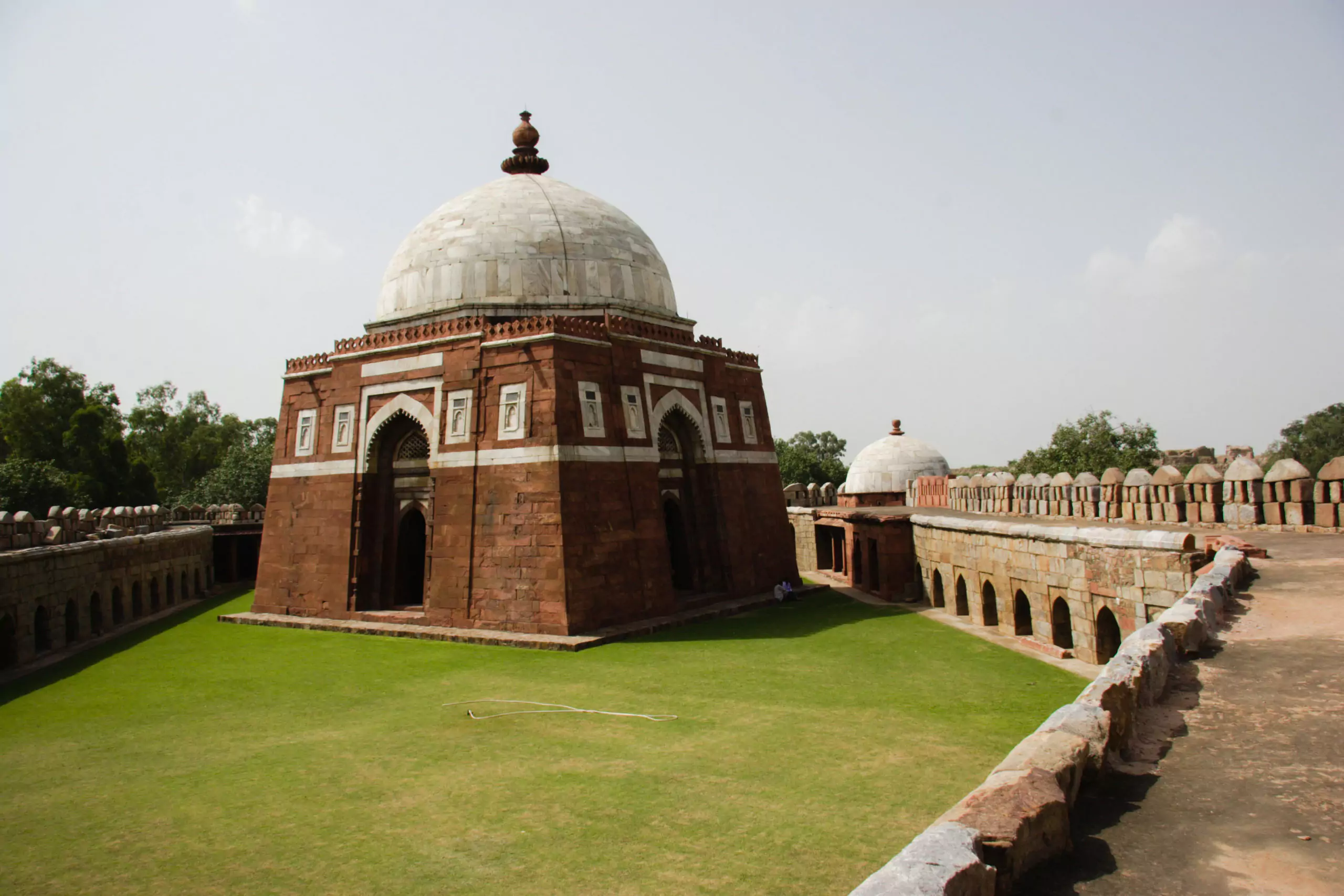
Tughlaqabad Fort
Syllabus Areas:
GS I - Indian Art & Culture
A hidden underground structure within Tughlaqabad Fort, Delhi, has come to light for its mysterious architecture and historical obscurity. The article highlights how this unique site remains undocumented, unexplored, and unacknowledged in mainstream heritage narratives, despite being part of a significant medieval fort.
Background:
- Tughlaqabad Fort was built in the 14th century by Ghiyas-ud-din Tughlaq, the founder of the Tughlaq Dynasty.
- It was intended to serve as a defensive military fortress for the Sultanate of Delhi.
- The fort is now mostly in ruins but retains immense archaeological and architectural value.
- Among its many secretive structures, the underground chambers and tunnels remain the least explored.
Location & Access:
- The underground segment is located within the Tughlaqabad Fort complex, south of Delhi.
- Entry is through an unmarked ground opening that leads to a steep stone stairway.
- The entrance is so inconspicuous that even regular visitors often miss it.
Architectural Features:
- Features arched doorways, long corridors, and side rooms.
- The space is cool, quiet, and stone-walled, with minimal lighting coming from roof vents or holes.
- The passage leads to multiple chambers, possibly used for defense, storage, or secret movement.
Mystery & Lack of Documentation:
- No official signage or ASI (Archaeological Survey of India) documentation explains its purpose.
- Local authorities and guards are also unaware of its historical function.
- The structure is largely ignored by tourism brochures and government heritage listings.
Public Curiosity:
- The author presents this place as a curiosity for Delhi’s heritage walkers and history lovers.
- Raises a question: why is such a monumental space left unexplored and unpreserved?
Underground structures in forts were often used for secret
escape routes, storing
ammunition, or hiding during sieges—this might have served such a
purpose.
Its neglect is
part of a larger problem of under-researched medieval sites in India,
especially those outside
Lutyens’ Delhi. This site reflects the engineering and planning
sophistication of the Tughlaq
era.
Prelims Questions:
- Tughlaqabad Fort was built during the reign of which ruler?
- Alauddin Khilji
- Muhammad bin Tughlaq
- Ghiyas-ud-din Tughlaq
- Firoz Shah Tughlaq
- The architectural style of Tughlaqabad Fort primarily reflects which of the
following
characteristics?
- Mughal grandeur with domes and marble
- Simple Islamic architecture with emphasis on fortification
- Dravidian architecture with temple carvings
- Persian influence with minarets and calligraphy
- Which of the following is a likely historical function of underground
structures in medieval forts like
Tughlaqabad?
- Audience halls for royal gatherings
- Open-air marketplaces
- Secret escape routes and storage chambers
- Public prayer areas
- What is the major concern raised in the article regarding the underground
structure at Tughlaqabad
Fort?
- It is being converted into a museum without public consultation
- It is wrongly attributed to the Mughal era
- It lacks proper documentation, signage, and conservation attention
- It has become a luxury hotel inside the monument
Answer: c) Ghiyas-ud-din Tughlaq
He was the founder of the Tughlaq dynasty and built Tughlaqabad Fort in the early 14th century as a fortified city.
Answer: b) Simple Islamic architecture with emphasis on fortification
Tughlaqabad Fort is known for its rugged, sloped walls and military design prioritizing defense over aesthetics.
Answer: c) Secret escape routes and storage chambers
Underground structures were typically used for strategic purposes like hiding, storing arms or escaping during sieges.
Answer: c) It lacks proper documentation, signage, and conservation attention
The article highlights that the site remains obscure and neglected by authorities despite its historical significance.
Mains Question:
- Discuss the importance of lesser-known structures in preserving Delhi’s medieval heritage. What steps are needed to integrate such sites into India’s cultural tourism strategy? 150 Words 10 Marks