
Supreme Court Stray Dog Order
Syllabus Areas:
GS II - Polity & Governance
GS IV - Ethics
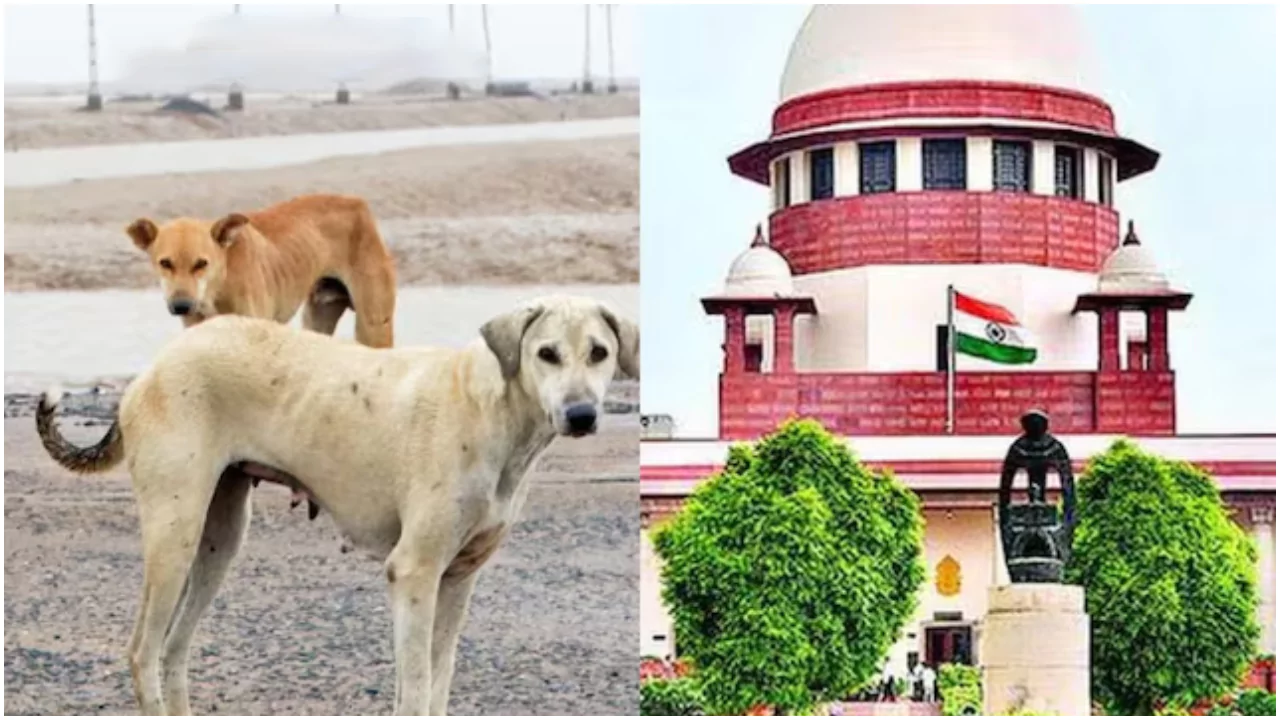
On 11 August 2025, the Supreme Court of India directed the Delhi government, municipal bodies, and police to immediately capture stray dogs in the National Capital Territory (NCT), keep them in shelters, and never release them back on streets.
This has triggered nationwide debate due to legal contradictions, practical challenges, and animal rights concerns.
SC’s Directions
- Stray dogs to be detained in pounds/shelters in the NCT.
- No captured dog to be released back into public spaces.
- At least 5,000 stray dogs to be sheltered within 6–8 weeks.
- Dogs must be sterilised and immunised after capture.
- Dog pounds to have sufficient personnel and be under CCTV surveillance.
- Authorities maintain a record of captured dogs and submit them to court.
- A helpline to report dog attacks must be started, with prompt medical aid for victims.
- “No sentiments should be involved” in the exercise; priority is public safety.
Key Issues & Concerns Highlighted
- Legal Contradictions
- The Animal Birth Control (ABC) Rules under the Prevention of Cruelty to Animals Act prohibit relocation of sterilised dogs from their original territory.
- The Animal Welfare Board of India (AWBI) has reiterated that rules must be followed — relocation violates existing legal provisions.
- Past SC orders have upheld these ABC provisions; the latest order contradicts them.
- Natural Justice Concerns
- Critics point out violation of the principles of audi alteram partem (hear the other side) and speaking for the voiceless — no representation from animal rights groups in the recent hearing.
- Practical Challenges
- Shelter capacity: Delhi lacks adequate infrastructure; creating thousands of shelters in NCR will be near-impossible due to land scarcity and costs.
- Financial burden: Feeding, housing, and employing staff for thousands of dogs will require huge, recurring expenditure.
- Operational hurdles: Continuous capture, sterilisation, vaccination, and care demand sustained manpower and coordination.
- Data Gaps
- The latest stray dog count is from 2019 Livestock Census; Delhi-specific count last done in 2016 — making policy based on outdated numbers.
- Examples of mismatch:
- Tamil Nadu (2019): 4.4 lakh stray dogs, but 3 lakh dog bites recorded — showing inconsistency between population data and incident data.
- Odisha: Highest stray dog population (17.3 lakh) but only 1.7 lakh bites reported.
- Manipur reported zero stray dogs in 2019 census but ~5,500 bite cases in same year.
- Public Health & Safety
- WHO estimates 99% of human rabies deaths are due to dog bites.
- India’s National Action Plan for Dog-Mediated Rabies Elimination (NAPRE) aims to eliminate rabies by 2030 via 70% vaccination coverage sustained for 3 years.
Way Forward – Suggestive Measures
- Align with Existing Law
- Any SC directive must conform to Prevention of Cruelty to Animals Act & ABC Rules to avoid legal ambiguity.
- Strengthen ABC & Vaccination Programmes
- Expand sterilisation and immunisation centres in a mission mode.
- Adopt the Goa model — 70% vaccination coverage reduced rabies cases by 92% and eliminated human rabies deaths.
- Improve Data Quality
- Conduct real-time stray dog census using technology (geo-tagging, mobile surveys) every 2–3 years.
- Integrate hospital bite records with stray dog population mapping.
- Community Involvement
- Rope in RWAs, NGOs, and animal welfare groups for community dog management.
- Promote adoption drives and responsible pet ownership.
- Urban Planning Integration
- Designate open dog parks and feeding zones to reduce human-dog conflict.
- Improve waste management to cut off food sources attracting stray populations.
- Balanced Policy Approach
- Ensure both public safety and animal welfare — avoid mass culling or indiscriminate capture.
- Legal representation for animal welfare bodies in any future hearings.
The SC’s intention — to protect citizens, especially children, from stray dog attacks — is legitimate. However, the present order raises serious legal, logistical, and ethical issues. Sustainable management of stray dogs in India must be data-driven, legally consistent, and humane, focusing on mass vaccination, sterilisation, and community participation rather than large-scale permanent relocation.
A balanced approach will safeguard both public health and animal rights, while aligning with India’s commitment to eliminate rabies by 2030.
Mains Question:
- Suggest a balanced policy framework to address stray dog menace in urban areas without violating ethical and legal norms. 150 Words 10 Marks