Saudi-Pakistan Pact
Syllabus Areas: GS II - International relations
GS III - Security
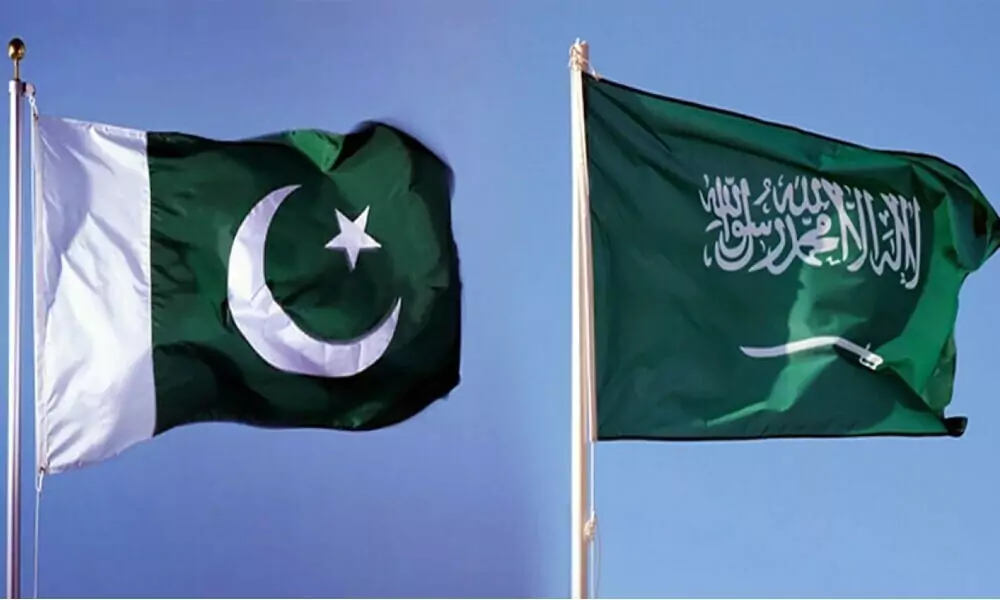
Saudi Arabia and Pakistan have signed a mutual defence pact, formally committing to collective defence and permanent military coordination. The agreement comes days after Israel’s bombing of Qatar, amid growing doubts over U.S. security guarantees to Gulf monarchies. It signals a shifting regional order, where Saudi Arabia is hedging against strategic vulnerabilities, while Pakistan is leveraging its military manpower for economic and geopolitical gains.
Background
- Long-standing cooperation:
Pakistan has deployed military personnel in Saudi Arabia since the 1960s, assisting in training and guarding sensitive sites. - Nuclear linkages:
Saudi Arabia has reportedly provided financial support to Pakistan’s nuclear programme. In Bob Woodward’s book (2024), MBS was quoted as saying: “I don’t need uranium to make a bomb. I will just buy one from Pakistan.” This reflects deep security ties. - Past crises and lessons:
- 2019: Drone and missile attacks by Iran-backed Houthis on Saudi Aramco facilities exposed Riyadh’s vulnerability.
- S. reluctance: Washington refrained from direct retaliation, highlighting its declining appetite to defend Gulf monarchies.
- Regional flux:
- Israel’s Gaza war has derailed Saudi–Israel normalisation talks under the Abraham Accords.
- Houthis in Yemen continue to disrupt Gulf oil and shipping despite a fragile ceasefire.
- The U.S. is pivoting strategically to East Asia, leaving Gulf monarchies uncertain about their security umbrella.
This backdrop explains why Riyadh is formalising military ties with Islamabad now.
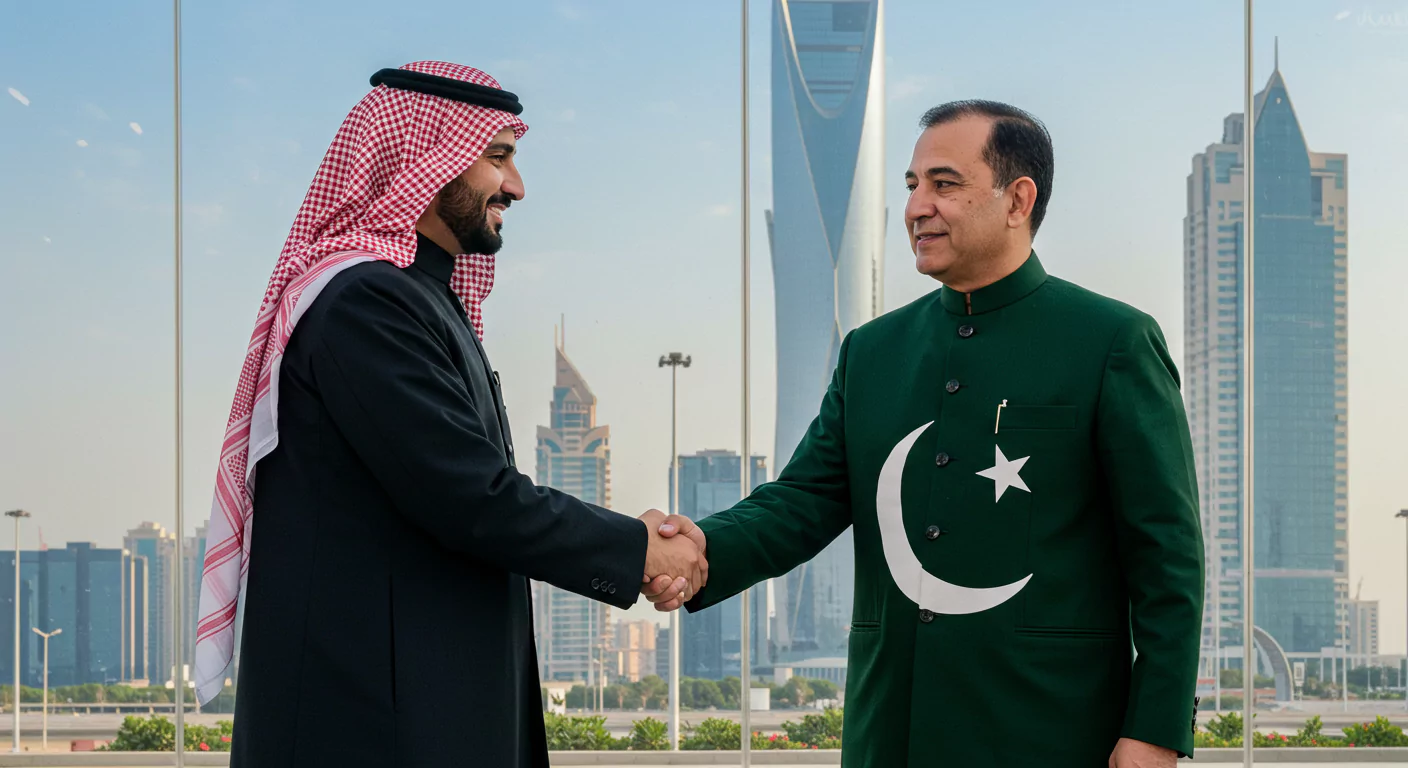
Key Terms of the Agreement
- Collective Defence Principle
- “Any aggression against either country shall be considered aggression against both.”
- Effectively a mutual defence commitment.
- Permanent Coordination Mechanisms
- Establishment of a joint military committee.
- Enhanced intelligence sharing.
- Expanded military training programmes.
- Troop Presence
- Pakistan’s military personnel, already stationed in Saudi Arabia, will now operate under a formal treaty framework.
- Nuclear Ambiguity
- No explicit mention of nuclear sharing.
- But Pakistan’s Defence Minister has hinted that Saudi Arabia could access Pakistan’s nuclear capabilities if required.
Why Now? – The Timing
- Israeli bombing of Qatar (Sept 2025) raised alarm: Qatar hosts Al-Udeid airbase, the largest U.S. facility in West Asia. The attack went unanswered by the U.S., showing limits of American guarantees.
- S. retrenchment: Washington’s focus is shifting towards China and the Indo-Pacific, leaving Gulf security on the backburner.
- Regional insecurity:
- Gaza war has destabilised the region.
- Houthis remain a potent force in Yemen, threatening Saudi oil and maritime security.
- Strategic hedging: Saudi Arabia cannot rely solely on the U.S. and is now diversifying by turning to Pakistan.
Implications for West Asia’s Security Landscape
- Shift in balance: Saudi Arabia signals to both Washington and Tel Aviv that it will diversify its security partners.
- Abraham Accords in doubt:
- Saudi Arabia says normalisation with Israel depends on creation of a Palestinian state (1967 borders).
- Israel outright rejects this → future of accords uncertain.
- Pakistan as security provider: Strengthens its role in the Gulf, projecting military manpower in exchange for financial support.
- Risks involved:
- Pakistan could get entangled in Saudi–Iran rivalry or Yemen war.
- Saudi Arabia could be dragged into South Asian instability if India–Pakistan tensions escalate.
- Pact doesn’t solve Saudi Arabia’s biggest threats: Iranian missiles and Houthi drones.
Implications for India
- India–Saudi ties at stake
- Over the past decade, India has deepened energy, trade, and counter-terrorism cooperation with Saudi Arabia.
- 6 million Indian expatriates live in the kingdom, making stability critical.
- Pro-Israel tilt vs Pro-Pakistan tilt
- India’s policy has tilted towards Israel in recent years.
- Saudis may now balance this with a tilt towards Pakistan.
- Strategic challenges
- Pakistan may strengthen its standing in the Gulf as a credible security provider, undermining India’s influence.
- Regional instability could impact India’s energy security, diaspora safety, and counter-terrorism priorities.
- Policy response
- India must acknowledge that U.S. dominance in West Asia is no longer guaranteed.
- Adopt a balancing strategy:
- Deepen economic and political ties with Riyadh.
- Engage with other Gulf states and Iran.
- Maintain flexibility to safeguard its long-term interests.
Way Forward for India
- Acknowledge that S. dominance in West Asia is no longer guaranteed.
- Regional security arrangements are being reconfigured.
- India should:
- Maintain balance in relations with Riyadh.
- Deepen economic & political engagement with Gulf monarchies.
- Keep channels open with Iran and others.
- Focus on stability and balance to secure energy, diaspora, and anti-extremist interests.
The Saudi–Pakistan defence pact reflects a geopolitical realignment in West Asia. Saudi Arabia, wary of declining U.S. reliability and rising regional insecurity, is turning to Pakistan as a supplementary security partner. Pakistan, facing economic distress, is leveraging its military manpower to re-enter Gulf geopolitics.
For India, the pact is a warning sign—its pro-Israel tilt could reduce its leverage in Riyadh. New Delhi’s best course lies in pragmatic balancing, ensuring its economic, energy, and diaspora interests are protected in an increasingly volatile region.
Mains Questions:
- Critically analyse the potential impact of the Saudi–Pakistan defence pact on India’s strategic interests in West Asia. (15 Marks)
- “The Saudi–Pakistan defence pact reflects the shifting security architecture of West Asia.” Examine the strategic drivers behind the agreement and its implications for regional stability. (15 Marks)
- How does the Saudi–Pakistan mutual defence pact complicate South Asia’s security environment, particularly in the context of India–Pakistan relations? (10 Marks)