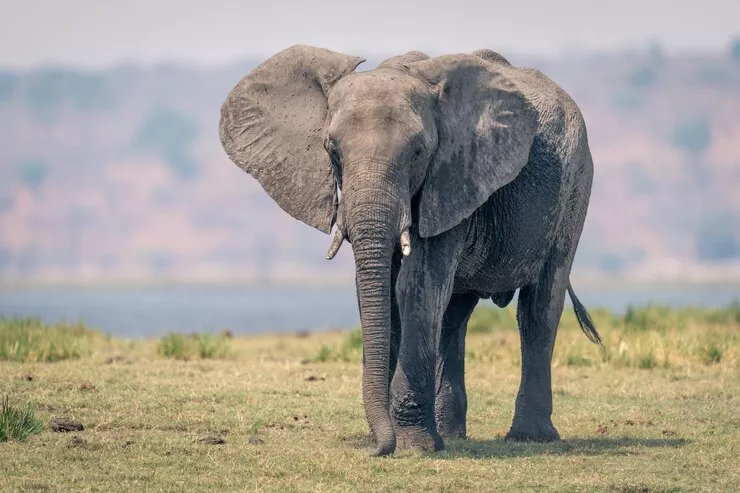
Project Elephant Phase I: Census in Northeast
Phase I of the synchronized elephant population estimation across the Northeastern states has been successfully completed, as noted in the 21st meeting of Project Elephant’s steering committee chaired by Environment Minister Bhupender Yadav in Dehradun.
- Field teams collected over 16,500 elephant dung samples, enabling reliable population estimation through DNA analysis
- The last nationwide census was in 2017 (~29,964 elephants); a draft 2022–23 report indicated a ~20 % drop, though it was shelved due to delays in the Northeast
These data form the basis for targeted conservation, human‑elephant conflict mitigation, and habitat protection. The steering committee also recommended including sloth bear and gharial under species recovery under Project Elephant
Railway Collision Mapping & Mitigation
To reduce elephant-train collisions, officials have examined 3,452.4 km of sensitive railway stretches and identified 77 high-risk sections, primarily in forested landscapes
Technological & Structural Solutions
- AI-powered Intrusion Detection Systems (IDS/EIDS):
- Northeast Frontier Railway piloted an IDS across 11 elephant corridors using optical-fibre-based acoustic sensors, generating ~41 daily alerts, and maintaining zero elephant collisions since Dec 2022
- Chakradharpur division under South Eastern Railway (SER) trialed a similar system along the Howrah–Mumbai mainline using DAS technology worth ₹15 cr, mapping elephant activity on stretches like Saranda, Porahat, Dalma forests.
- EIDS trials on June 15–16 in Barabamboo–Chakradharpur–Lotapahar yielded positive results; full rollout in high-risk zones is expected soon
- Other mitigation:
- Construction of ramps, underpasses, vegetated overpasses in Assam, West Bengal, Deepor Beel, Pench–Kanha corridor
- Sensor-based speed regulation, permanent speed restrictions (30–50 km/h) in NFR, rail-forest department capacity building
Impact So Far
- In the NFR zone, IDS detected 9,768 intrusion alerts (≈41/day) without a single elephant fatality since December 2022
- SER saw 9 elephant deaths between Aug 2018–May 2024 in Kolhan; IDS deployment aims to eliminate such incidents going forward
- Between 2019–20 and 2023–24, 73 elephant fatalities were formally recorded across India due to train collisions
Strategic Perspective
- The census provides essential baseline data to analyze elephant population trends, corridors, and conflict zones—critical for policy and field action.
- The mapping of sensitive stretches, along with emerging AI‑based systems and infrastructure retrofitting, represents a high‑tech and multisector approach—bringing railways, wildlife agencies, and conservation bodies together.
- Early indications of positive outcomes in Northeast and SER zones highlight that technology-driven alerts coupled with speed regulation can substantially cut elephant mortality.
Way Forward
- AI system expansion: Extend IDS/EIDS coverage across all 77 identified hotspots—ongoing in SER and planned across Northeast.
- Infrastructure: Build more overpasses/underpasses and retain vegetative cover to influence elephant movement patterns favorably.
- Coordination & data: Engage Indian Railways, Environment Ministry, WII, and state forest departments via unified monitoring platforms (e.g., WII portal), with regular inter-agency reviews
- Awareness & training: Sensitize railway staff and field forest teams, embed wildlife‑train safety protocols in operations