Project Cheetah and the Shift from Kuno to Banni Grasslands
Syllabus Areas:
GS III - Environment and Ecology
Cheetahs, once native to India, were officially declared extinct in 1952 due to hunting, habitat loss, and lack of prey. After seven decades, Project Cheetah was launched in 2022 with the aim of reintroducing cheetahs into Indian ecosystems by translocating them from African countries such as Namibia and South Africa. However, the initiative faced setbacks, leading to the exploration of new habitats like the Banni grasslands in Gujarat.
Why in News?
- Kuno National Park in Madhya Pradesh, the original site for cheetah reintroduction, proved unsuitable for sustaining the African cheetahs.
- Of the 20 cheetahs initially introduced, 10 died due to various environmental and ecological challenges.
- In response, the authorities have identified the Banni grasslands in the Kutch district of Gujarat as an alternative, more suitable habitat.
- The move is part of a new strategic plan based on lessons learned from the earlier failures at Kuno.
Project Cheetah:
- First intercontinental large carnivore translocation project in the world.
- Aimed at restoring India’s ecological balance by reintroducing the cheetah, the only large carnivore that India lost post-Independence.
- Involves long-term planning for habitat suitability, prey base development, monitoring, and breeding.
Habitat Suitability:
- A species can only thrive in a habitat that supports its physiological, ecological, and behavioral needs.
- Factors include prey availability, terrain type, climate, vegetation, and space for territory.
Species-Habitat Matching:
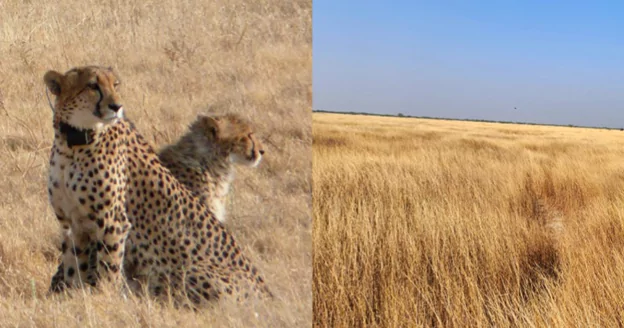
- African cheetahs are adapted to vast open savannahs with low grass and abundant prey — conditions not found in Kuno but seen in Banni.
Carrying Capacity:
- The maximum number of individuals of a species that a habitat can support without degradation.
- Kuno’s carrying capacity for cheetahs was limited due to prey scarcity and space constraints.
Anthropogenic Pressure:
- Human activities near wildlife habitats (settlements, grazing, tourism, etc.) can cause stress and limit the free movement of animals.
Challenges Faced in Kuno National Park
- Ecological Mismatch: Kuno is a forested landscape, not a grassland ecosystem. African cheetahs require open plains to utilize their speed for hunting.
- Limited Area: Kuno has a confined forest patch, limiting the home range required for multiple cheetahs.
- Prey Base Deficiency: Inadequate numbers of prey animals like chinkara and blackbuck.
- Health & Adaptation: Cheetahs faced climate-related infections and adaptation issues.
- Human Disturbance: Proximity to human activity made it difficult for the cheetahs to adapt and thrive.
- High Mortality Rate: 10 cheetahs died, and many cubs born in the wild did not survive.
Why Banni Grasslands Are Chosen
- India’s Largest Grassland: Covers around 2,618 sq. km.
- The Banni grasslands are a unique arid grassland ecosystem located in the Kutch district of Gujarat, India, bordering the Rann of Kutch.
- Savanna-like Terrain: Features short grasses, soft soil, high temperatures, and low rainfall — similar to African cheetah habitats.
- Prey Abundance: Rich in biodiversity with species like deer, blackbucks, and other herbivores.
- Low Human Density: Less anthropogenic pressure allows better wildlife movement.
- Infrastructure Development:
- 500-acre breeding center has been set up.
- High fencing enclosures for safety and acclimatization.
- Drone and CCTV surveillance for monitoring.
- Training programs for forest officials.
Current Status
- 24 cheetahs (including 12 cubs) remain in Kuno.
- Authorities plan to relocate 10 cheetahs in the first phase to Banni grasslands.
- Long-term objective: Establish a stable, free-ranging cheetah population in suitable Indian habitats.
Broader Significance
- Ecological Restoration: Restoring lost species enhances biodiversity and strengthens ecological functions.
- Conservation Model: Serves as a model for future species reintroductions (e.g., Great Indian Bustard, Asiatic Lion).
- International Cooperation: Involves collaboration with Namibia and South Africa.
- Public Awareness: Symbolic species like cheetahs boost interest in wildlife conservation.
Project Cheetah is a bold conservation attempt to right a historical ecological wrong. The early setbacks in Kuno serve as a crucial learning curve. The shift to Banni grasslands indicates a pragmatic course correction rooted in scientific reasoning and ecological compatibility. If implemented with careful monitoring and adaptive management, India could once again become home to a sustainable cheetah population.
Prelims Questions:
- Consider the following statements regarding Project Cheetah:
- It is India’s first intercontinental large carnivore translocation project.
- The Asiatic cheetahs reintroduced under the project were sourced from African countries.
- Kuno National Park was selected because it had an existing cheetah population earlier.
- 1 only
- 1 and 2 only
- 2 and 3 only
- 1, 2 and 3
- Statement 1 is correct.
- Statement 2 is incorrect because African cheetahs (not Asiatic) were brought from Namibia and South Africa.
- Statement 3 is incorrect. Kuno never had cheetahs; it was selected due to the availability of forest land and relocation of villages, not prior cheetah population.
- Which of the following ecological features make Banni Grasslands suitable
for cheetah
reintroduction?
- Presence of short grasses and open plains
- Abundance of natural prey species like blackbuck and chinkara
- High human population density for community-based conservation
- Low rainfall and high temperatures resembling African savannas
- 1 and 2 only
- 1, 2 and 4 only
- 2, 3 and 4 only
- 1, 2, 3 and 4
- Statement 3 is incorrect: Low human density, not high, makes the area better suited for wildlife.
- Remaining statements are correct and reflect the ecological suitability of Banni for cheetahs.
- With reference to the difference between African and Asiatic Cheetahs,
consider the following
statements:
- African cheetahs prefer savanna-type grasslands, while Asiatic cheetahs prefer arid desert landscapes.
- Asiatic cheetahs are genetically closer to Indian cheetahs that went extinct in 1952.
- African cheetahs are naturally found in India’s semi-arid forests.
- 1 and 2 only
- 2 only
- 1, 2 and 3
- 1 and 3 only
- Statement 3 is incorrect — African cheetahs are not naturally found in India; they were introduced.
Which of the above statements is/are correct?
Answer:A
Explanation:
Select the correct answer using the code below:
Answer:B
Explanation:
Which of the statements given above is/are correct?
Answer:B
Explanation:
Mains Question:
Q. Critically examine the challenges and prospects of Project Cheetah in restoring extinct species through intercontinental wildpfe translocation in India. 150 Words 10 Marks