Plastic Treaty Negotiations (UNEP 2024)
Overview:
The United Nations Environment Programme (UNEP) initiated the Plastic Treaty Negotiations to address the escalating plastic pollution crisis. The treaty aims to create a legally binding agreement that covers the entire lifecycle of plastics, from production to disposal. By 2024, the treaty seeks to limit plastic pollution, particularly in marine environments, through both binding and voluntary measures.
Key Concepts and Technical Terms:
- Plastic: A synthetic material made from polymers derived from fossil fuels like crude oil and natural gas. It is widely used due to its durability and cost-effectiveness but is a major pollutant due to its non-biodegradability.
- Microplastics:
- Primary Microplastics: Manufactured as microbeads, pellets, or fibers found in cosmetics and detergents.
- Secondary Microplastics: Formed from the degradation of larger plastics through environmental factors like sunlight and waves.
- Plastic Lifecycle: Refers to the stages from raw material acquisition to the final disposal of plastic products.
- Extended Producer Responsibility (EPR): A policy approach where producers are responsible for the entire lifecycle of their plastic products, including recycling and disposal.
- Circular Economy: An economic model aimed at minimizing waste by reusing and recycling materials, as opposed to a linear "take-make-dispose" approach.
- Greenhouse Gas (GHG) Emissions: Plastics account for 3.6% of global emissions, mainly from fossil fuel-based production. Emissions could increase by 20% by 2050.
- Polluter-Pays Principle: The principle that those responsible for pollution should bear the costs of managing it to prevent damage to human health and the environment.
Objectives and Scope of the Plastic Treaty
- Objective: To end plastic pollution in marine environments to safeguard human health and the environment.
- Scope: The treaty applies to the entire plastic lifecycle and aims
to:
- Limit plastic production and consumption.
- Improve waste management systems.
- Ensure the safe use of chemicals in plastics.
- Promote circular economy practices.
Timeline of Key Events in Plastic Treaty Negotiations (UNEP 2024)
This timeline tracks the key milestones of the Plastic Treaty Negotiations led by the United Nations Environment Programme (UNEP), from the establishment of expert groups to the final negotiations. Each event is explained in detail, highlighting its significance, key outcomes, and role in shaping the treaty.
2017: UN Environment Assembly (UNEA) Established an Expert Group on Marine Litter
Context:
The rise in marine plastic pollution, especially microplastics, became a global concern in the early 2010s. Plastics were found in oceans, harming marine life and entering the food chain.
Event:
- At the Third Session of UNEA (UNEA-3), held in Nairobi, Kenya, member states established an Expert Group on Marine Litter and Microplastics to assess the sources, impacts, and solutions to marine plastic pollution.
- The group comprised scientists, policymakers, and industry representatives who provided evidence-based recommendations to reduce marine litter.
Key Outcomes:
- The group concluded that plastic pollution required global action beyond voluntary measures.
- It recommended creating an international framework with legally binding obligations to prevent plastic pollution from land-based and marine sources.
Significance:
This initiative laid the
foundation for future
discussions on a legally binding
treaty, recognizing that marine plastic pollution could not be solved through national
efforts alone.
2022: UNEA Adopted Resolution 5/14 to Develop a Legally Binding Treaty by 2024
- Context:
- Event:
- At UNEA-5.2, held in Nairobi, member states adopted Resolution 5/14, titled “End Plastic Pollution: Towards an International Legally Binding Instrument”.
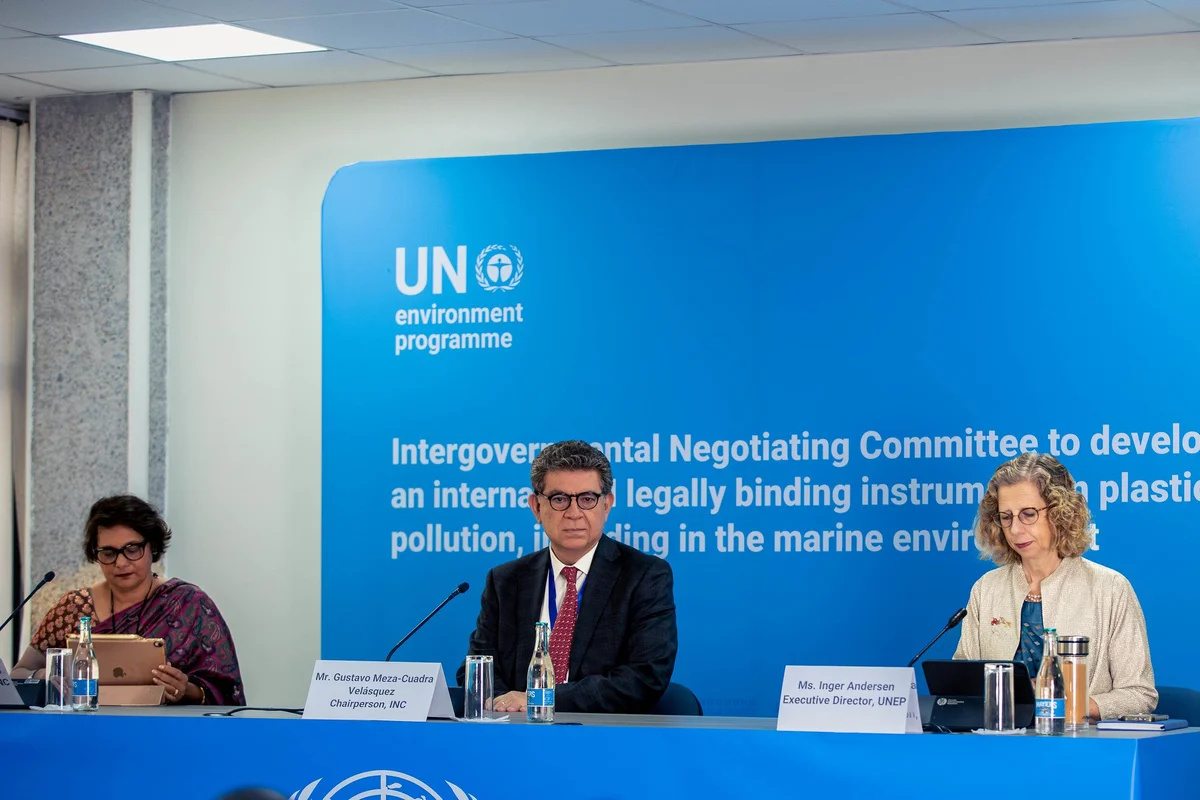
- The resolution mandated the establishment of an Intergovernmental Negotiating Committee (INC) to develop a global treaty addressing the full lifecycle of plastics, from production to disposal.
- Key Components of Resolution 5/14:
- Develop a legally binding instrument by 2024 with both mandatory and voluntary measures.
- Ensure that the treaty covers the entire lifecycle of plastics.
- Address plastic pollution in marine environments and support developing countries with financial and technical resources.
- High Ambition Coalition (HAC):
- A group of over 60 countries, including Rwanda, Peru, the European Union, Japan, and Pacific Island nations, formed the High Ambition Coalition.
- Their goal: End plastic pollution by 2040 by reducing plastic production, phasing out single-use plastics, and promoting a circular economy.
- Significance:
- Resolution 5/14 was a turning point in global environmental governance, marking the first time nations committed to legally binding measures against plastic pollution.
- The resolution set a clear deadline of 2024 to finalize the treaty, accelerating negotiations and international collaboration.
By 2022, plastic production had reached over 400 million tonnes annually, with only 9% being recycled. Plastic pollution was found in oceans, soil, and even human bloodstreams, highlighting the need for urgent action.
2023: Drafting of the “Zero Draft” Treaty Began at INC-3 in Nairobi
- Context:
- Event:
- INC-3 was held in Nairobi, Kenya, from November 13–19, 2023.
- Delegates focused on defining key provisions of the treaty, including production limits, single-use plastics, chemical transparency, and waste management.
Following INC-1 (Uruguay, 2022) and INC-2 (Paris, 2023), negotiators began drafting the first version of the treaty, known as the “Zero Draft”. This draft incorporated proposals from governments, industries, and civil society groups.
- Key Issues Discussed:
- Production Limits:
- High Ambition Coalition: Proposed reducing plastic production by 40% by 2040 (baseline: 2025).
- Petrochemical-Producing Nations (Saudi Arabia, Iran, China): Opposed production caps, citing economic dependence.
- Single-Use Plastics:
- Countries debated phasing out items like plastic bags, straws, and cutlery. The draft proposed banning these products globally.
- Chemical Transparency:
- The draft included mandatory disclosure of hazardous chemicals in plastic production. Petrochemical industries preferred voluntary disclosure.
- Extended Producer Responsibility (EPR):
- The EU supported a global EPR system, holding plastic producers accountable for waste management.
- The USA and India advocated for national-level EPR systems.
- Stakeholder Positions:
- Petrochemical Industry: Opposed production caps, emphasizing waste management improvements.
- Consumer Brands (Unilever, PepsiCo, Walmart): Supported production limits and product design requirements.
- Civil Society (GAIA): Advocated for legally binding obligations to reduce plastic production.
- Production Limits:
- Outcome:
- The “Zero Draft” was finalized, proposing:
- Caps on virgin plastic production.
- Bans on harmful single-use plastics.
- Mandatory recycling targets.
- Improved waste management systems.
- However, disagreements over production limits and financial mechanisms remained unresolved.
- The “Zero Draft” was finalized, proposing:
- Significance:
- INC-3 marked a transition from conceptual discussions to concrete negotiations.
- The “Zero Draft” provided a foundation for the final treaty, which would be refined in subsequent sessions.
2024: Final Negotiations at INC-5 in Busan, South Korea
- Context:
By 2024, plastic production had continued to rise, with projections indicating a 20% increase in greenhouse gas emissions from plastics by 2050.
- INC-4 (Ottawa, Canada, April 2024) had focused on strengthening the Zero Draft, but key issues like production limits, financing, and chemical regulations remained contentious.
- Event:
- INC-5 was held in Busan, South Korea, from November 25–December 1, 2024.
- This final session aimed to reach a consensus on the treaty’s key provisions, balancing the interests of developed and developing nations.
- Key Issues Finalized:
- Plastic Production Limits:
- A compromise was reached to reduce virgin plastic production by 30% by 2040, with flexibility for developing countries.
- Single-Use Plastics:
- A global phase-out of the most harmful single-use plastics was scheduled to begin in 2025.
- Chemical Regulations:
- Mandatory disclosure of hazardous chemicals was included, despite resistance from petrochemical industries.
- Extended Producer Responsibility (EPR):
- A hybrid approach was adopted, combining global guidelines with national implementation.
- Financial Mechanisms:
- Developed countries committed to providing financial and technological support to developing nations for waste management and sustainable plastic alternatives.
- Stakeholder Commitments:
- Petrochemical Industry: Agreed to voluntary measures but continued to oppose production caps.
- Consumer Goods Companies: Committed to reducing plastic packaging and supporting recycling initiatives.
- Civil Society: Welcomed the legally binding measures but called for stricter enforcement.
- Outcome:
- The final draft of the Plastic Treaty was adopted, marking a historic milestone in global environmental governance.
- The treaty would be opened for signature in 2025, with implementation beginning in 2026.
- Significance:
- INC-5 concluded the negotiation process, fulfilling the mandate of UNEA Resolution 5/14.
- The treaty’s success depended on global cooperation, with countries required to submit progress reports and update their commitments regularly.
- Plastic Production Limits: