New Wildlife Corridors & Forest Conservation Initiatives in India
India has demonstrated a strong commitment to strengthening wildlife conservation and expanding protected areas through innovative wildlife corridors and forest protection programs. The period between 2024 and 2025 marks a significant phase of ecological restoration, habitat connectivity, and strategic conservation.
This detailed report covers
- Newly created and expanded wildlife corridors
- Expansion of national
- parks, wildlife sanctuaries, and biosphere reserves
- Key government policies and legislative reforms
- Community and international partnerships
- Challenges and future strategies
Current Status of Protected Areas (As of 2024)
According to the Wildlife Institute of India, India has made consistent progress in increasing the number of protected areas and forest cover:
- 574 Wildlife Sanctuaries – 3.87% of the country’s area
- 310 Community Reserves – 0.26%
- 145 Conservation Reserves – 0.21%
- 104 National Parks – 1.23%
- Total Protected Areas:1,135 (Covering 5.69% of India's land area)
India aims to increase protected area coverage to 8% of its total land by 2030 as part of its National Biodiversity Action Plan.
New and Expanded Wildlife Corridors (2024–2025)
Wildlife corridors are critical for improving genetic diversity, reducing human-wildlife conflict, and ensuring safe wildlife migration routes. India's wildlife corridor network has seen major expansions in 2024, with several new corridors planned for 2025.
- Kanha-Pench Tiger Corridor (Madhya Pradesh–Maharashtra)
- One of the largest tiger corridors in the world, covering over 16,000 sq. km.
- Expanded by 250 sq. km in 2024 to improve tiger movement and gene flow.
- Over 5,000 hectares of degraded land have been reforested with native vegetation.
- Installation of camera traps and AI-based monitoring to track tiger movement and prevent poaching.
- Nilgiris-Sathyamangalam Elephant Corridor (Tamil Nadu, Kerala,
Karnataka)
- Expanded by 150 sq. km in 2024.
- Strategic elephant migration route between Mudumalai Tiger Reserve, Bandipur National Park, and Silent Valley National Park.
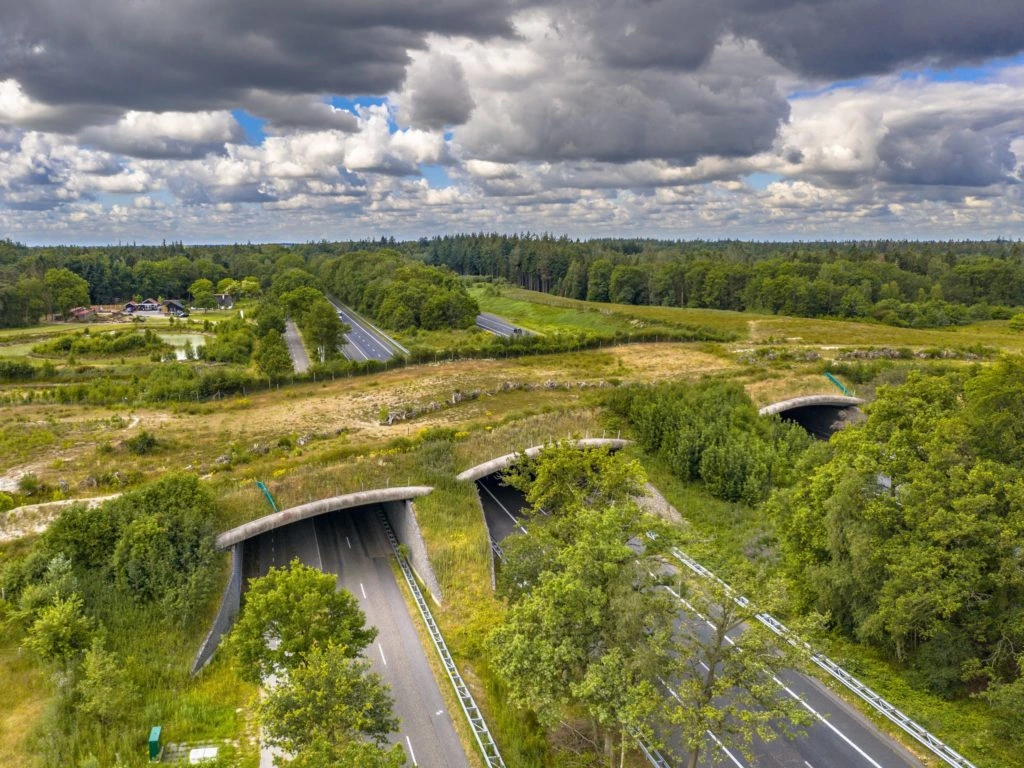
- Construction of 5 new eco-bridges to prevent road-related wildlife deaths.
- Over 12 villages relocated under the Compensatory Afforestation Plan.
- Kaziranga–Karbi Anglong Corridor (Assam)
- Expanded by 250 hectares in early 2024.
- Critical for rhino and elephant migration between Kaziranga National Park and Karbi Anglong Hills.
- Establishment of new guard posts and patrol units to combat poaching.
- Improved flood-prevention infrastructure to protect wildlife during monsoons.
- Rajaji-Corbett Tiger Corridor (Uttarakhand)
- Expanded by 100 sq. km in 2024.
- Strengthens connectivity between Rajaji National Park and Corbett Tiger Reserve.
- Reforestation of 3,500 hectares with native tree species to provide shelter and prey base for tigers.
- Introduction of wildlife underpasses along major highways to prevent tiger and elephant road deaths.
- Western Ghats Wildlife Corridor (Kerala, Karnataka, Goa)
- Strengthened through the addition of 75 sq. km in 2024.
- New corridor connects Bandipur, Wayanad, and Silent Valley National Parks.
- Focus on protecting endangered species such as the Nilgiri Tahr and Lion-Tailed Macaque.
- Funded by the Global Environment Facility (GEF) and World Wildlife Fund (WWF).
- Eastern Ghats Corridor (Odisha, Andhra Pradesh)
- Over 60 sq. km of land added to the corridor in early 2024.
- Increased focus on protecting the Indian pangolin and sloth bear
- Community-based forest protection initiatives implemented to reduce illegal logging.
Expansion of Protected Areas (2024–2025)
- New National Parks and Tiger Reserves
- Raigad National Park (Maharashtra) – 350 sq. km
- Pilibhit Tiger Reserve (Uttar Pradesh) – Expanded by 100 sq. km
- Dampa Tiger Reserve (Mizoram) – Expanded by 50 sq. km
- Bhitar Kanika National Park (Odisha) – 200 sq. km expansion
- New Conservation Reserves
- Garo Hills Conservation Reserve (Meghalaya) – 1,200 sq. km (planned for 2025)
- Sundarbans Mangrove Conservation Reserve (West Bengal) – 500 sq. km (planned for 2025)
- Kalakkad–Mundanthurai Conservation Reserve (Tamil Nadu) – 120 sq. km (announced in 2024)
Forest Conservation and Reforestation Initiatives
- Green India Mission (Expanded)
- ₹5,000 crores ($600 million) allocated for 2024–2025.
- Goal to afforest 3 million hectares of degraded land.
- Focus on carbon sequestration, biodiversity improvement, and water conservation.
- National Afforestation Program (NAP)
- Focused on increasing forest cover in tribal and backward areas.
- Over 700 sq. km of afforestation completed in 2024.
- Involves 30,000+ community forest committees.
Key Policy and Legislative Developments
- Wildlife Protection Act Amendment (2024)
- Increased penalties for wildlife poaching and trafficking.
- Introduction of stricter guidelines for setting up eco-tourism projects in protected areas.
- Provision for rapid approval of wildlife corridors and buffer zones.
- National Forest Policy (Updated in 2024)
- Aims to increase India's forest cover to 33% of total land area by 2030.
- Mandates that at least 5% of forested land remains undisturbed by human activity.
Community and International Collaboration
Community-Based Forest Management (CFM)
- Over 15,000 tribal families are involved in forest protection.
- Training programs for sustainable bamboo cultivation and medicinal plant harvesting.
International Partnerships
- WWF → Supported elephant corridors in the Western Ghats.
- UNEP: Funding for wildlife monitoring and AI-based poaching prevention.
- GEF → Funding for mangrove restoration in the Sundarbans.
Challenges and Risks
- Human-Wildlife Conflict
- Increased tiger and elephant attacks on human settlements.
- Encroachment of wildlife corridors due to infrastructure development.
- Poaching and Illegal Wildlife Trade
- Rise in illegal rhino and tiger poaching despite stronger surveillance.
- Climate Change
- Habitat loss due to rising temperatures and erratic rainfall.
- Increased forest fires in protected areas.
Strategic Takeaways
- India's expansion of wildlife corridors and protected areas reflects a long-term strategic vision for biodiversity conservation.
- Increased funding for AI-based monitoring and anti-poaching initiatives is enhancing wildlife protection.
- International collaboration with WWF and UNEP strengthens India's conservation capacity.
- Focus on community-based conservation ensures local support and sustainability.
India’s ambitious expansion of wildlife corridors and forest conservation projects in 2024–2025 marks a major shift toward sustainable environmental governance. The combination of increased funding, advanced technology, and community involvement positions India as a global leader in wildlife and forest conservation.
Handling multiple papers?