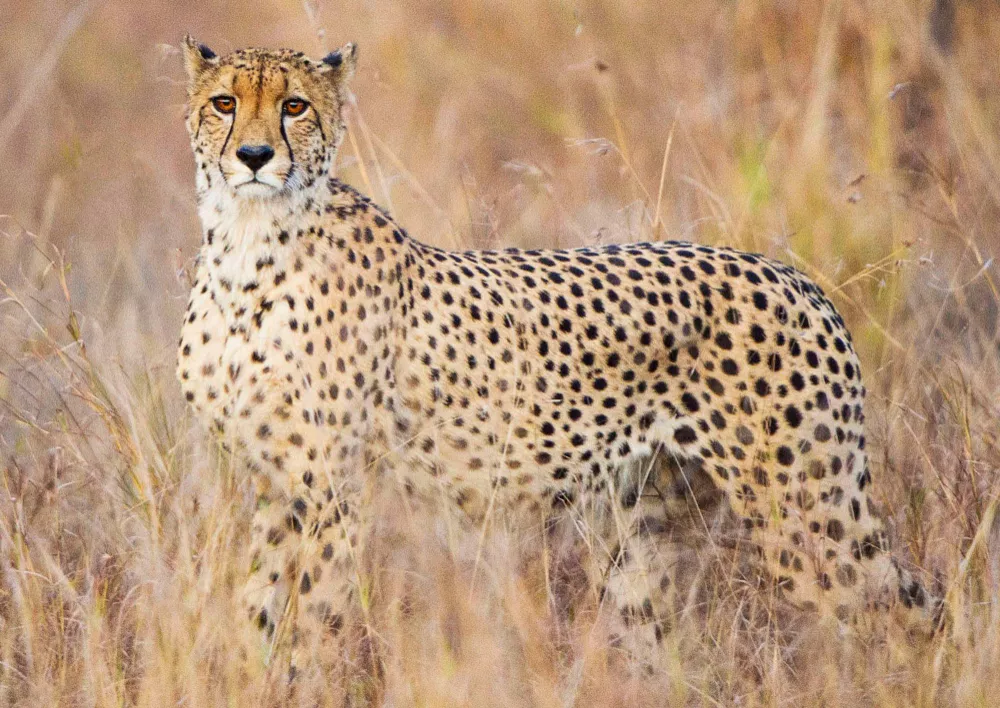
New Cheetahs from Botswana
Syllabus Areas:
GS III - Environment and Ecology
India is set to receive eight new cheetahs from Botswana by mid-December 2025 as part of the ongoing Project Cheetah. The move aims to strengthen the reintroduction programme after mixed success with earlier batches in Madhya Pradesh’s Kuno National Park. This step rekindles India’s 70-year effort to restore a vanished predator and balance its grassland ecosystem.
Historical Background
- The Asiatic cheetah (Acinonyx jubatus venaticus) once ranged widely across India, from Punjab to Tamil Nadu.
- The species went extinct in India by 1952, mainly due to hunting, habitat loss, and prey depletion.
- India is the first country globally to attempt cheetah reintroduction after local extinction.
- The idea traces back to the 1970s, but only materialised in 2022, when 8 African cheetahs from Namibia were brought to Kuno, followed by 12 from South Africa in 2023.
Project Cheetah – Overview
- Launched: 17 September 2022
Implementing Agency: National Tiger Conservation Authority (NTCA) with support from MoEFCC, Wildlife Institute of India, and state governments. - Objective: Reintroduce cheetahs in India to restore open-forest and grassland ecosystems, enhance biodiversity, and promote eco-tourism.
- Total plan: 50 cheetahs to be introduced over 5 years.
- Current location: Kuno National Park (Madhya Pradesh). Future sites proposed: Gandhi Sagar, Nauradehi, Mukundara Hills, Shahgarh Bulge.
Why Botswana?
Botswana hosts one of the largest wild cheetah
populations in
Africa.
The upcoming transfer is meant to:
- Broaden the genetic base of the Indian cohort.
- Replace mortality losses (some cheetahs died due to heat stress, infections, territorial fights).
- Deepen bilateral conservation cooperation between India and southern African nations.
Environmental & Ecological Perspectives
- Ecosystem Restoration: Cheetahs are apex predators shaping prey behaviour and vegetation patterns. Their return could stabilise India’s dry grassland and scrub ecosystems, often neglected in conservation compared to forests.
- Biodiversity Cascade: Reintroducing cheetahs can indirectly aid populations of blackbuck, chinkara, and bustards by improving habitat protection measures.
- Climate & Habitat Concerns: However, climate variance between southern Africa and central India challenges cheetah adaptation—Kuno’s warmer, more humid summers differ from Botswana’s semi-arid climate.
- Human-Wildlife Interface: Cheetahs are less prone to livestock conflict than leopards or tigers, but require large, disturbance-free territories. Habitat fragmentation and proximity of villages around Kuno remain major risks.
Geographical Perspective
- Kuno National Park (Madhya Pradesh) lies in the northern part of the Deccan Plateau, within the semi-arid zone of India’s biogeographic classification (Zone 4).
- The region forms a transition between tropical dry deciduous forests and thorn scrub, ideal for open-habitat species.
- The Chambal River basin nearby offers additional ecological corridors that can support herbivore populations essential for cheetahs’ prey base.
- Long-term success depends on landscape connectivity—linking Kuno to other grassland tracts in Rajasthan and Gujarat to avoid genetic isolation.
Challenges & Criticisms
- Limited carrying capacity of Kuno (estimated 20-25 cheetahs only).
- Prey density is insufficient compared with African reserves.
- High mortality observed in the first two years due to stress, infections, and heat.
- Local displacement: Some villages still await relocation, raising human–wildlife tensions.
- Ecological mismatch: African cheetahs differ genetically and behaviourally from extinct Asiatic subspecies.
- Resource diversion: Critics argue funds could instead strengthen existing endangered species protection (e.g., Great Indian Bustard).
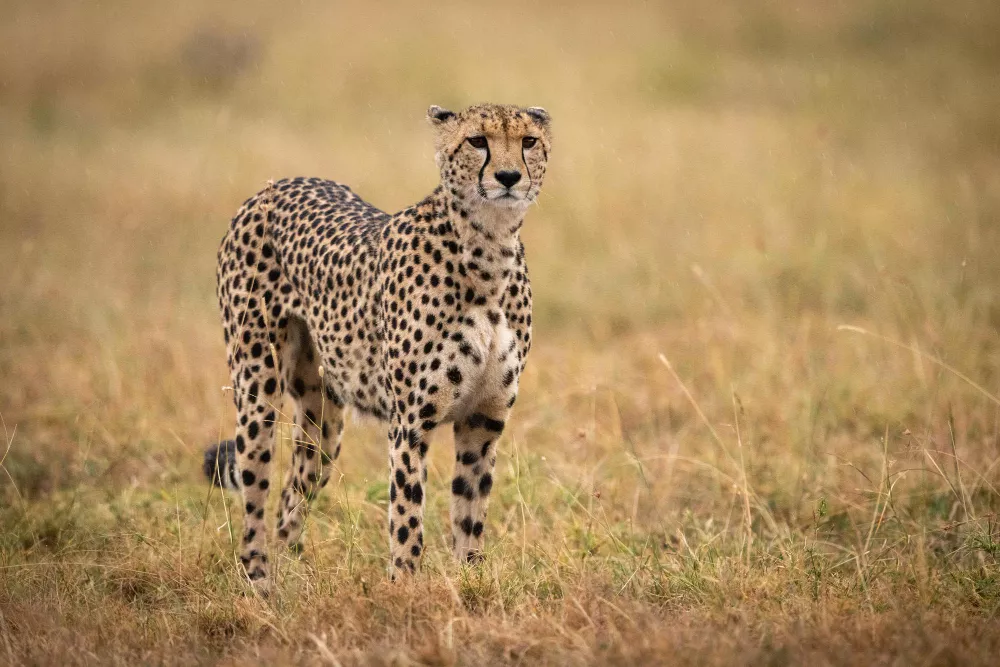
Conservation Significance
Despite the hurdles, the project signals India’s commitment to
re-wilding
lost ecosystems, not just protecting existing ones.
It aligns
with
global goals such as:
- Convention on Biological Diversity (CBD) targets for ecosystem restoration.
- Sustainable Development Goal 15 (Life on Land).
- India’s LiFE initiative (Lifestyle for Environment) for promoting co-existence with nature.
The Road Ahead
- Adaptive Management: Regular mortality audits, habitat expansion, and better veterinary care.
- Landscape-level planning: Identify secondary release sites for dispersal.
- Community Integration: Involve local communities through eco-tourism, compensation, and conservation incentives.
- Scientific Monitoring: Satellite tracking, genetics, and behavioural studies to measure adaptation success.
- Regional Cooperation: Continued engagement with African nations for expertise exchange and genetic material.
Project Cheetah embodies both ambition and uncertainty. The arrival of new cheetahs from Botswana renews hope but also demands humility before ecological complexity. Success will depend less on symbolic reintroduction and more on long-term landscape management, scientific rigour, and community partnership. In restoring the cheetah, India is testing whether modern conservation can truly heal what history erased.
Prelims Questions:
1. Project Cheetah was launched with which of the following primary objectives?
- To reintroduce the extinct Asiatic Cheetah in Indian ecosystems.
- To restore open forest and grassland ecosystems.
- To strengthen eco-tourism and local livelihood models.
- To replace the leopard population with cheetahs in dry zones.
Select the correct answer:
2. Which of the following statements about the cheetah reintroduction is/are correct?
- India is the first country in the world to reintroduce a large carnivore species after complete local extinction.
- The cheetahs introduced in India belong to the subspecies Acinonyx jubatus venaticus.
- The project is implemented by the NTCA under the Ministry of Environment, Forest and Climate Change.
Select the correct answer:
3. Which of the following are major ecological benefits expected from successful cheetah reintroduction?
- Regulation of prey species behaviour and numbers.
- Enhanced biodiversity and grassland health.
- Reduction in human–wildlife conflicts through displacement.
- Carbon sequestration increases in dry ecosystems.
- To replace the leopard population with cheetahs in dry zones.
Select the correct answer:
4. With reference to the Cheetah species, consider the following statements:
- The cheetah is currently listed as Vulnerable under the IUCN Red List.
- It is the fastest land animal capable of speeds up to 120 km/h.
- Its natural prey base consists mainly of large ungulates such as sambar and nilgai.
Which of the statements given above is/are correct?
5. Which of the following are potential limitations to the success of Project Cheetah?
- Limited carrying capacity of Kuno National Park.
- Low prey density and high human habitation around the park.
- Climate differences between African habitats and central India.
- Over-availability of open grasslands in India.