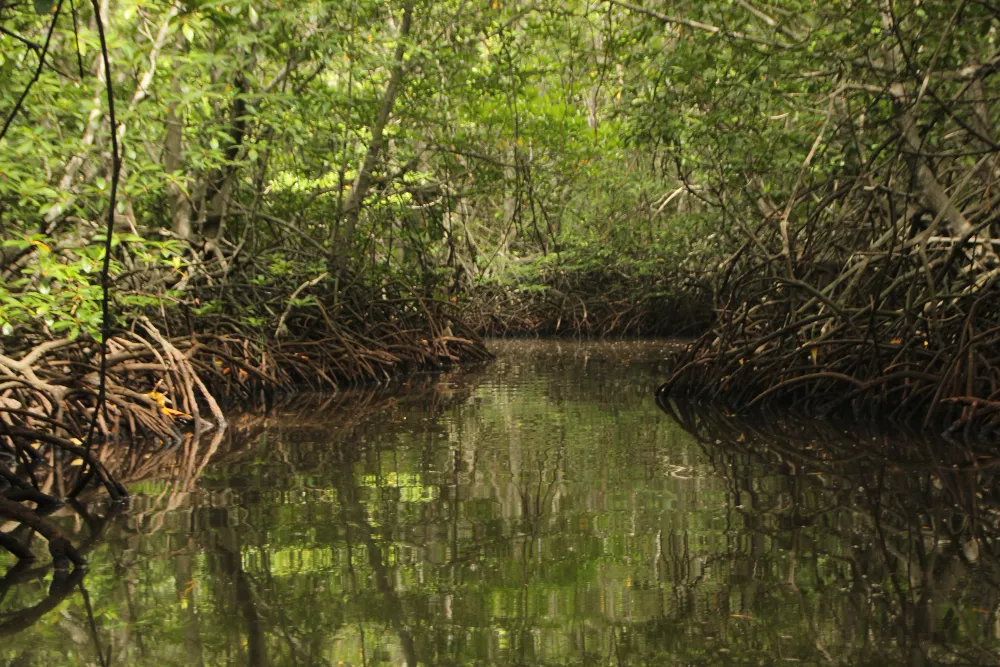
Mangroves
Syllabus Areas:
GS I - Geography
GS III - Environment & Ecology
Mangroves survive where most plants perish—in salty, coastal waters. New cellular-level research explains how these ancient plants tolerate extreme salinity, offering insights that could help develop salt-tolerant crops amid rising sea levels.
Unique Survival Ability of Mangroves
- Unlike most terrestrial plants, mangroves thrive in saline (brackish to saltwater) environments.
- Their survival is crucial as climate change increases sea levels and soil salinity in coastal regions.
Research Background and Study Scope
- The study was published in Current Biology by international researchers.
- Scientists analysed 34 mangrove species across 17 plant families, comparing them with inland relatives.
- Mangroves have evolved independently about 30 times over 200 million years, showing strong evolutionary convergence.
Key Cellular Traits Identified
- The study found that mangrove salt tolerance is linked to a few critical cellular traits, rather than many complex adaptations:
- Unusually small leaf epidermal pavement cells
- Thicker cell walls, providing higher mechanical strength
- These traits help mangroves tolerate low osmotic potential, a condition created by high salt concentrations that normally prevents water uptake.
Photosynthesis and Stomata Findings
- Contrary to expectations, mangroves do not have smaller or more numerous stomata to increase photosynthesis.
- Their resilience is therefore not driven by higher photosynthetic rates, but by structural cellular adaptations.
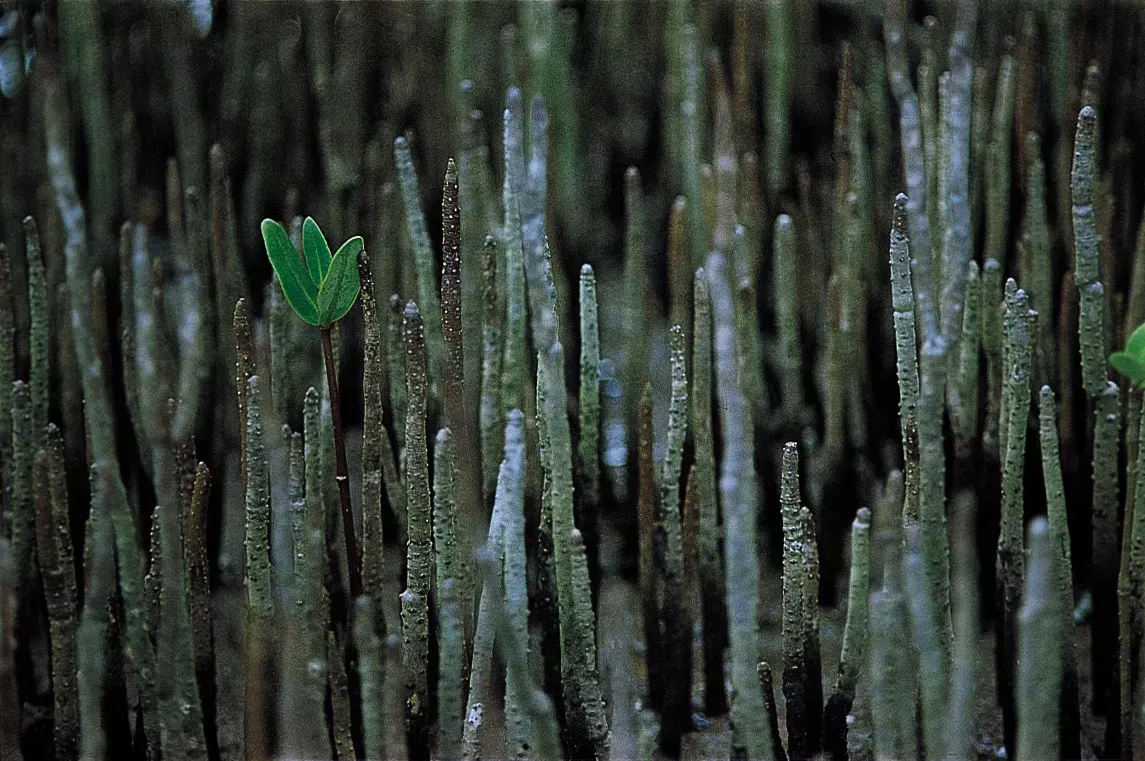
Pneumatophores
Pneumatophores are specialised aerial (respiratory) roots found mainly in mangrove plants, which grow upward out of waterlogged, oxygen-deficient soils to facilitate gas exchange.
Different Salt-Management
Mechanisms
Mangroves employ
multiple strategies to deal with salt:
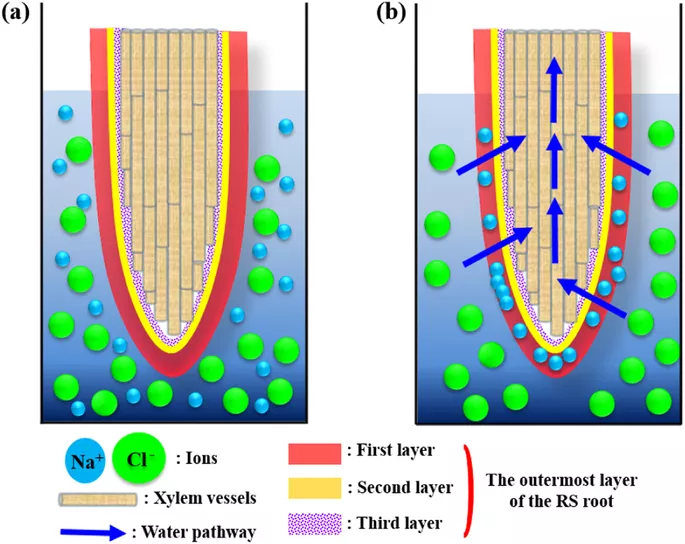
- Salt exclusion:
- Some species have roots with an internal waxy layer that filters out most salt.
- This requires generating strong internal tension to pull fresh water from salty solutions.
- Salt secretion:
- Other species absorb salt but later concentrate and excrete it through specialised leaf tissues.
Mechanical Strength as a Core Advantage
- Small cell size combined with thick walls makes tissues stronger.
- This structural strength enables mangroves to function despite intense osmotic stress caused by saline water.
Ecological and Human Importance of Mangroves
- Mangroves protect coastlines from erosion and storm surges.
- They provide habitats for fish, marine animals, and birds.
- Since a large share of the global population lives near coasts, mangroves deliver direct human benefits.
Implications for Agriculture and Climate Adaptation
- The findings suggest that engineering salt-tolerant
crops is
possible by:
- Manipulating cell size
- Altering cell wall properties
- This is especially relevant for economically important crops threatened by rising soil salinity.
Policy and Research Direction
- The study advocates targeting crops vital to food security in salt-affected regions.
- Such innovations could help agriculture adapt to climate-induced salinisation of land.
Prelims Questions:
1. Why are mangroves considered important from a climate-change adaptation perspective?
- They reduce coastal erosion and buffer storm impacts.
- They enhance marine biodiversity by acting as nursery habitats.
- Their cellular adaptations offer insights for developing salt-tolerant crops.
Which of the statements given above are correct?
2. With reference to mangrove plants, consider the following statements:
- Mangroves have evolved independently multiple times as an adaptation to saline coastal environments.
- Compared to inland plants, mangroves generally possess a higher density of stomata to enhance photosynthesis under stress.
- Mangrove resilience to salinity is partly linked to structural characteristics at the cellular level.