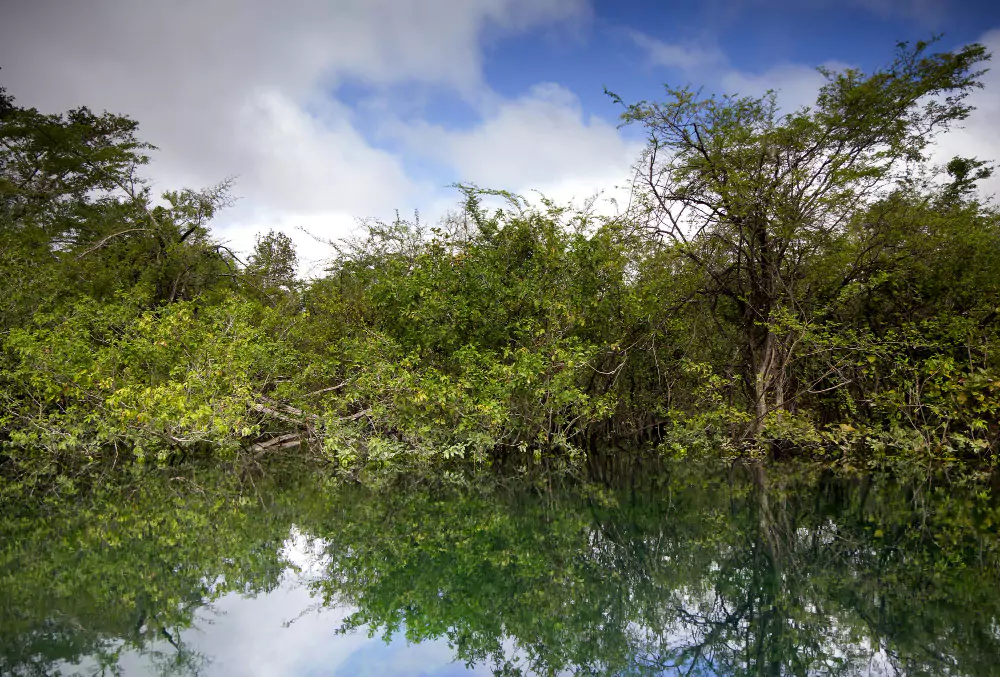
Mangrove Ecosystem
Syllabus Areas:
GS III - Environment and Ecology
Mangroves have historically been marginalized in planning and policy frameworks despite their crucial ecological, economic, and climate-related roles.
Importance of Mangroves
Ecological Role
- Serve as biodiversity hotspots and nurseries for juvenile fish, mollusks, and crabs.
- Interconnected with rivers, wetlands, and estuaries—essential for nutrient cycling and ecological balance.
Climate Function (Blue Carbon)
- Mangroves are among the world’s most effective carbon sinks.
- Sundarbans alone sequesters carbon worth ₹462 million annually.
- Act as buffers against climate threats like cyclones, flooding, and sea-level rise.
Natural Capital Value
- Estimated economic value ranges from ₹3,535 million (Pichavaram) to ₹664 billion (Sundarbans).
- Provide coastal protection, fisheries, timber, and other ecosystem services.
Livelihood Support
- Sustain millions of coastal livelihoods, especially fisherfolk.
- Enable alternative income through aquaculture, apiculture (beekeeping), and eco-tourism.
Urban Degradation
- Urban mangroves (Mumbai, Chennai) are often degraded due to pollution and encroachment.
- Loss weakens flood resilience, biodiversity, and local livelihoods.
Community Role
- When empowered, local communities become effective stewards.
- Community-led models like EDCs and JFMCs can be adapted for urban settings.
- Local knowledge and direct dependence make them vital to conservation.
Mapping & Monitoring
- Use of satellite, drone, and AI tools helps quantify mangrove area, health, and carbon value.
- Supports better-informed policy and restoration efforts.
Citizen Science
- Engaging communities in monitoring (e.g., via Mangrove Mitras) builds awareness and action.
- Tracking indicators like water flow, biodiversity, and public perception helps guide conservation.
Current Challenge
- Marginalisation in Planning and Policy
- Mangroves are often excluded from urban development and climate resilience planning.
- Their economic value is rarely reflected in national balance sheets or infrastructure investments.
- Massive Economic Value (Yet Undervalued)
- In Pichavaram, valuation ~₹3,535 million.
- In Sundarbans, valuation ~₹664 billion.
- Carbon sequestration alone in Sundarbans valued at ₹462 million annually.
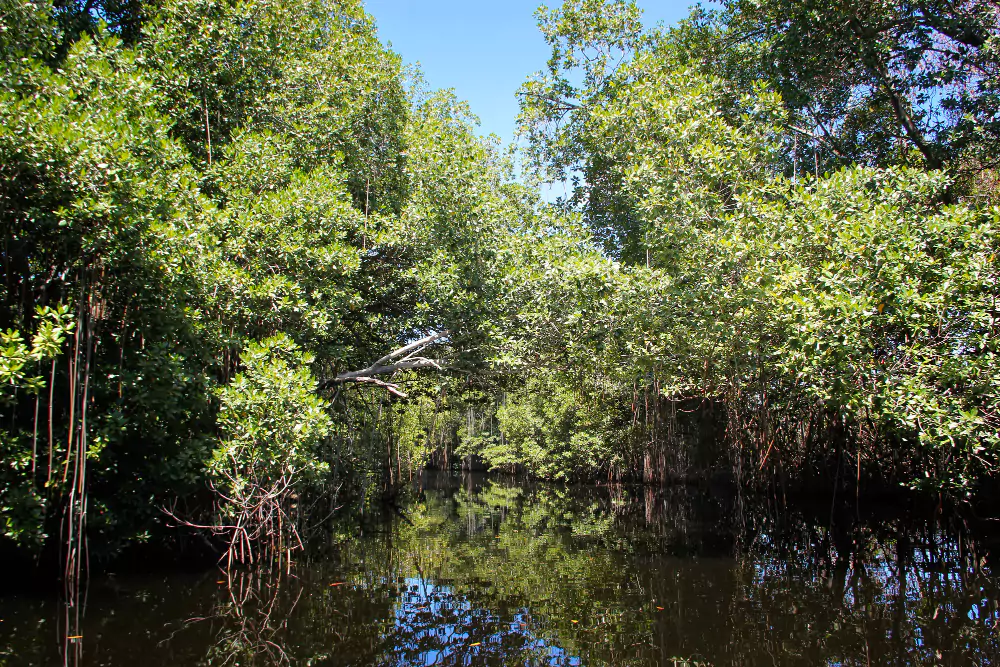
Pathways for Action: Three Pillars of the Mangrove Coalition
- 1. Mapping with Technology
- Use of satellite, drone, and AI-based geospatial tools for accurate mangrove mapping and blue carbon quantification.
- Helps guide restoration policies and investment.
- Valuation Data:
- Economic services of mangroves range from ₹3,535 million (Pichavaram) to ₹664 billion (Sundarbans).
- Carbon sequestration in Sundarbans alone is worth ₹462 million annually.
- Community inclusion is essential: Those who rely on mangroves must benefit equitably from these initiatives.
- 2. Community-Led Conservation
- Fisherfolk and local communities understand and value mangroves as fish nurseries and coastal buffers.
- Urban mangroves (e.g., in Mumbai, Chennai) are highly degraded and fail to support biodiversity or livelihoods.
- Empowered communities → Better stewardship → Stronger ecological outcomes.
- Alternative livelihoods: Aquaculture, beekeeping, eco-tourism.
- Recommend integrated ownership models like:
- Eco-Development Committees (EDCs)
- Joint Forest Management Committees (JFMCs) – adaptable to urban mangrove contexts.
- 3. Citizen Science & Engagement
- Public participation in ecosystem monitoring can:
- Complement or replace formal data collection.
- Foster a sense of ownership and wonder.
- Monitoring should include:
- Area & health of mangroves.
- Freshwater flows (quantity, quality, timing).
- Biodiversity (birds, fish, mollusks, flora).
- Community perception and dependence.
- Platforms like "Mangrove Mitras" can:
- Engage urban citizens and local communities.
- Foster people-wetland-river-mangrove connections.
- Promote immersive experiences and conservation culture.
- Public participation in ecosystem monitoring can:
Way Forward / Conclusion
- Sustainable mangrove management is not a top-down exercise, but a symbiotic relationship where healthy ecosystems support human wellbeing and vice versa.
- Mangroves should be reclassified as critical climate and economic infrastructure, not merely biodiversity hotspots.
- A multi-stakeholder coalition—governments, businesses,
scientists, and communities—is essential to:
- Invest in mangrove restoration.
- Embed their value into policy frameworks and market systems.
- Create resilient coastal economies through integrated stewardship.