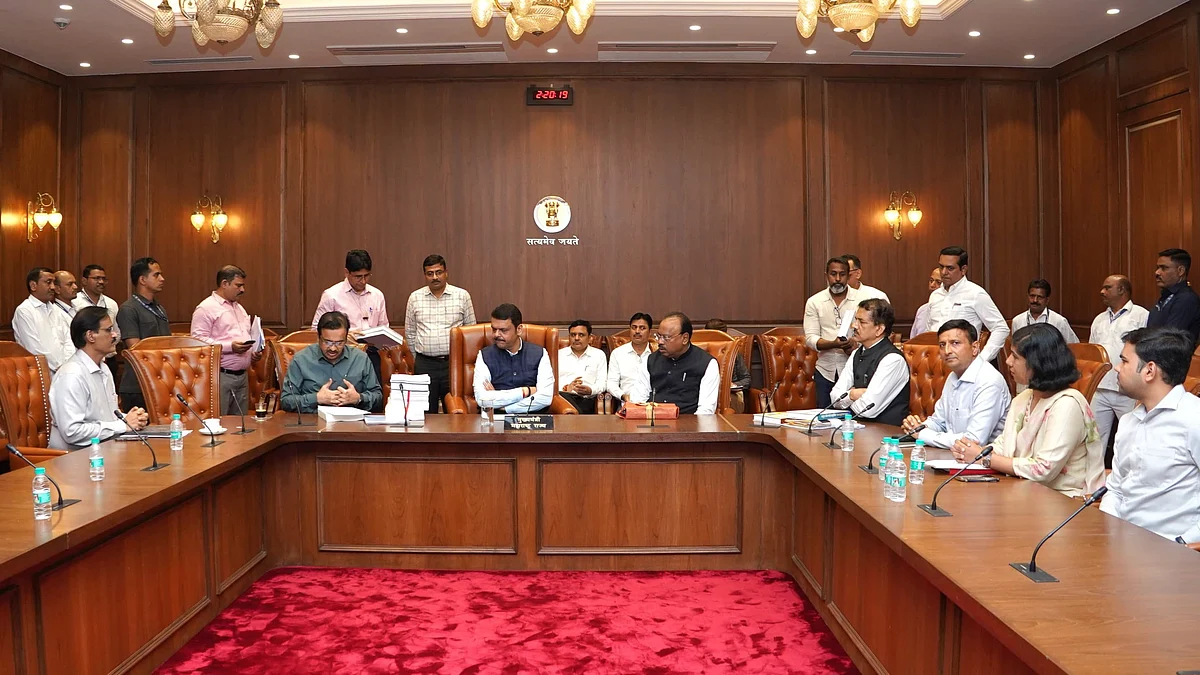
Maharashtra Urban Security Bill
Syllabus Areas:
GS II - Governance
GS III - Internal Security
The Maharashtra government has introduced and passed the Maharashtra Special Public Security Bill (MSPS), which aims to prevent certain unlawful activities linked to left-wing extremist organisations, often referred to as "Urban Maoists".
The Bill was introduced by Chief Minister Devendra Fadnavis and passed by voice vote in the Maharashtra State Assembly in July 2025.
The Bill had first been introduced in 2022 but was delayed and subsequently amended before being reintroduced in 2025.
Objective of the Bill
- The Bill seeks to provide legal mechanisms for the effective prevention of unlawful activities carried out by left-wing extremist groups operating in urban areas.
- The government argues that while Naxalism was earlier confined to remote regions, there is a growing presence and support base in urban spaces through logistical, ideological, and financial assistance.
Context and Justification by Government
- Chief Minister Fadnavis stated that urban Maoists were trying to brainwash the youth, thereby posing a serious internal security threat.
- The government claimed that existing laws were not sufficient to address the urban dimensions of the Naxal threat.
- Other states such as Chhattisgarh, Andhra Pradesh, Telangana, and Odisha have enacted similar laws and banned 48 Naxal-related organisations.
Definition of "Unlawful Organisation" and "Unlawful Activity"
- The Bill empowers the government to declare any group as an "unlawful organisation"
if it is found involved
in
one or more of the following activities:
- Membership or association with an organisation declared unlawful.
- Raising funds or assisting in the management of such organisations.
- Promoting, inciting, or participating in the operations of these groups.
- The Bill defines "unlawful activity" as any act (written, spoken, symbolic, or
visual) that:
- Threatens public order, peace, or safety.
- Interferes with administration of law, judicial functioning, or public institutions.
- Encourages violence, vandalism, or public apprehension.
- Promotes disobedience against law and governance.
- Collects or distributes funds, goods, or services in support of such activities.
Punishments and Provisions
- The offences listed under the Bill are cognizable, non-bailable, and allow arrest without a warrant.
- The punishments range from imprisonment for 2 to 7 years and fines ranging from ₹2 lakh to ₹5 lakh.
- The most serious offence—committing an unlawful activity—can attract both imprisonment and the maximum fine under the law.
Legislative Process and Objections
- After the initial introduction, the Bill was sent to a Joint Select Committee that included 25 members from both houses of the legislature, chaired by BJP leader and Minister Chandrashekhar Bawankule.
- The Committee held five meetings and reviewed over 1,200 suggestions and objections from opposition parties, NGOs, and civil society.
- Objections included concerns over vague definitions, lack of safeguards for freedom of speech, and potential misuse to silence dissent or activism.
Amendments Made by the Select Committee
- The first amendment clarified the intent of the Bill in the preamble, stating it is aimed at preventing “unlawful activities of left-wing extremist organisations or similar organisations”.
- The second amendment changed the composition of the Advisory Board under Clause 5(2)
by specifying it will
consist of three members:
- A judge or retired judge of the High Court as chairperson.
- A government pleader.
- A senior law officer.
- The third amendment clarified that any act defined as an offence under the Bill must be investigated by an officer not below the rank of Sub-Inspector, with authority delegated to the rank of Police Superintendent for oversight.
Concerns Raised by Opposition and Civil Liberties Groups
- Opposition parties and rights organisations such as the People's Union for Civil Liberties (PUCL) have expressed concern that the Bill could be misused to target students, NGOs, and political dissenters.
- They argue that vague terms like "disobedience", "propagation", or "collection of money" could criminalise legitimate civil activism or ideological disagreement.
- There is also fear that the law bypasses judicial oversight and grants excessive powers to the executive.
Conclusion and Way Forward
- The Maharashtra Special Public Security Bill represents a significant expansion of state powers in dealing with internal security threats from extremist ideologies.
- While the government justifies it as necessary for national security and urban counter-insurgency, critics warn that the broad and vague definitions risk undermining civil liberties and constitutional rights.
- The implementation, judicial scrutiny, and public accountability of the Bill will determine whether it serves national interest or becomes a tool of political suppression.