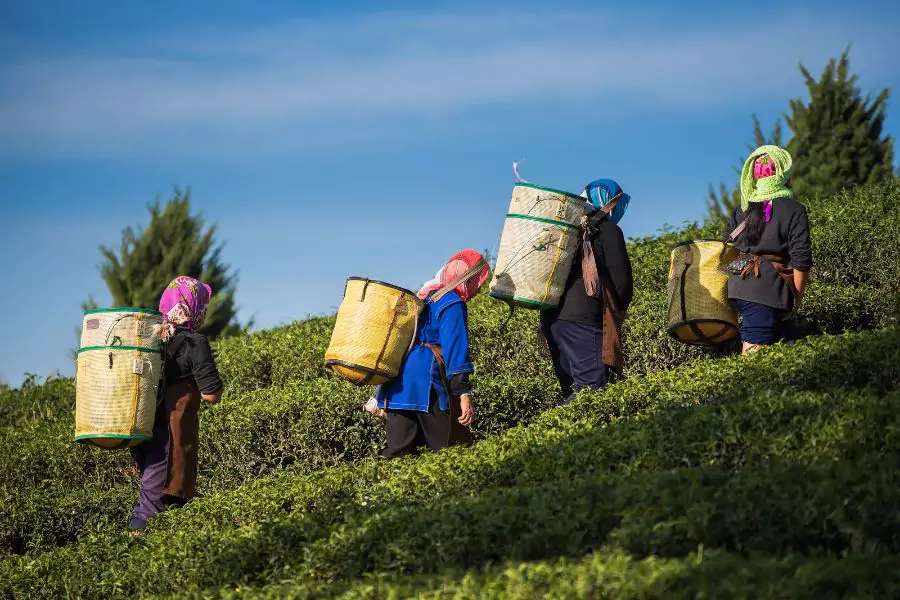
Israel-Iran Truce Revived Indian Tea Exports
Syllabus Areas:
GS II - IR
GS III - Economy
The Israel-Iran conflict caused a sudden drop in demand for Indian orthodox tea, especially from Iran – a major market. After the ceasefire announcement, there are signs of recovery: buyers are returning, auction sales are improving, and prices are stabilizing.
- Orthodox tea prices rose from ₹269.40/kg (last week) to ₹290.66/kg.
- Despite this, 49% of teas were unsold at auctions held on June 24–25 (compared to 49.26% earlier in June).
Demand Resumption:
- Exporters were in a “wait-and-watch” mode.
- The ceasefire announcement helped resume demand from pending orders.
- Exporters expect gradual improvement as buyers from Iran, UAE, and Commonwealth countries return.
Why is Iran important?
- One of the top 3 importers of Indian orthodox tea (premium variety grown mostly in Assam and Darjeeling).
- Has historically imported 20–25 million kg per year from India.
- 2023 saw a sharp drop due to geopolitical tensions
Strategic Importance of Iran for Indian Tea:
| Year | Exports to Iran (in million kg) |
|---|---|
| 2022 | 22.21 mkg |
| 2023 | 5.29 mkg (↓ due to conflict) |
| 2024 | 9.24 mkg (↑ post partial recovery) |
- Tea from India is part of Iran's cultural consumption, making it a steady but sensitive market.
Auction Dynamics
- India’s orthodox tea is primarily sold via Kolkata tea auctions.
- The auction system gives real-time price discovery, crucial for small and medium producers.
| Sale Dates | Quantity Sold (%) | Avg Price (₹/kg) |
|---|---|---|
| June 3-4 | 92.03% | ₹322.16 |
| June 10-11 | 88.23% | ₹316.67 |
| June 17-18 | 49.62% (conflict peak) | ₹269.40 |
| June 24-25 | 75.85% (post truce) | ₹290.66 |
Observation:
- Prices fell ~16% during peak tensions.
- Sales volume halved, reflecting uncertainty among buyers.
Exporters' Sentiment
- Exporters were hesitant to ship due to:
- Payment delays,
- Shipping bottlenecks,
- Risk of port closures.
After ceasefire:
- Pending orders resumed,
- Buying restarted ahead of auctions,
- Traders optimistic but still cautious
Geopolitical Linkages
- This situation shows how international conflicts directly impact India’s trade, even in non-oil sectors.
- Disruptions in West Asian geopolitics (like Iran-Israel tension)
can damage:
- India’s export volumes,
- Shipping routes (like via Strait of Hormuz),
- Payment security (sanctions, SWIFT bans, etc.).
- Tea was rerouted via UAE to avoid instability – an example of trade route flexibility.
Wider Implications for Economy & Policy
Microeconomic:
- Orthodox tea prices are high-value, so even small shocks affect incomes of small growers and estates in Assam, Bengal, and Nilgiris.
- Drop in exports impacts employment in tea plantations and packing units.
Macroeconomic:
- Export reduction affects foreign exchange earnings.
- Creates trade imbalance with Middle Eastern countries.
Strategic Suggestions:
- Diversify export markets beyond Iran (e.g., Russia, Egypt, CIS countries).
- Set up payment protection schemes for exporters in conflict zones.
- Use diplomatic backchannels (via UAE, Chabahar) to ensure stable trade corridors.
- Promote tea as a soft power tool in West Asia and Central Asia.
- Strengthen India’s export intelligence networks to predict and prepare for shocks.
Mains Question:
Q. Examine the impact of geopoptical developments on India’s agricultural exports with special reference to orthodox tea.” 150 Words 10 Marks