Heat Dome
Syllabus Areas:
GS I - Geography
GS III - Environment
In an unprecedented move, the summit of the Eiffel Tower was shut to tourists as Paris and several parts of Europe faced a red alert for extreme heat.
- From Spain to Italy, Portugal to France, countries have been experiencing scorching temperatures, in some places exceeding 46°C.
- This extreme weather event has not only disrupted daily life and public infrastructure but also raised serious concerns about climate resilience and the growing frequency of heatwaves.
- The phenomenon is being attributed to a ‘heat dome’, a rare yet increasingly observed atmospheric condition.
Heat Dome
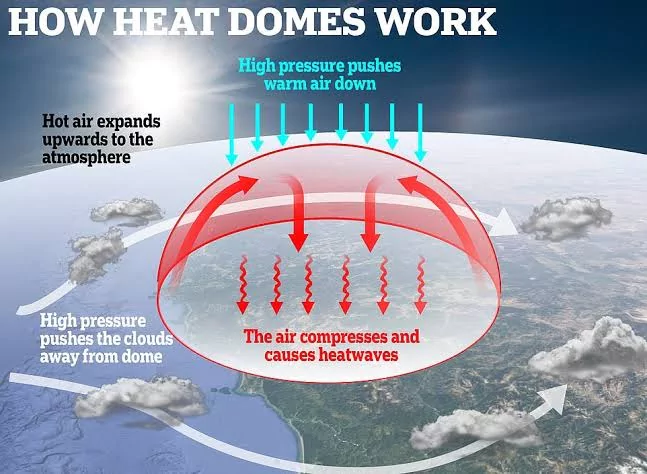
A heat dome forms when a high-pressure system remains stationary over a region, acting like a lid on a pot. This prevents hot air from escaping, and the lack of clouds allows sunlight to intensify surface heating. The warm air gets compressed and becomes even hotter. As this air mass stagnates, temperatures soar and remain persistently high.
Causes of Heatwaves:
Heatwaves are prolonged periods of excessively hot weather that may be accompanied by high humidity. They result from a combination of natural atmospheric patterns and human-induced climate change. Here are the key causes of heatwaves:
- High-Pressure Systems (Anticyclones)
- A persistent high-pressure area in the atmosphere traps air in place, preventing it from rising and cooling.
- This sinking air compresses and heats up, leading to sustained high temperatures.
- It also pushes away clouds, allowing uninterrupted sunlight to heat the ground further.
- Jet Stream Disruptions
- The jet stream is a fast-moving air current high in the atmosphere that guides weather patterns.
- Sometimes, it becomes wavy or weak, causing high-pressure systems to stall over a region.
- This “blocking” effect results in heatwaves lasting days or even weeks.
- Climate Change
- Human activities like fossil fuel burning and deforestation have raised global average temperatures.
- Baseline warming makes heatwaves more likely and intense.
- Warmer oceans and atmosphere increase the energy available for extreme weather.
- Urban Heat Island Effect
- Cities are often hotter than surrounding rural areas due to heat absorption by concrete, asphalt, and buildings.
- Lack of vegetation and poor airflow trap heat, amplifying heatwave impacts in urban settings.
- Land Surface Changes
- Deforestation and soil degradation reduce evaporative cooling.
- Dry soils and sparse vegetation reflect less sunlight and absorb more heat.
- Sea Surface Temperature Anomalies
- Warmer ocean temperatures, especially in the Atlantic and Pacific, can influence atmospheric circulation.
- Events like El Niño can create abnormally hot and dry conditions in some regions.
Jet Stream:
A narrow, fast-flowing air current in the upper atmosphere that helps regulate weather. When disrupted, it can cause weather systems like heat domes to remain static over one area.
Anti-Cyclone:
A weather system with high atmospheric pressure at its center. These systems rotate outward and downward, pushing clouds away and allowing more sunlight in, contributing to heating.
Impacts Across Europe
- France: Over 1,350 schools were shut or operated partially. Public places were converted into cooling shelters, and thousands faced power outages.
- Portugal and Spain: Mora in Portugal recorded 46.6°C, while El Granada in Spain touched 46°C — among the highest ever. Barcelona broke its record for the hottest June since 1914.
- Italy: Rome issued emergency outdoor work bans during peak heat hours, and warnings were extended into mid-September.
- England: Wimbledon recorded 31.4°C, making it the hottest opening day ever.
This intense heatwave has led to disruptions in transportation, increased energy demand, health emergencies, and pressure on water resources.
The current European heatwave, driven by a heat dome, is a stark reminder of how climate extremes are becoming more frequent and intense. Such events not only threaten health and infrastructure but also challenge the preparedness of cities and governments. As the planet warms, understanding atmospheric phenomena like heat domes becomes crucial—not just for forecasting, but for climate adaptation and resilience planning.
Mains Question:
- Examine the causes of heatwaves and discuss their socio-economic and ecological impacts. Also, suggest measures for mitigation and adaptation." 250 Words 15 Marks