EEZ Fisheries Rules
Syllabus Areas:
GS III - Economy and Infrastructure, Agriculture and Allied Sector
Why in the News?
The Union Government has notified new rules for Sustainable Harnessing of Fisheries in the Exclusive Economic Zone (EEZ).
The objective is to promote deep-sea fishing, value addition, and sustainable marine resource management.
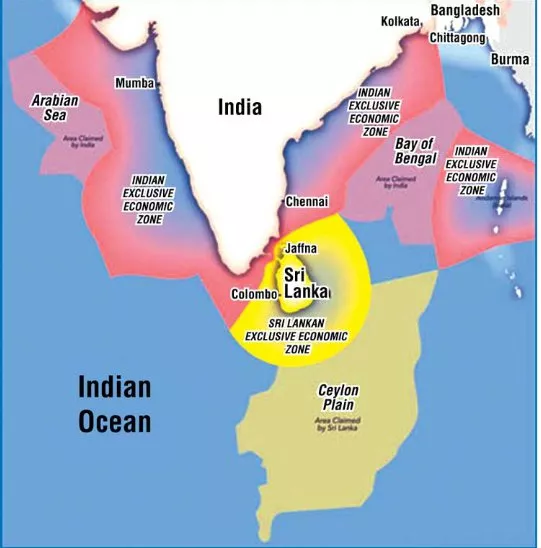
India has a vast Exclusive Economic Zone (EEZ)
— an
area extending
up to 200 nautical miles from the coast, where the country
has rights
to explore, exploit, and manage marine resources.
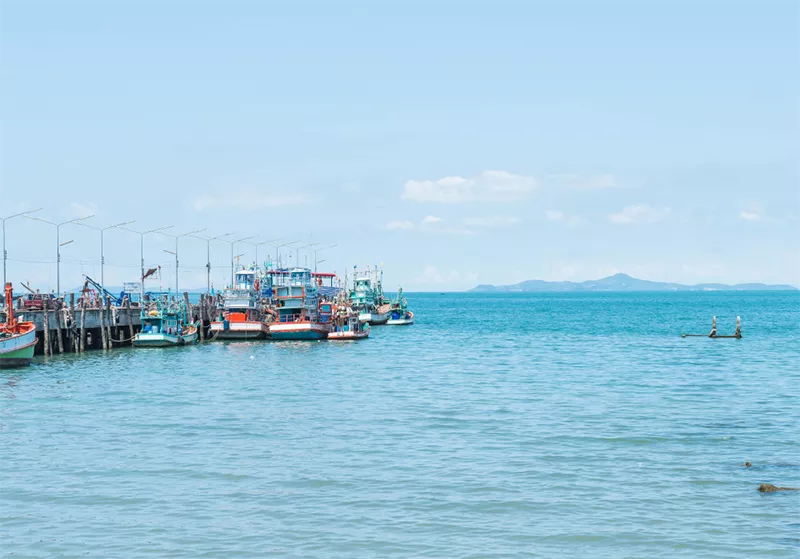
Until now, most
Indian fishers
operated close to the shore (nearshore fishing), leaving deep-sea resources
underused.
To tap this potential sustainably, the Union Government has framed new rules for Sustainable Harnessing of Fisheries in the EEZ. These rules aim to combine economic growth with environmental care.
Objective of the New Rules
The rules aim to:
- Encourage deep-sea fishing through organized and scientific methods.
- Give priority to fishermen cooperatives and Fish Farmer Producer Organisations (FFPOs) so that benefits go to communities, not only large private players.
- Enhance seafood exports by improving value addition, traceability, and certification — ensuring that Indian fish exports meet global standards.
Who Can Operate in the EEZ
The rules define an “operator” as:
- Any individual, enterprise, FFPO, or fisheries cooperative (including multi-state ones),
- Who controls or manages a fishing vessel or takes responsibility for its operation.
This broad definition ensures both traditional fishers and modern enterprises can participate, but with accountability.
Training and Capacity Building
Recognizing that most traditional fishers lack experience in deep-sea fishing, the Government will:
- Conduct training and capacity-building programmes for traditional and small-scale fishers.
- Include Fisheries Cooperatives, Self-Help Groups (SHGs), and FFPOs.
- The training will cover modern fishing techniques, safety at sea, value addition, and post-harvest management.
This step ensures that local fishers are not left behind as the sector modernizes.
What is Deep-Sea Fishing?
Deep-sea fishing is the practice of catching fish and other seafood far from the coast, beyond the continental shelf, usually in the Exclusive Economic Zone (EEZ). It requires advanced vessels, specialized gear, and technology to harvest high-value species sustainably, often for commercial exports and industrial-scale fisheries.
Infrastructure Development and Modern Vessel Concept
A major highlight is the introduction of the “Mother-and-Child Vessel” system:
- The mother vessel acts as a large support ship in the deep sea.
- Smaller “child vessels” catch fish and transfer them mid-sea to the mother vessel for storage and processing.
- This system helps fishers stay longer in deep waters without returning frequently to shore.
Special focus will be on Andaman & Nicobar
Islands and
Lakshadweep, which together account for 49% of
India’s
EEZ area.
These islands can become hubs for
deep-sea fishing
and seafood exports if supported by modern infrastructure.
Digital Monitoring and Certification
To ensure transparency and international credibility:
- Catch Certificates and Health Certificates will be mandatory for exports.
- All applications will be made online through designated government portals.
- These portals will be connected to the REALCraft portal, which stores details of vessels and catches.
This system allows for traceability — meaning every exported fish can be traced back to its vessel and location, meeting international market demands.
Ban on Harmful Fishing Practices
The rules prohibit destructive methods that damage marine life, such as:
- LED light fishing (which attracts and over-harvests small fish),
- Pair trawling (two boats dragging a single large net that sweeps everything in its path),
- Bull trawling (powerful trawling that harms seabeds).
The goal is to protect the marine ecosystem, maintain fish diversity, and ensure long-term sustainability.
Conservation Measures
To prevent overfishing and biodiversity loss:
- A Minimum Legal Size (MLS) for fish species will be introduced — smaller fish cannot be caught or sold.
- Fisheries Management Plans (FMPs) will be prepared with input from State Governments and stakeholders.
- These plans will set sustainable limits and seasonal restrictions to restore declining fish stocks.
Promotion of Mariculture (Marine Aquaculture)
The government plans to promote mariculture — the farming of marine species such as fish, seaweed, and shellfish in the sea itself.
- Sea-cage farming and seaweed cultivation will be encouraged.
- This provides alternative livelihoods for coastal communities.
- It also helps reduce fishing pressure near the coast, while increasing overall production
Industry Concerns and Suggestions
The Seafood Exporters Association of India welcomed the rules but raised some points:
- The rules should clearly define “juvenile fishing” (catching immature fish) and “illegal fishing”.
- There must be proper catch certification by the Marine Products Export Development Authority (MPEDA).
- Promoting sustainable fishing practices will help India gain access to premium international markets, especially in Europe and the U.S.
Broader Significance
- These rules are expected to transform India’s marine fisheries sector by making it more organized, technology-driven, and sustainable.
- They also align with the Blue Economy vision — using ocean resources responsibly for growth, employment, and environmental health.
- For island territories and coastal states, the policy could become a model of balanced development — blending livelihood promotion with ecological conservation.
Prelims Questions:
1. With reference to the Sustainable Harnessing of Fisheries in the Exclusive Economic Zone (EEZ) Rules, consider the following statements:
- The rules give priority to private fishing enterprises for deep-sea fishing operations.
- The “operator” under the rules can include cooperatives and Fish Farmer Producer Organisations (FFPOs).
- The rules are applicable only within 12 nautical miles from the Indian coastline.
Which of the statements given above is/are correct?
2. Consider the following fishing methods:
- LED light fishing
- Pair trawling
- Bull trawling
Which of the above have been banned under the new EEZ Rules to protect marine biodiversity?
3. Assertion (A):
The Government has introduced a minimum legal size (MLS) for fish species under the EEZ Rules.
Reason (R):
This measure ensures that only mature fish are caught, thereby supporting the regeneration of marine stocks.
Codes
- Both A and R are true, and R is the correct explanation of A.
- Both A and R are true, but R is not the correct explanation of A.
- A is true, but R is false.
- A is false, but R is true.
4. Assertion (A):
The new EEZ Rules promote seaweed cultivation and sea-cage farming in coastal waters.
Reason (R):
These mariculture practices increase production without harming the environment and provide alternative livelihoods for traditional fishers.
Codes
- Both A and R are true, and R is the correct explanation of A.
- Both A and R are true, but R is not the correct explanation of A.
- A is true, but R is false.
- A is false, but R is true.