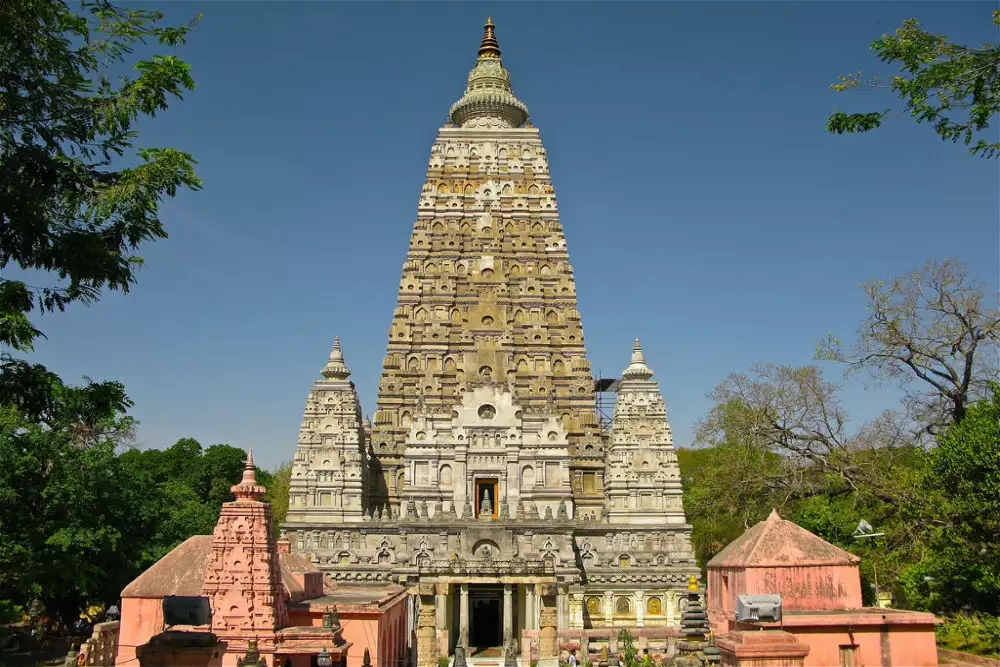
Mahabodhi Temple located in Bodh Gaya, Bihar, is the site where Prince
Siddhartha attained enlightenment, becoming the Buddha in 589 BCE.
The temple is considered one of Buddhism’s holiest sites.
The current structure dates back to the Gupta period (6th century
CE) and was restored in the 1880s.
Origin of the Dispute
Though the temple is central to Buddhism, it is currently managed by a Hindu priest
and a Hindu-dominated committee under the Bodh Gaya Temple
Act (BGTA), 1949.
Mahanth Ghamandi Giri, a Shaivite monk, established Bodh Gaya Math
in the 16th century, and his descendants continue to manage the temple.
Buddhists claim the temple should be under Buddhist control, not
Hindu.
Legal and Political Struggles
Sri Lankan monk Anagarika Dharmapala led early efforts in the 19th
century to reclaim the temple for Buddhists.
His campaign led to the passage of BGTA in 1949, which provides
for:
A 9-member temple management committee (5 nominated by the
state government: 4 Hindus and 4 Buddhists + 1 DM of Gaya as Chair).
The Chair (DM) is usually Hindu, and a Hindu is nominated as Committee Head
even if in minority.
Why BGTA is Controversial
Though Buddhists are included, the management is still dominated by
Hindus.
Buddhists claim this undermines their religious rights.
BGTA does not allow full control to Buddhists despite the site's Buddhist
origins.
Conflict with Places of Worship Act, 1991
This Act preserves the religious status of places as it existed on 15 August
1947.
It complicates legal challenges by Buddhists to reclaim sole control of the temple.
The matter is currently pending in the Supreme Court, since a 2012
petition.
Recent Protests and Demands
Ongoing protests are being led by All India Buddhist Forum (AIBF).
In February 2024, monks and activists were removed by force after they performed
“non-Hindu” rituals inside the temple.
Buddhists demand full control of the temple, citing that it should
be “made home to non-Hindu rituals”.