DELLA Protein
Syllabus Areas:
GS III - Environment and Ecology
Food security has emerged as one of the most pressing challenges confronting humanity today. Erratic climatic patterns—particularly the impacts of El Niño, La Niña, and ongoing global warming—combined with droughts, soil degradation, and multiple local environmental stressors, are causing significant drops in crop productivity across the world. In such a scenario, scientific research focused on enhancing crop yields offers a rare ray of hope. Recent findings published in Nature Chemical Biology highlight a breakthrough mechanism involving an ancient plant protein known as DELLA, opening new possibilities for engineering high-yield crops.
Ancient Plants and a Modern Solution
Marchantia polymorpha: A Window Into Early Plant Evolution
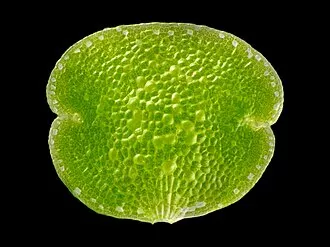
Scientists have turned their attention to a primitive land plant species known as Marchantia polymorpha, a member of the Bryophyta division. These amphibious plants, often called liverworts, have existed on Earth for nearly 500 million years and exhibit some of the earliest adaptations that allowed plants to transition from water to land. Their simple leaf-like structures resemble a human liver, which explains their common name.
Because liverworts belong to one of the earliest branches of plant evolution, studying them provides valuable insights into how plants originally evolved mechanisms to survive harsh environmental conditions.
The Central Player: DELLA Protein
What Is DELLA and Why Does It Matter?
The DELLA protein plays a crucial role in regulating plant growth and stress responses.
In flowering plants, DELLA typically:
- Slows cell division
- Restrains excessive growth
- Enhances stress tolerance
- Helps improve long-term yield
During adverse conditions, DELLA suppresses growth temporarily, enabling the plant to conserve energy and survive. When conditions improve, the protein is deactivated to allow renewed growth.
The Known Mechanism in Flowering Plants
In advanced plant species, DELLA activity is controlled through a three-component mechanism involving:
- Gibberellic Acid (GA) – promotes growth
- GID1 receptor – detects GA
- DELLA protein – inhibits growth
When GA levels rise, GA binds to GID1, forming a GA–GID1–DELLA complex. This triggers the breakdown of DELLA, allowing plant growth to resume.

New Mechanism Discovered in Liverworts
In Marchantia polymorpha, an enzyme called MpVIH encourages the release of a signalling molecule named InsP8.
- InsP8 binds to the DELLA protein
- It neutralises (deactivates) DELLA
- Growth resumes even without the GID1 receptor pathway
Thus, scientists discovered that:
- Flowering plants and
- Amphibious primitive plants
use two different regulatory mechanisms to control DELLA activity and, consequently, growth and yield.
This understanding has massive implications for agriculture.
Implications for Crop Improvement
The DELLA protein is not new to agricultural history. During the Green Revolution, dwarf varieties of wheat and rice exhibited higher yields partly because the DELLA protein became less active, preventing unnecessary stem elongation and improving grain productivity.
With the new research on DELLA regulation:
- Scientists can fine-tune DELLA activity rather than completely disabling it
- This reduces negative side effects such as weakened stress tolerance
- Using genetic engineering, it becomes possible to design crops that grow optimally even under adverse climatic conditions
- The MpVIH–InsP8 mechanism offers an additional regulatory tool for next-generation high-yield crops
This discovery is therefore highly relevant to current global food security challenges
At a time when climate variability and ecological disruptions are threatening global food production, understanding how plants naturally regulate growth under stress is vital. The discovery of an alternative DELLA-regulation pathway in Marchantia polymorpha offers a promising foundation for future genetic engineering efforts. By strategically modifying DELLA activity, scientists can potentially develop resilient, high-yield crops capable of sustaining the world’s growing population.
In the broader journey toward ensuring global food security, this breakthrough stands out as a significant step forward.
Prelims Question:
1. DELLA proteins are critically linked to which of the following plant responses?
- Stress tolerance
- Growth suppression
- Gibberellin signalling
- Nitrogen fixation