Delhi Fuel Ban on ELVs
Delhi Fuel Ban on ELVs
Syllabus Areas:
GS III - Environmental Pollution, S&T
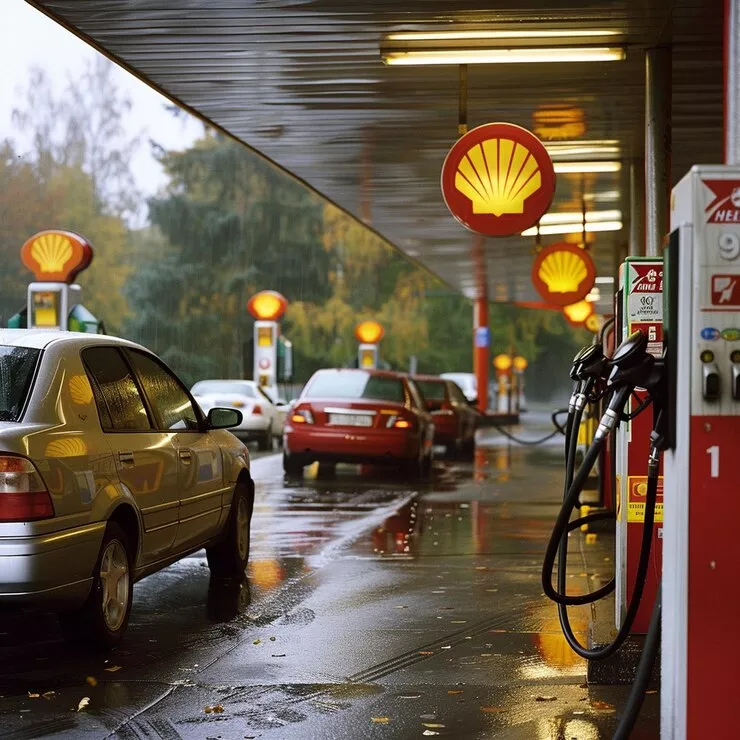
Two days after petrol and diesel were denied to old vehicles in Delhi, the State Environment Ministry justified it by citing CAQM’s directive and “operational and infrastructural challenges.”
Background
- The Commission for Air Quality Management (CAQM) ordered a ban on End-of-Life Vehicles (ELVs).
- ELVs are petrol vehicles over 15 years old and diesel vehicles over 10 years
- The policy is based on pollution concerns and long-standing court orders.
What is Delhi’s Fuel Ban for Old Vehicles?
- From July 1, 2024, fuel is denied to ELVs in high-density NCR districts.
- From November 1, it will be implemented across the entire NCR.
- ELVs can only buy fuel if they show proof of exemption or scrappage.
Implementation Challenges
- ANPR (Automatic Number Plate Recognition) systems installed at fuel stations (498 total) are glitchy and ineffective.
- Issues with camera placement, sensor failure, and speaker malfunctions.
- Lack of real-time vehicle data sharing allows users from other districts to bypass the ban
How Many Vehicles Are Affected?
- Around 62 lakh ELVs in Delhi NCR:
- 41 lakh two-wheelers
- 18 lakh four-wheelers
- Rest are goods carriers.
- Haryana: 27.5 lakh | UP: 12.4 lakh | Rajasthan: 6.1 lakh
Why Ban Older Vehicles?
- BS-IV vehicles emit 5 to 5.5 times more particulate matter than BS-VI.
- Transport contributes:
- 28% of PM2.5
- 41% of SO2
- 78% of NOx emissions in NCR.
What is BS IV?
- It is part of the Bharat Stage (BS) emission standards modeled on European regulations (Euro norms).
- These standards are enforced by the Central Pollution Control Board (CPCB) under the Ministry of Environment, Forest and Climate Change (MoEFCC).
Why is BS-IV Important?
- Reduces pollutants like:
- 5 – fine particles that cause respiratory issues.
- NOx (Nitrogen Oxides) – contribute to smog and acid rain.
What is Particulate Matter?
Particulate Matter (PM) refers to a mixture of tiny solid and liquid particles suspended in the air. These particles are invisible to the naked eye but can be inhaled deep into the lungs, causing serious health and environmental problems.
Types of PM:
| Type | Particle Size | Source & Impact |
|---|---|---|
| PM10 | ≤ 10 micrometres | Dust, pollen, mold. Affects upper respiratory system. |
| PM2.5 | ≤ 2.5 micrometres | Combustion (vehicles, industry, stubble burning). Penetrates deep into lungs and bloodstream. Very harmful. |
What Do the Laws Say?
- NGT Order (2015):
- Ban diesel vehicles >10 years and petrol vehicles >15 years in Delhi-NCR.
- Motor Vehicles Rules (1999):
- Registration is valid only for a fixed period; cannot be renewed once expired (except for transport vehicles).
Expert Opinion and Measures:
- Ban alone won’t solve Delhi’s air pollution.
- Experts call for:
- Better fuel
- Cleaner technology
- Public transport augmentation
- City-wide coordination
- Pollution monitoring & vehicle maintenance
Prelims Questions:
- With reference to the implementation of the End-of-Life Vehicle (ELV)
policy in India, consider
the
following statements:
- The policy prohibits both petrol and diesel vehicles from operating beyond their registered lifespan, irrespective of pollution levels.
- The implementation is guided by directions from the National Green Tribunal (NGT) and enforced by the Commission for Air Quality Management (CAQM).
- The Central Motor Vehicles Rules, 1999 permit automatic renewal of private vehicle registration after the ELV threshold, subject to fitness test.
- 1 and 2 only
- 2 only
- 1 and 3 only
- 1, 2 and 3
- Statement 1 is incorrect: The policy is based on lifespan not conditional on emission fitness, but legal exemptions exist.
- Statement 2 is correct.
- Statement 3 is incorrect: After the ELV age, private vehicles' registration cannot be renewed,regardless of fitness.
- Consider the following pairs:
- 1 only
- 1 and 2 only
- 2 and 3 only
- 1, 2 and 3
- BS-IV emits significantly more PM than BS-VI.
- BS-V was never implemented in India (skipped directly to BS-VI).
- BS-III is more polluting than BS-IV. Hence, Pair 2 is incorrect.
- In the context of urban air pollution and regulatory frameworks in India,
which of the
following best
explains the rationale behind banning fuel to old vehicles rather than just
penalizing
them?
- Denial of fuel is a direct enforcement tool that reduces the dependence on real-time monitoring systems.
- Penalizing old vehicles without fuel restriction ensures higher revenue through challans.
- Fuel denial was introduced by the Motor Vehicles Act as a uniform national policy.
- Vehicle manufacturers recommended fuel denial as part of the BS-VI implementation guidelines.
Answer: a
Explanation:
- Statement (a) reflects the pragmatic enforcement strategy, especially considering technological glitches in monitoring (ANPR, cameras).
- Rest are either factually incorrect or not core justifications for the ban.
Which of the above statements is/are correct?
Answer: b
Explanation:
| Emission Standard | Approximate PM 2.5 Emission Ratio compared to BS-VI |
|---|---|
| BS-IV | 4.5 to 5.5 times higher |
| BS-V | Slightly more than BS-VI |
| BS-III | Less than BS-IV |
Which of the above pairs is/are correctly matched?
Answer: a
Explanation:
Mains Question:
- Why is technological infrastructure critical in enforcing environmental regulations such as vehicle fuel bans? Illustrate with recent examples. 150 Words 10 Marks