
Core of the Constitution
Syllabus Areas:
GS I - Society
GS II - Polity
The term "secular" in the Constitution to protect India's founding values amid rising political and social polarization. It emphasizes that removing or undermining the secular principle in the Preamble is both legally indefensible and politically dangerous.
Constitutional Importance of Secularism
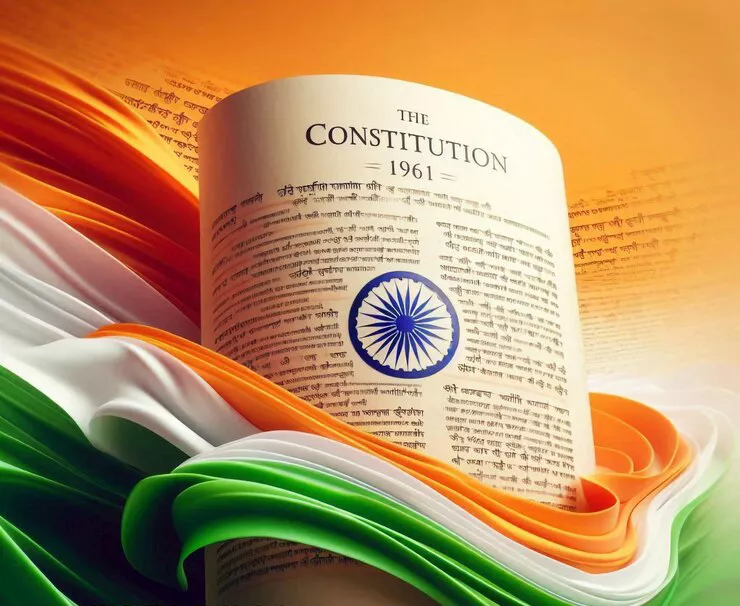
- The Constitution is not just a legal text; it reflects the dreams, aspirations, and rights of the people.
- The Preamble, introduced as a poetic preface, enshrines liberty, equality, and fraternity.
- Secularism was formally included in the Preamble after the 42nd Amendment in 1976.
- Judicial precedent: SR Bommai v. Union of India (1994) held secularism as the bedrock of constitutional philosophy.
Legal and Political Context
- Critics argue that “secular” and “socialist” were later additions; however, the basic structure doctrine protects these principles.
- Secularism in the Indian context means equal treatment of all religions, no state religion, and respect for pluralism.
- It is part of the basic structure doctrine, hence beyond the scope of constitutional amendment for removal.
Basic Structure Doctrine:
- The Basic Structure Doctrine holds that Parliament can amend any part of the Constitution under Article 368, but it cannot alter or destroy its "basic structure" — the fundamental features that form its core identity.
Nature of Indian Secularism
- Not a rigid wall between state and religion (as in Western secularism) but a principle of equal respect and treatment for all faiths.
- Sarva dharma sama bhava: All religions are equal in the eyes of the State.
- Guarantees under Articles 25–28: Right to freedom of religion, prohibition of religious instruction in state-run institutions, and state neutrality.
Challenges & Misuse
- Rise of divisive politics, majoritarianism, and intolerance threaten secularism.
- Efforts to remove the term from the Preamble are not only unconstitutional but also politically motivated.
- Danger lies in eroding co-ownership of the Republic by all communities, which is essential for democracy.
Way Forward
- Reaffirm secularism as a constitutional value.
- Guard against political attempts to undermine foundational principles.
- Recognize that secularism is essential for unity in diversity and as a safeguard for minorities
- Constitutional promises should be preserved to maintain democratic harmony.
Secularism is not an imported idea; it draws from India’s own
traditions—Ashoka’s Dhamma, Akbar’s Sulh-i-Kul,
Kabir’s and Guru Nanak’s teachings.
Removing secularism from the
Constitution is not only revisionism but historical vandalism.
In a diverse nation
like India, secularism is the best route to fraternity and social peace.
Prelims Questions:
1. Consider the following statements about the Preamble of the Indian Constitution:
- The words “Secular” and “Socialist” were part of the original Preamble adopted in 1950.
- The Preamble can be amended but cannot alter the basic structure of the Constitution.
- Secularism in the Indian context means the strict separation of religion from State.
Which of the statements given above is/are correct?
2. Which of the following cases is considered a landmark in affirming that secularism is part of the basic structure of the Constitution?
- Indira Nehru Gandhi v. Raj Narain (1975)
- Kesavananda Bharati v. State of Kerala (1973)
- S. R. Bommai v. Union of India (1994)
- Minerva Mills Ltd. v. Union of India (1980)
Mains Questions:
- "The removal of 'secular' from the Preamble would not only be unconstitutional but also a threat to India’s unity in diversity." Discuss in the context of the Basic Structure Doctrine. 150Words 10 Marks