Brain Response
Syllabus Areas:
GS III - Science and Technology
A new study published in iScience has offered rare insight
into one of the
earliest mysteries of human development — when the brain first begins to
perceive rhythm.
By studying premature infants,
whose brains are at a similar stage to fetuses in the final weeks of
pregnancy, scientists have found that the link between sound and
movement emerges far earlier than previously thought.
The Study and Its Method
Researchers at the University of Picardy Jules Verne, France, used a non-invasive imaging method called functional near-infrared spectroscopy (fNIRS) to monitor brain activity in premature babies (around 36 weeks gestational age) while they slept.
The infants were exposed to:
- Rhythmic sound sequences, and
- Irregular, non-rhythmic sound sequences.
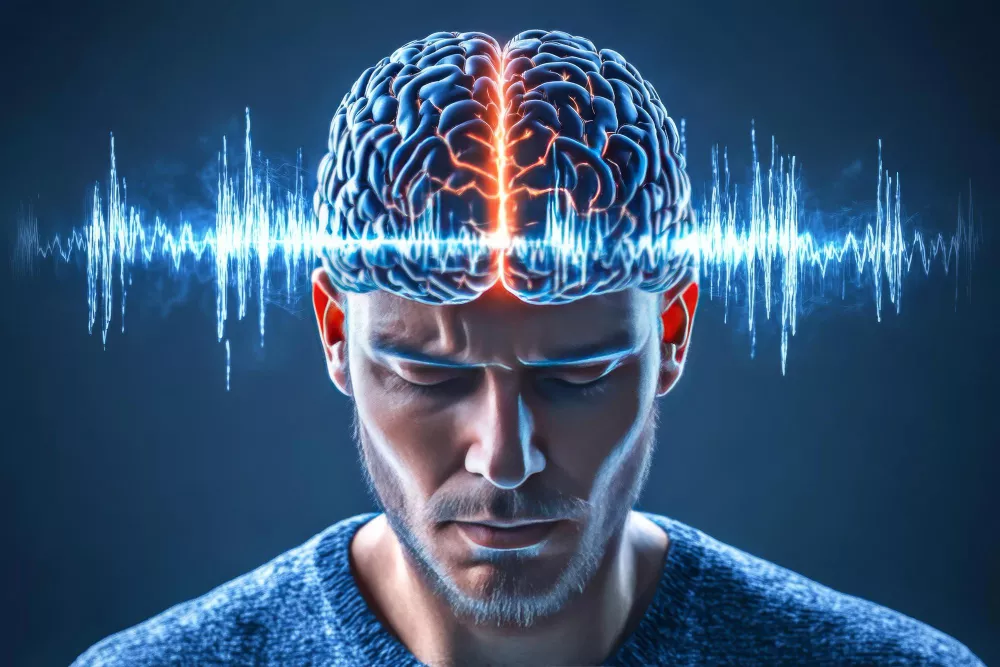
The results showed that rhythmic sounds activated not only the auditory areas of the brain (those that process hearing), but also motor planning regions, which are involved in movement coordination.
Key Findings
- Rhythm processing starts before birth: The brain begins responding to rhythmic patterns even before full-term birth — suggesting auditory rhythm perception begins during late gestation.
- Sound–movement connection: The activation of movement-related areas indicates that the brain links rhythm and motion internally, even before the baby can move voluntarily. This prepares the ground for future synchrony and motor coordination after birth.
- Brain-wide activation: Rhythmic sounds triggered stronger and broader brain activity than irregular ones, implying that rhythm helps organize and stimulate multiple brain regions, not just those for hearing.
Scientific Context and Expert Insights
- The auditory system becomes functional even before the third trimester, and this early exposure to rhythmic sounds — such as the mother’s heartbeat and voice — helps the fetus’s brain build timing and coordination networks.
- The findings bridge a key developmental gap — showing coordination between hearing and movement even before birth, when the motor system is still maturing. And also emphasized that the motor system is an active partner in shaping perception, not just a follower.
- Added that while fNIRS cannot capture rapid brain waves, the results align with the theory that rhythm perception stems from self-organizing neural oscillations — a resonance between auditory and motor circuits.
- Scientists highlighted the clinical relevance: Smooth, symmetrical movements in fetuses and newborns often indicate healthy neural coordination, reducing the risk of neurodevelopmental disorders like cerebral palsy.
Cerebral palsy (CP) :
Cerebral palsy (CP) is a group of neurological disorders that affect movement, muscle tone, and posture. It happens when a child’s developing brain—usually before or during birth, or shortly after—is damaged or doesn’t develop properly.
A few essentials:
- Cause: Often due to lack of oxygen to the brain, premature birth, brain infections, or head injury in early life.
- Nature: It’s non-progressive, meaning the brain injury doesn’t worsen over time, though symptoms can change as the person grows.
Broader Implications
The study suggests that rhythm may serve as a foundational element of brain development, influencing:
- Language acquisition,
- Social communication, and
- Cognitive synchronization.
Even without conscious recognition of music or beats, the developing brain is already “learning to listen and move in time.”
Early rhythmic exposure could help stimulate synaptic growth, strengthen hearing–movement connectivity, and support early learning processes long before birth.
Significance for Neuroscience and Child Development
- Neural preparation for communication: The capacity to detect rhythm may later support language rhythm (prosody) and turn-taking in conversation.
- Implications for neonatal care: Controlled rhythmic auditory exposure in neonatal ICUs might promote brain development in premature infants.
- A deeper evolutionary insight: Rhythm could be one of the first organizational patterns through which the human brain learns to interpret the world — possibly a biological root of both music and movement.
The study underscores a profound idea: long
before a baby
dances, sings, or
speaks, its brain is already wired to feel rhythm.
From
the pulse of
the mother’s heart to the cadence of her voice, these rhythmic cues
help the fetal
brain build the first internal map of timing and
coordination.
“The presence of elaborate neural capacities for processing rhythm so early in life highlights its importance as a building block for learning from regularities in the world.”
In essence, rhythm may be the brain’s first language — its first form of music — guiding how it learns to make sense of life before it even begins.
Prelims Questions:
1. Exposure to rhythmic sounds in the womb plays a foundational role in:
- Development of neural coordination.
- Early language and social communication abilities.
- Formation of skeletal muscle structure.
- Establishment of hearing–motor linkage.
Select the correct answer using the code below:
2. Which of the following statements regarding rhythm perception in the brain is/are correct?
- It is entirely dependent on postnatal sensory experiences.
- It arises from neural oscillations linking hearing and motor regions.
- It is believed to exist even before the full maturation of the motor system.
Select the correct answer using the code below:
3. With reference to auditory system development in humans, consider the following statements:
- The auditory system becomes functional only after birth.
- Foetal exposure to external sounds begins before the third trimester.
- Motor–auditory connectivity starts developing before voluntary movement.
Which of the statements given above are correct?
4. Which of the following pairs are correctly matched?
| Brain Region | Primary Function |
|---|---|
| 1. Auditory cortex | Processing of sound signals |
| 2. Motor cortex | Planning and coordination of movement |
| 3. Prefrontal cortex | Regulation of heartbeat and digestion |