Goddess & Location: The festival centers on Goddess
Kamakhya, a form of the Mother Goddess or Shakti, whose sanctum at
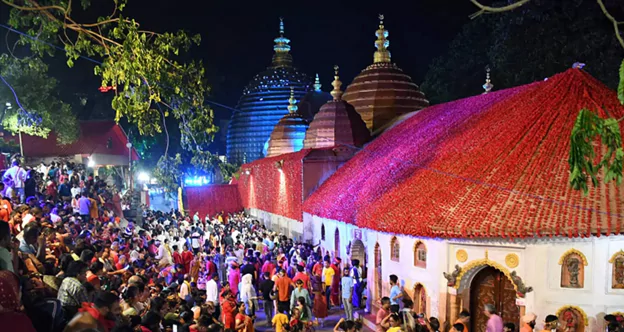
Kamakhya Temple atop Nilachal Hill in Guwahati is one of
India’s 51 Shakti Peethas—believed to be where Sati’s
womb and vagina fell
Mythological roots: It is mythically believed that Kamakhya
undergoes her annual menstruation here—marking a divine energy cycle linked to
fertility and feminine power
Timing & Monsoon Link
Held in mid‑June (Assamese month of Ahaar/Asadha), coinciding with
the sun's entry into Gemini and the onset of
monsoon—symbolically tying Earth’s fertility to the
goddess’s menstrual cycle
Rituals & Celebrations
Sanctum Closure: For three days, the
temple’s doors remain shut—symbolic of the goddess’s period, akin
to traditional menstrual seclusion
Restrictions: During this time, devotees refrain from puja,
cooking, farming, or reading scriptures—reflective of respect for the
goddess’s condition
Transformation of the Symbol: The stone yoni receives a red silk
cloth, and its spring water turns red, believed to be the
goddess’s menstrual fluid. On the fourth day, a ceremonial
bath cleanses the symbol, the doors reopen, and devotees receive prasad:
Angodak: holy water from the yoni spring
Angabastra: red cloth worn during the seclusion
Tantric & Sociocultural Significance
Tantric Roots: Kamakhya is a key site of Tantric
Shaktism. The mela is also called a Tantric fertility
festival—attracting ascetics, yogis, Aghoras,
Bauls, and Tantriks who return to seclusion afterward
Taboo Transformation: In a society that often stigmatizes
menstruation, this festival sacralizes The goddess menstruates
publicly—and the world honors this natural process, repudiating impurity
perceptions .
Scale & Participation
Attracts hundreds of thousands of pilgrims—men, women,
ascetics, foreigners—creating one of Northeast India’s largest religious
gatherings .
Extensive economic activity ensues—markets for ritual items,
local vendors, community kitchens emerge, though waste management becomes a
challenge amid large crowds
Societal & Environmental Impact
Agrarian Pause: Traditional Assamese and tribal farmers avoid
sowing or transplanting rice during this period, viewing it as inauspicious—a
humble integration of spiritual beliefs in agriculture
Civic Challenges: Sanitation and crowd management issues persist,
prompting municipal responses and volunteer involvement to manage waste