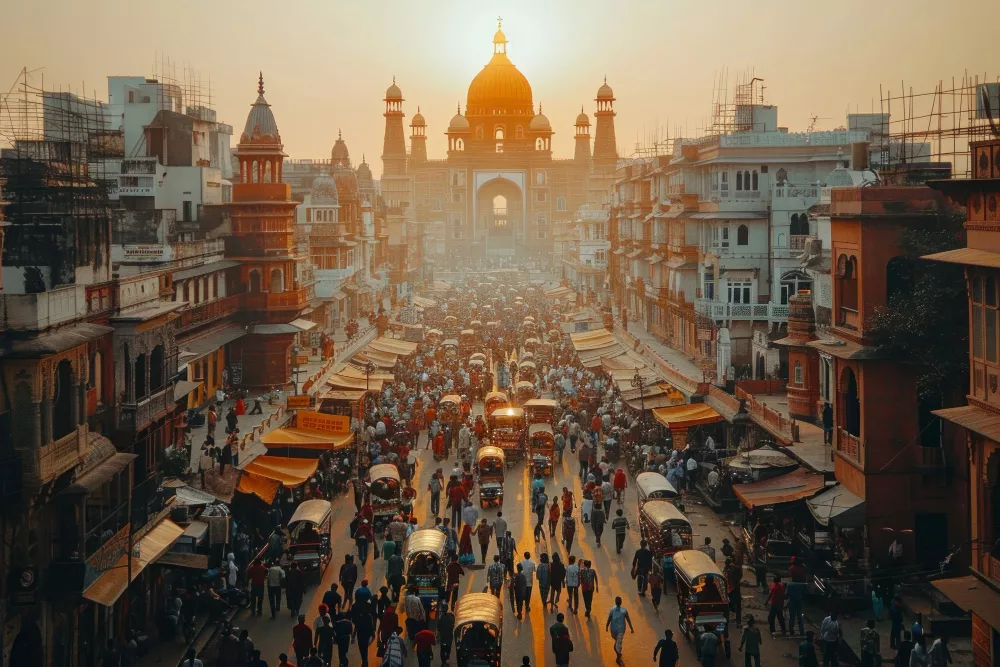
20th Session of UNESCO’s ICH
Syllabus Areas:
GS I - Art & Culture
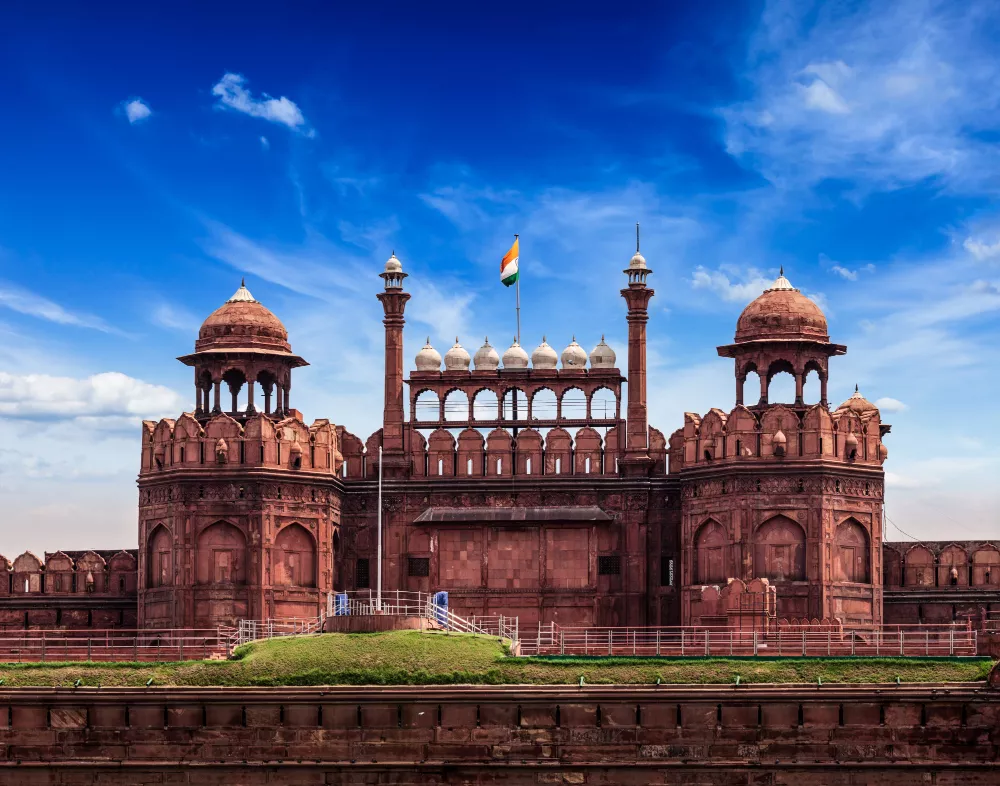
India hosted the 20th Session of UNESCO’s Intergovernmental Committee for the Safeguarding of the Intangible Cultural Heritage (ICH) at the Red Fort, New Delhi, from 8–13 December 2025. The summit brought together global cultural experts, Member States, NGOs, and practitioners to deliberate on safeguarding living cultural traditions.
The event gained global attention as Deepavali (Diwali) was officially inscribed on UNESCO’s Representative List of Intangible Cultural Heritage, taking India’s total entries to sixteen. The recognition marks a significant milestone in India’s cultural diplomacy and its leadership in safeguarding living heritage.
What is UNESCO & Why ICH Matters?
About UNESCO
- UNESCO (United Nations Educational, Scientific and Cultural Organization) was established in 1945.
- Its mandate: promote international cooperation in education, science, culture and communication.
- UNESCO is globally known for two heritage frameworks:
- World Heritage (1972 Convention) — protects monuments, sites, natural landscapes.
- Intangible Cultural Heritage (2003 Convention) — protects living traditions, rituals, performing arts, craft skills and oral expressions.
2003 Convention on Safeguarding Intangible Cultural Heritage
- Adopted to address risks to traditional cultures due to globalization, urbanization, and cultural homogenisation.
- Defines ICH as "practices, representations, expressions, knowledge and skills that communities recognize as part of their cultural heritage."
- Five recognised domains:
- Oral traditions
- Performing arts
- Social practices, rituals and festive events
- Knowledge about nature & universe
- Traditional craftsmanship
- Mechanisms under the Convention:
- Representative List of ICH
- List in Need of Urgent Safeguarding
- Register of Good Safeguarding Practices
Intergovernmental Committee
- 24-member body that evaluates nominations.
- Decides on inscriptions, financial assistance, and international cooperation.
- Annual session rotates among member states — India hosted the 20th session.
Significance of India Hosting the 20th ICH Session
- Reinforces India’s position as a major custodian of living heritage.
- Symbolically powerful: hosting at the UNESCO-recognised Red Fort, linking tangible and intangible heritage.
- Demonstrates India’s active role in shaping global cultural policy.
- Creates a platform for practitioners, indigenous groups and state governments to engage with global experts.
- Boosts cultural tourism, diplomacy and national soft power.
- Highlights India’s push for more indigenous and community-led safeguarding strategies.
Deepavali’s Inclusion in UNESCO’s ICH List (2025)
Why Deepavali Was Nominated
- One of the world’s largest, most vibrant cultural festivals.
- Rooted in ancient traditions symbolising victory of light over darkness.
- Embodies community bonding, inter-faith participation, and cross-regional variations.
- Sustains diverse livelihoods — diya makers, sweet makers, textile artisans, rangoli artists.
- Acts as a cultural bridge across South Asia and global Indian diaspora.
UNESCO’s Observations
- Deepavali represents a living, evolving cultural expression.
- Strong community participation ensures resilience.
- Women’s role in artistic expressions (rangoli, kolam, alpona) highlighted.
- Festival supports micro-economies and strengthens social cohesion.
- Environment-friendly variants (oil lamps, organic colours) show adaptive capacity.
Significance of the Inscription
- Enhances global visibility for India’s cultural traditions.
- Encourages safeguarding programmes: documentation, training, craft support.
- Boosts research, funding and UNESCO-linked technical assistance.
- Provides international protection against misrepresentation or cultural dilution.
- Strengthens India’s cultural identity in global diplomatic forums.
Complete List of India’s Intangible Cultural Heritage Elements
|
No. |
ICH Element |
Year |
Domain |
|---|---|---|---|
|
1 |
Kutiyattam – Sanskrit Theatre |
2008 |
Performing arts |
|
2 |
Tradition of Vedic Chanting |
2008 |
Oral traditions |
|
3 |
Ramlila – Ramayana performance |
2008 |
Performing arts |
|
4 |
Ramman – Himalayan ritual festival |
2009 |
Social practices & rituals |
|
5 |
Chhau Dance |
2010 |
Performing arts |
|
6 |
Kalbelia Folk Songs & Dances |
2010 |
Performing arts |
|
7 |
Mudiyettu – Kerala ritual drama |
2010 |
Ritual performance |
|
8 |
Buddhist Chanting of Ladakh |
2012 |
Oral traditions |
|
9 |
Sankirtana – Manipur |
2013 |
Ritual music & dance |
|
10 |
Thatheras’ Traditional Metal Craft, Punjab |
2014 |
Traditional craftsmanship |
|
11 |
Yoga |
2016 |
Social practices & wellbeing traditions |
|
12 |
Navroz (Nowruz) – Multinational |
2016 |
Festival & social practice |
|
13 |
Kumbh Mela |
2017 |
Ritual, pilgrimage, social practice |
|
14 |
Durga Puja in Kolkata |
2021 |
Festival & community arts |
|
15 |
Garba of Gujarat |
2023 |
Festival dance tradition |
|
16 |
Deepavali |
2025 |
Social practices, rituals & festive events |
Key Outcomes of the 20th ICH Session (India 2025)
- Examination of global nominations for inclusion in ICH lists.
- Adoption of safeguarding reports for multiple nations.
- Expert discussions on climate change impacts on traditional festivals.
- Review of global best practices on community-led safeguarding.
- Strengthening of Asia–Pacific cooperation in cultural preservation.
- India proposed capacity-building modules for South Asian nations.
- Launch of a UNESCO–India Living Heritage Digital Repository roadmap (announced in concept form).
- Special cultural performances from India’s ICH elements at Red Fort.
Why Intangible Cultural Heritage Matters for India
- India’s civilizational identity is deeply rooted in living traditions.
- Provides livelihoods to millions — folk artists, craftspeople, performers.
- Ensures inter-generational cultural transmission.
- Boosts cultural tourism and soft power.
- Reinforces pluralism, harmony and India’s composite culture.
- Encourages sustainable craft practices and environmental responsibility.
Challenges Ahead
- Risk of over-commercialisation of cultural festivals.
- Urbanisation weakening traditional community networks.
- Lack of documentation for certain tribal/folk traditions.
- Need for better financial assistance for craftspeople.
- Pressure from mass tourism affecting authenticity.
- Climate constraints on traditional festivals (e.g., lantern making, fireworks regulations).
- Need for systematic school-level cultural education.
Way Forward
- Create community-led safeguarding plans for Deepavali-related arts.
- Provide direct support to artisans (diya makers, rangoli artisans, textile workers).
- Promote eco-friendly festival elements through incentives.
- Build digital archives documenting regional variants of Deepavali.
- Expand UNESCO training programmes for cultural practitioners.
- Encourage state governments to nominate more tribal traditions.
- Strengthen cultural infrastructure — craft villages, cultural hubs, training centres.
India’s hosting of the 20th UNESCO ICH Summit and the inscription of Deepavali together mark a defining moment in the country’s cultural diplomacy. While the global recognition is prestigious, the real responsibility lies in protecting, nurturing and transmitting these traditions at the grassroots. With committed policy support, community involvement, and sustainable practices, India can continue to serve as a global lighthouse of living cultural heritage.
Prelims Questions:
1. With reference to the 2003 UNESCO Convention on Safeguarding ICH, consider the following:
- It recognises “knowledge concerning nature and the universe” as one of the domains of intangible heritage.
- It institutionalised the Intergovernmental Committee for the Safeguarding of ICH.
- It mandates State Parties to create national inventories of intangible heritage.
How many of the above statements are correct?
2. Which of the following is NOT a domain under UNESCO’s intangible heritage classification?
- Oral traditions and expressions
- Social practices, rituals and festive events
- Knowledge systems related to agriculture productivity
- Traditional craftsmanship