150 Years of Arya Samaj
Syllabus Areas:
GS I - History
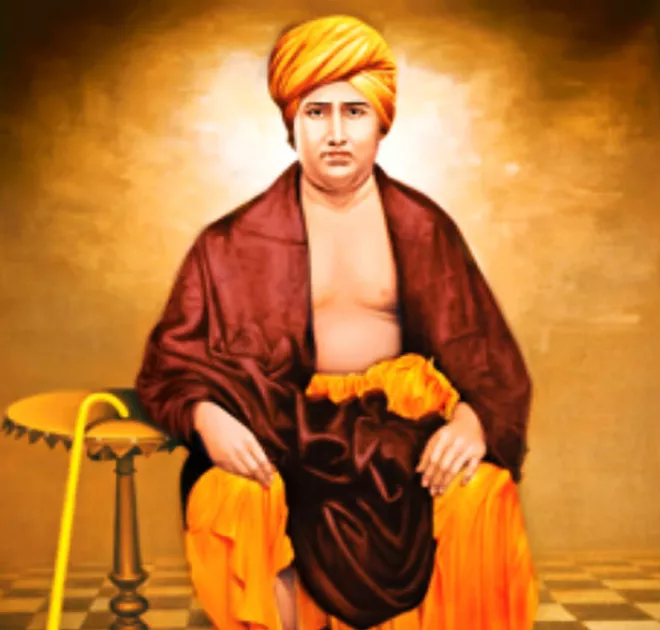
In 1875, in Bombay (now Mumbai), the reformist movement Arya Samaj was founded by Maharshi Dayanand Saraswati with the radical ambition of returning to the Vedas and promoting a socially just, morally grounded Hinduism. Now, as the Samaj marks 150 years since its foundation, it is opportune to reflect on its journey: its founding ideals, key milestones, its contributions and the challenges ahead. I present here a full-length article suited for a website audience, structured and detailed.
Founding Context & Philosophy
The historical moment
- In the mid-19th century India was under British colonial rule; social customs, religious practices and education systems were undergoing dramatic challenges.
- Maharshi Dayanand, influenced by the Vedas, and by reading and debate, sought to reform Hindu society’s foundations. The phrase “Back to the Vedas” became his rallying cry.
Core beliefs of Arya Samaj
- The Samaj holds the Vedas as the infallible source of truth
- It rejects idol worship (murti-puja), blind rituals, and animal sacrifice.
- The Samaj emphasises universalism: one God, moral living, the duty of human beings to pursue truth and uplift the world.
- It also emphasises social reform: women’s education, widow remarriage, fighting caste discrimination.
Founding date & landmark
- The movement was formally founded on 10 April 1875 in Bombay.
- In 2025, the Samaj marked 150 years of its foundation.
Key Phases in the Journey
Early Years (1875-1900)
- After establishment, focus was on teaching the Vedas, setting up gurukuls (schools) and challenging prevailing orthodox practices.
- The founder died in 1883, but the movement continued and spread, especially in Punjab and other regions.
- There were debates internally as well: e.g., a split in 1893 around vegetarianism vs meat-eating in Punjab.
Early 20th Century — Social Reform & Nationalism
- The Samaj engaged in the famous Shuddhi movement: reconversion efforts to bring back those who had converted to other religions; this brought societal and political implications.
- It also committed to education: founding of schools, orphanages, women’s education.
- Its members and frameworks supported Indian nationalist efforts; the Samaj offered an ideological platform for freedom movement.
Post-Independence to Present
- The Samaj continued to expand in India and abroad (in the diaspora).
- Today, it celebrates its 150-year journey and asserts relevance in areas like education, culture, national identity. The government has recognised this milestone.
Major Contributions & Legacy
Education & Institutions
- The Samaj founded and inspired schools, especially the DAV (Dayanand Anglo-Vedic) chain.
- Focus on women’s education: for instance, girls’ school in Jalandhar grew into a women’s college under its inspiration.
Social Reform
- Formalised a range of social reforms: widow remarriage, inter-caste marriage, abolition of child marriage, challenging untouchability.
- The Samaj also engaged in relief work (e.g., after earthquake) and community service.
National & Cultural Influence
- As the state acknowledged, the Samaj contributed to India’s “Vedic identity” and to the shaping of modern Indian society.
- Its guiding motto “Krinvanto Vishwam Aryam” (let us ennoble the world) encapsulates its global vision.
Diaspora Reach
- Beyond India, Arya Samaj branches exist in Mauritius, Ghana, Singapore and other countries, helping the Indian diaspora maintain cultural identity while adapting to new contexts.
Challenges & Critiques
- While progressive in many respects, the Samaj faced criticism for its reconversion campaigns (Shuddhi) which had communal overtones.
- Tensions between tradition and modernity: How to remain rooted in the Vedas yet adapt to contemporary realities (e.g., educational models, gender roles, interpretation of scriptures).
- Debate persists whether the Samaj’s interpretation of Vedic texts is inclusive enough in today’s plural society.
Why the 150-Year Mark Matters
- Milestones like 150 years prompt reflection: what was promised, what was achieved, and what remains to be done.
- They also provide occasions for renewal: the Samaj’s institutions and followers can reinvigorate their commitment to core values (truth, service, upliftment).
- Public and governmental recognition (such as by the Prime Minister) elevates the popular awareness of the Samaj’s role.
- For the broader society, this is an opportunity to revisit reforms that remain unfinished: gender equality, caste justice, education for all, Vedic wisdom in modern life.
Forward Outlook: What Next for Arya Samaj?
- Adapted education: Leverage its institutional strength (schools/colleges) to equip learners with 21st-century skills, while preserving values.
- Inclusivity & pluralism: While rooted in Vedic tradition, engage with India’s plural ecosystem—gender, caste, religion, environment.
- Social justice priorities: Focus on still-persistent issues—rural education, sanitation, female literacy, climate consciousness.
- Global engagement: For its diaspora reach, the Samaj can act as a bridge between Indian traditions and global ethical movements (sustainability, human rights).
- Meaningful ritual & practice: The Samaj’s rejection of idol worship and emphasis on inner spirituality offers an alternative to ritual-heavy religion; this can be relevant for modern seekers.
- Digital presence: In a world of social media and online communities, the Samaj needs to amplify its voice in digital spaces for younger generations.
The 150-year journey of Arya Samaj is not merely a commemoration of the past but a reaffirmation of India’s enduring spirit of reform and renewal. Founded on the timeless wisdom of the Vedas, the movement challenged social evils, promoted education, and inspired national awakening long before independence became a rallying cry. Today, as the world faces moral and social disarray, Arya Samaj’s principles of truth, equality, and self-discipline stand as a guiding light.
Its legacy calls not for nostalgia but for action — to apply Vedic ideals to modern challenges, to reform without fear, and to serve society with conviction. As Arya Samaj steps into its next century and beyond, its mission remains clear: to build a just, enlightened, and self-reliant India rooted in knowledge and righteousness.