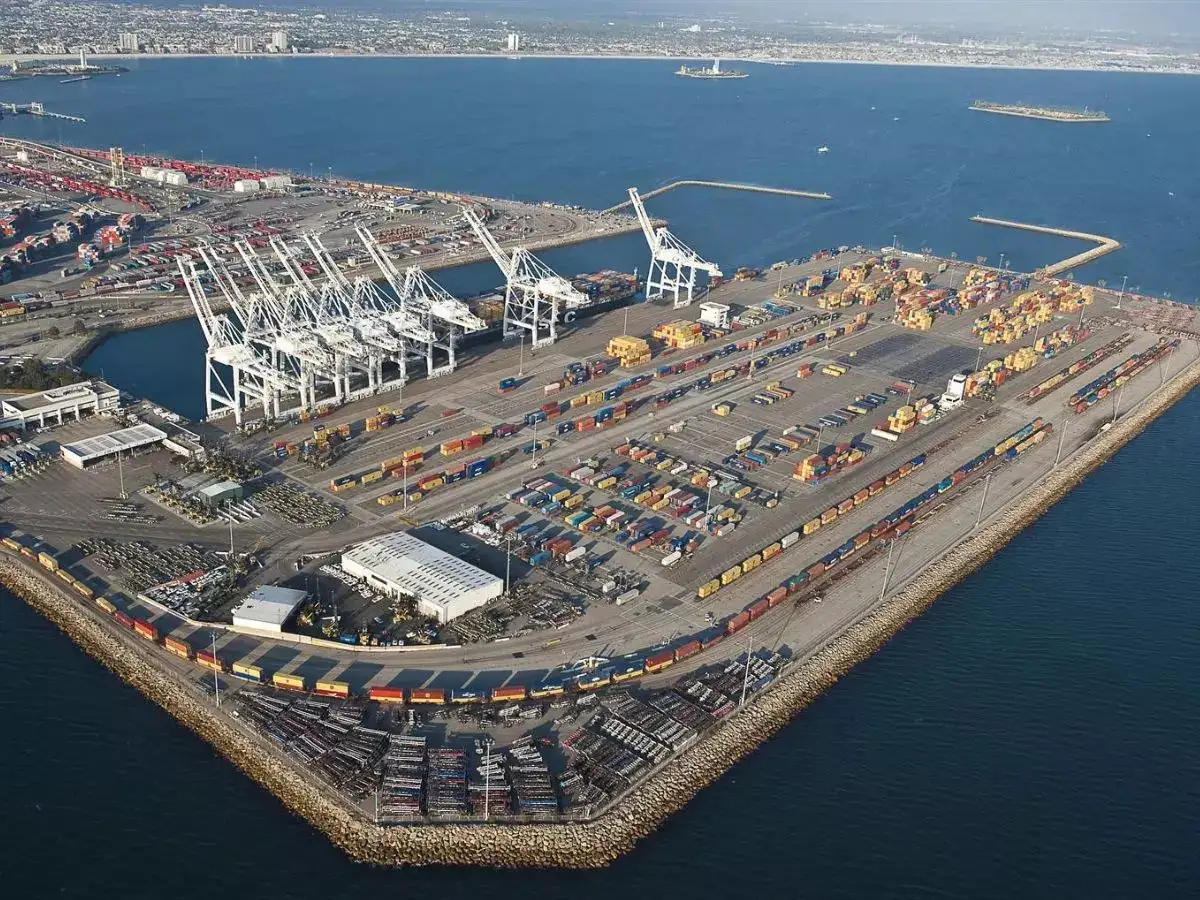
US Revoked Sanctions Waiver on Chabahar Port
Syllabus Areas:
GS II - International Relations
In September 2025, the United States revoked the sanctions waiver previously granted to India for its operations at the Shahid Beheshti Terminal of Chabahar Port in Iran.
- This waiver, issued in 2018, had allowed India to invest in, operate, and trade through Chabahar without fear of punitive action under U.S. sanctions against Iran.
- The waiver ends on 29 September 2025. After this date, Indian entities involved in Chabahar could be penalized under the Iran Freedom and Counter-Proliferation Act (IFCA).
- The move has triggered serious concerns in New Delhi regarding India’s strategic connectivity, its investments in Iran, and its broader regional influence.
Implications
For India
- Connectivity setback: India’s crucial access route to Afghanistan and Central Asia, bypassing Pakistan, is jeopardized.
- Economic costs: Indian investments (over $300 million committed) in port equipment and infrastructure face uncertainty.
- Trade barriers: Sanctions risk may discourage banks, insurers, and shipping companies from facilitating trade via Chabahar.
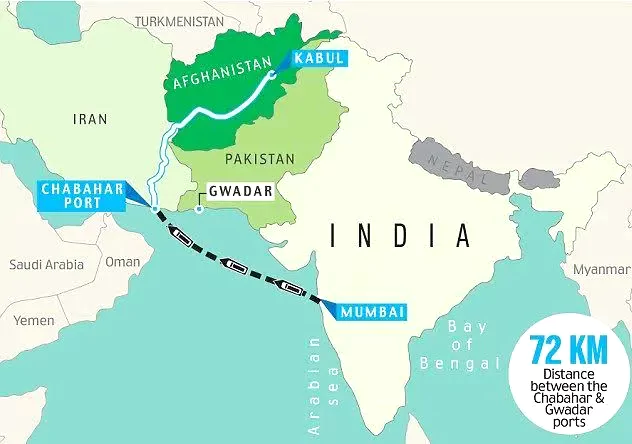
- Strategic credibility: Weakens India’s ability to offer regional alternatives to Chinese projects like Gwadar Port (Pakistan).
For the Region
- Afghanistan impact: Chabahar was central to delivering humanitarian aid and trade to Afghanistan. With sanctions, Kabul may tilt further towards Pakistan-China networks.
- Iran’s options: Tehran may deepen alignment with China and Russia, reducing India’s leverage.
- S.–India friction: The revocation creates friction between India and the U.S., at a time when both are aligning on the Indo-Pacific against China.
Background
- S. sanctions on Iran target its nuclear programme, missile development, and alleged sponsorship of terrorism.
- In 2018, under the Trump administration, while most sanctions were re-imposed, Chabahar received a waiver due to its perceived role in stabilising Afghanistan.
- The waiver symbolised recognition of India’s role as a development partner in Afghanistan and its need for alternative connectivity.
- However, with changing U.S. priorities and a tougher stance on Iran, the exemption has now been withdrawn.
Chabahar Port: A Strategic Gateway
About
- Location: A deep-water port in Sistan-Baluchistan province, Iran, on the Makran coast near the Gulf of Oman, outside the Strait of Hormuz.
- Unique position: It is Iran’s only deep-sea port with direct open-ocean access.
- Importance for India: Provides secure, direct access for large cargo ships, bypassing Pakistan to connect with Afghanistan and Central Asia.
- Terminals: Two main terminals — Shahid Beheshti and Shahid Kalantari. India is actively engaged in developing and operating the Shahid Beheshti Terminal.
Development & Management
- Chabahar Agreement (2016): Signed between India, Iran, and Afghanistan to create the International Transport and Transit Corridor (ITTC), boosting regional connectivity.
- India’s role:
- Operations taken over in December 2018 by India Ports Global Limited (IPGL), through its subsidiary India Ports Global Chabahar Free Zone (IPGCFZ).
- India has invested in port equipment, cranes, and container handling facilities.
Operational Performance
- Trade & Aid to Afghanistan:
- Trans-shipment of 5 million tonnes of wheat and 2,000 tonnes of pulses from India to Afghanistan.
- Regional cooperation:
- Supplied 40,000 litres of Malathion to Iran in 2021 for locust control.
- Humanitarian support:
- Used extensively for aid shipments during the Covid-19 pandemic.
- Connectivity building: Integral to International North-South Transport Corridor (INSTC) and India’s vision of deeper trade links with Central Asia.
Importance
- Strategic bypass: Provides India access to Afghanistan and Central Asia without relying on Pakistani territory.
- Counter to Gwadar: Serves as a counterbalance to China’s Gwadar Port (Pakistan), located just ~170 km away.
- INSTC link: Integral to the International North-South Transport Corridor (INSTC), connecting India to Russia and Europe through Iran.
- Energy & trade security: Ensures India’s ability to secure energy and trade routes in a region dominated by Chinese projects.
- Aid & outreach: India has used Chabahar to send humanitarian assistance (e.g., wheat to Afghanistan).
Geopolitics Involved
- India–Iran Relations
- Historically friendly ties, but strained by India’s reduced oil imports under U.S. pressure.
- Chabahar remains the single largest connectivity project binding the two countries.
- India–U.S. Relations
- While both nations collaborate in the Indo-Pacific, the U.S. move highlights limits of strategic convergence.
- India’s principle of strategic autonomy faces a stress test.
- India–China Rivalry
- China’s Belt and Road Initiative (BRI) and Gwadar port strengthen Beijing’s foothold in the region.
- Weakening of Chabahar undermines India’s ability to counter Chinese influence.
- Regional Security
- Afghanistan’s dependence may shift toward Pakistan and China, reducing India’s role in its reconstruction.
- Russia and Central Asia may view India as a less reliable partner if Chabahar is paralysed.
Way Forward
- Diplomatic Negotiation
- India must engage Washington to secure a fresh waiver, stressing Chabahar’s role in regional stability and its importance in countering China.
- Diversification of Partnerships
- Collaborate with Russia, Iran, and Central Asian states to operationalise Chabahar through non-U.S. financial channels (local currencies, barter, rupee-rial mechanisms).
- Strengthen Strategic Autonomy
- Reduce overdependence on U.S. approval in core regional projects.
- Reinvest in projects that secure independent access routes.
- Operational Mitigation
- Explore alternate financing, insurance, and shipping mechanisms insulated from U.S. systems.
- Work with regional development banks to support Chabahar.
- Balance Ties
- Maintain cooperation with the U.S. in the Indo-Pacific while asserting India’s independent interests in West Asia and Central Asia.
The revocation of the U.S. waiver for Chabahar port is a serious blow to India’s regional connectivity vision. It not only threatens India’s investment but also weakens its ability to project influence in Afghanistan and Central Asia, while indirectly boosting China’s and Pakistan’s leverage.
For India, the challenge lies in balancing ties with the U.S. while protecting its core interests in Iran and Central Asia. Chabahar has been more than just a port — it is a symbol of India’s aspiration for strategic autonomy and regional leadership. How New Delhi responds will shape the trajectory of its foreign policy in West Asia and beyond.
Prelims Questions:
1. Consider the following statements regarding the Chabahar Port Project:
- It is a trilateral agreement between India, Iran, and Pakistan.
- It provides India an alternative route to Afghanistan, bypassing Pakistan.
- It is a part of the International North-South Transport Corridor (INSTC).
Options
2. Which of the following ports is considered as a counterweight to Chabahar Port in regional geopolitics?
- Gwadar Port
- Bandar Abbas Port
- Karachi Port
- Fujairah Port
Mains Questions:
- The recent revocation of U.S. sanctions waiver for Chabahar Port is a major challenge for India’s regional connectivity and strategic autonomy. Discuss. 15 marks 250 Words
- “Connectivity projects are not merely economic corridors, but tools of geopolitics.” Analyse in the context of India’s involvement in Chabahar Port. 15 Marks 250 Words