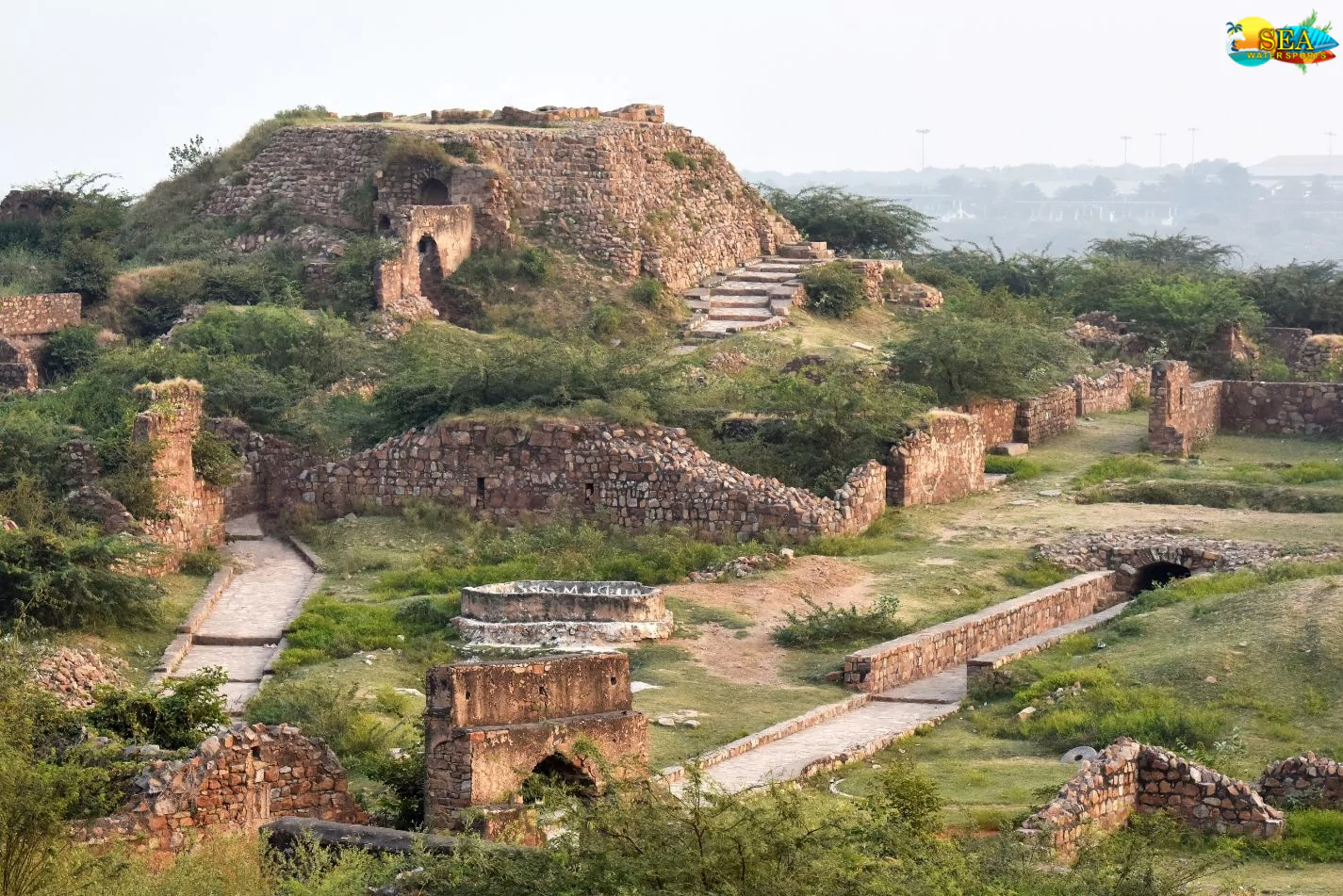
Tughlaqabad's Hidden Passage
Syllabus areas:
Prelims - History
Tughlaqabad Fort in Delhi has recently drawn attention due to its little-known underground corridor, a long tunnel-like passage with rows of darkened cells. This structure is intriguing because its purpose remains unknown, and it stands as one of the most puzzling features of the fort. Unlike other prominent monuments in Delhi, Tughlaqabad remains isolated from mainstream tourism and public life.
Background
- Construction: It was built in the early 14th century by Ghiyasuddin Tughlaq, the founder of the Tughlaq dynasty, as the third city of Delhi.
- Historical Accounts: Traveller Ibn Battuta described the fort as having “gilded tiles” and “vast stores of wealth”, indicating its grandeur during its peak.
- Abandonment: After Ghiyasuddin’s death in a freak accident, his successor ordered the population to relocate to a new capital far from Delhi. This decision left Tughlaqabad abandoned, initiating a decline that has lasted centuries.
- Comparison: While the Red Fort remains a vibrant part of India’s political and cultural narrative, Tughlaqabad has faded into obscurity.
Present Condition
- The fort’s massive ramparts, bastions, and hilltop location give it a grim and windswept appearance.
- It is largely deserted except for a large monkey population.
- Vegetation such as wild grass has overrun the ruins, and many structures have collapsed or partially survived.
- One ruined structure resembles a Roman aqueduct, reflecting diverse architectural influences or coincidences in design.
The Underground Corridor
- Description: The corridor is located beneath rugged terrain and accessed via a steep staircase from an opening in the ground.
- Atmosphere: Inside, daylight dims and the temperature drops. The passage eventually leads back to the surface through another staircase.
- Purpose: No conclusive evidence exists about its original use.
Theories suggest it could have been:
- An army barrack
- A horse stable
- A shrine or monks’ hostel
- An escape route
- Legends: Local guards claim strange voices can be heard at night from within the corridor, which they attribute to ghosts, although they could be the sounds of bats.
Significance
- Historical Value: The fort is a reminder of Delhi’s Tughlaq-era city planning and military architecture.
- Tourism Potential: Restoration and promotion could transform Tughlaqabad into a major heritage attraction, similar to the Red Fort.
- Cultural Importance: The site highlights the contrast between Delhi’s celebrated Mughal-era monuments and its neglected medieval predecessors.
Prelims Questions:
1. With reference to Ghiyasuddin Tughlaq, consider the following statements:
- He founded the Tughlaq dynasty and built Tughlaqabad Fort.
- He shifted the capital from Delhi to Daulatabad.
- He died in a freak accident involving a pavilion collapse.
Which of the statements given above is/are correct?
2. Which of the following policies are correctly associated with Muhammad bin Tughlaq?
- Introduction of token currency
- Transfer of capital from Delhi to Daulatabad
- Establishment of a department for agriculture called “Diwan-i-Kohi”
3. Consider the following statements regarding Firoz Shah Tughlaq:
- He introduced the practice of hereditary appointments to administrative posts.
- He established new towns such as Firozabad, Hissar, and Jaunpur.
- He abolished many taxes not sanctioned by Islamic law.
Which of the statements given above is/are correct?
4. Who among the following Sultanate rulers was a contemporary of the traveller Ibn Battuta?
- Iltutmish
- Balban
- Muhammad bin Tughlaq
- Firoz Shah Tughlaq