Legacy of the Cholas
Syllabus Areas:
GS I - History (Art & Culture)
The Aadi Thiruvathirai festival at Gangaikonda Cholapuram, Tamil Nadu, commemorating the birth anniversary of Rajendra Chola I (r. 1012–1044 CE), was celebrated with grandeur. This year’s event gained national attention with Prime Minister Narendra Modi’s participation during its valedictory ceremony. It also coincided with the 1,000-year anniversary of Rajendra Chola’s Southeast Asian maritime expedition.
Background of Rajendra Chola I and Gangaikonda Cholapuram
- Rajendra Chola I was the son of Rajaraja Chola I and succeeded him in expanding the Chola Empire further into Southeast Asia, establishing diplomatic and trade influence.
- As per historian A. Nilakanta Sastri, Rajendra Chola ruled over the most extensive and respected Hindu state of his era.
- Gangaikonda Cholapuram (literally, “The town of the Chola who brought the Ganges”) became the imperial capital from 1025 CE to 1279 CE.
Key Takeaways
Origins and Rise
- Time Period: 9th to 13th Century CE (peak under Rajaraja Chola I and Rajendra Chola I)
- Region: Primarily Tamil Nadu; capital at Thanjavur, later Gangaikonda Cholapuram
- Sources: Inscriptions (e.g., Thanjavur temple), copper plate grants (Leiden, Thiruvalangadu), foreign accounts
Major Achievements
- Strong Central Administration
- Well-organized bureaucracy
- Village self-government (Ur, Sabha, Nagaram)
- Revenue administration and land surveys
- Military Conquests
- Conquered parts of Sri Lanka, Andhra, Karnataka, Odisha
- Expanded north to the Ganges (hence Rajendra's title Gangaikonda)
- Maritime Prowess
- Built a powerful navy
- Conducted naval expeditions to Southeast Asia (Srivijaya Empire – modern Indonesia, Malaysia)
- Architecture & Art
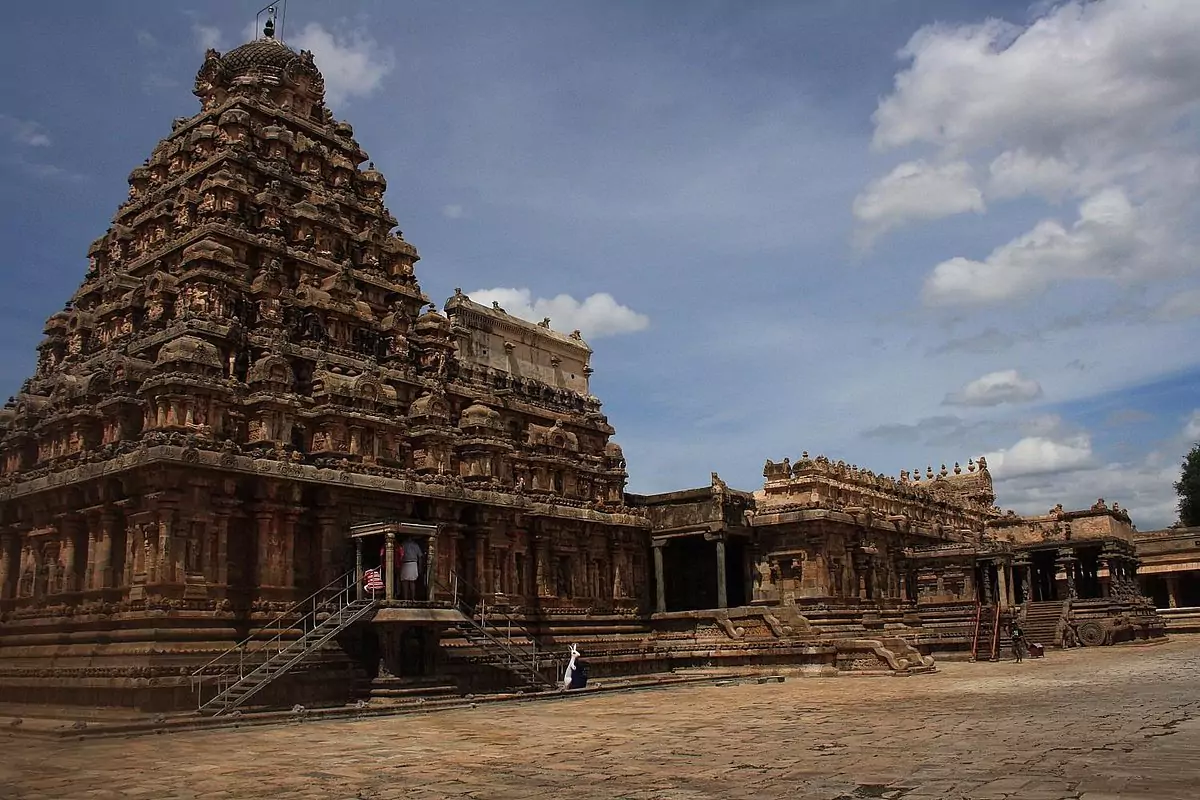
- Dravidian style temples: Brihadeeswarar (Thanjavur), Gangaikonda Cholapuram, Darasuram
- Use of granite, vimana towers, bronze sculpture art (notably Nataraja)
- Declared UNESCO World Heritage as part of Great Living Chola Temples
- Literature & Language
- Supported Tamil and Sanskrit literature
- Tevaram hymns, Chola inscriptions rich in Tamil
Key Highlights of the Event
- PM Modi spent two hours at the temple and deviated from usual political engagements:
- Attended devotional performances by Oduvars and Ilaiyaraaja.
- Dressed traditionally in white dhoti and angavastram.
- Highlighted Chola contributions to governance, architecture, and maritime expansion.
- Modi promised to honor the Chola emperors with statues.
Current Issues in Ariyalur District (Former Capital)
Economic & Developmental Concerns
- Ariyalur, once a thriving capital, is now a backward, agrarian district.
- Infrastructure gaps:
- Poor rail connectivity – longstanding proposals remain unaddressed.
- Low industrial growth despite an industrial estate set up a decade ago.
- Agricultural decline:
- Sugarcane cultivation stopped due to pest attacks.
- Sugar mills are nearly non-functional.
- Neglected tourism potential:
- Despite being a World Heritage Site, the temple lacks basic amenities.
- Fossil museum and tree park, globally significant, remain under-promoted.
Geological Importance
- The region is noted for its fossil deposits, considered as significant as the Grand Canyon in Arizona (U.S.), yet lacks national recognition or visibility.
Key Issues Raised by Locals
- Symbolic gestures (e.g., statues) are appreciated but
insufficient.
- People expected concrete announcements on:
- Railway lines connecting major towns like
Kumbakonam–Namakkal,
Pattukottai–Ariyalur–Thanjavur.
- Job creation and industrial promotion.
- Railway lines connecting major towns like Kumbakonam–Namakkal, Pattukottai–Ariyalur–Thanjavur.
- Job creation and industrial promotion.
The Chola legacy, including art, administration, urban planning, and maritime prowess, remains a proud symbol of India’s historical might. However, the lack of development in Ariyalur, which was once a thriving capital, underlines the gap between cultural celebration and real-time governance outcomes.
Prelims Questions:
1. Consider the following statements:
- Gangaikonda Cholapuram was established by Rajaraja Chola I.
- It served as the Chola capital for over two centuries.
- The temple at Gangaikonda Cholapuram is part of UNESCO’s World Heritage Sites.
Which of the above statements are correct?
- 1 and 2 only
- 2 and 3 only
- 1 and 3 only
- All of the above
2. The Chola Gangam lake, mentioned recently in the news, is located in:
- Thanjavur
- Ariyalur
- Kanchipuram
- Tiruchi
3. Rajendra Chola I’s maritime expedition was directed towards which of the following regions?
- East Africa
- Southeast Asia
- Central Asia
- Persia