Katchatheevu Island
Syllabus Areas:
GS II - International Relations
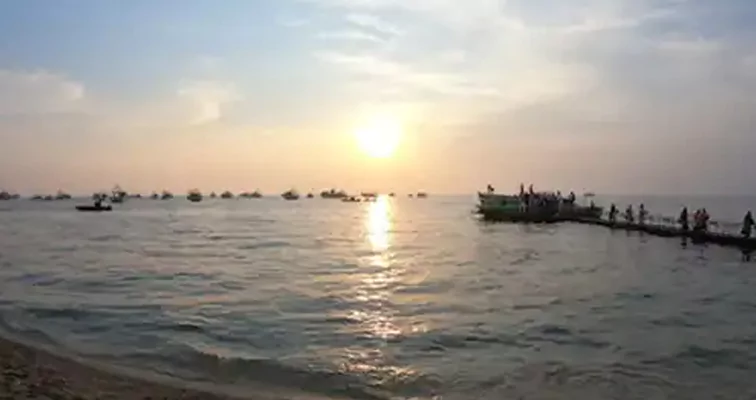
Sri Lankan President Anura Kumara Dissanayake recently became the first head of state from Sri Lanka to visit Katchatheevu Island, an uninhabited territory in the Palk Strait. The visit drew attention on both sides of the Palk Strait, reigniting the decades-old debate over the island’s ownership and the livelihood struggles of fishermen in Tamil Nadu and Northern Sri Lanka.
About Katchatheevu
- Location: Uninhabited island, about 33 nautical miles off Jaffna Peninsula.
- Size:15 sq. km.
- Significance:
- Religious – houses the historic Anthony’s Catholic Shrine, a major pilgrimage site for both Indian and Sri Lankan Christians.
- Economic – lies close to rich fishing grounds near Kanyakumari, making it vital for fishermen.
Historical Background
- Competing claims over Katchatheevu date back to British colonial times between the Madras Presidency (India) and Ceylon (Sri Lanka).
- The issue was settled through two bilateral agreements:
- 1974 Agreement: India recognized Sri Lanka’s sovereignty over Katchatheevu.
- 1976 Agreement: Demarcation of the International Maritime Boundary Line (IMBL) further cemented Sri Lanka’s control.
- In return, India secured sovereignty over the Wadge Bank, a rich fishing zone near Kanyakumari.
The Political Dimension in India
- Despite the 1974 settlement, the Katchatheevu issue resurfaces frequently in Tamil Nadu politics.
- Successive governments and political parties, including the DMK, AIADMK, BJP, and Congress, have raised the matter for electoral advantage.
- Accusations: Parties accuse each other of “gifting away” Indian territory.
- Recent Statements: Tamil Nadu CM K. Stalin reiterated that the “only permanent solution” lies in retrieving the island.
Fishermen’s Concerns
- Bottom-Trawling Problem
- Tamil Nadu fishermen widely practice bottom-trawling, a destructive fishing method that scoops marine life indiscriminately.
- This depletes fish stocks and damages the marine ecosystem, angering Sri Lankan fishermen.
- Frequent Arrests
- Sri Lankan Navy regularly arrests Indian fishermen who cross the IMBL.
- In 2025 alone, over 230 arrests have been reported.
- Conflict of Livelihoods
- Tamil Nadu fishermen claim traditional rights to these waters.
- Sri Lankan Tamil fishermen, recovering from decades of civil war, see Indian bottom-trawlers as a direct threat to their livelihoods.

Sri Lanka’s Position
- Sri Lanka firmly asserts sovereignty over Katchatheevu, citing the 1974 agreement.
- The island is used for:
- Religious unity: Annual pilgrimage to St. Anthony’s shrine.
- Fisheries regulation: Controlling access to nearby waters.

India’s Position
- Official stance: Successive Indian governments have recognized Sri Lanka’s sovereignty, as per the 1974 and 1976 pacts.
- Political stance: Opposition parties continue to demand retrieval of the island, particularly during election cycles.
The Katchatheevu dispute today is less about territory and more about fishermen’s livelihoods. Simply reopening the sovereignty question offers no real solution. The real challenges lie in:
- Ending destructive bottom-trawling
- Ensuring sustainable fishing in the Palk Strait.
- Negotiating bilateral agreements on fishing rights.
- Supporting alternative livelihoods for fishermen in Tamil Nadu.
Way Forward
- Joint Fisheries Management – India and Sri Lanka must set up mechanisms for sustainable fishing practices.
- Ban on Bottom-Trawling – Both governments need to strictly regulate destructive methods.
- Fishermen Welfare Schemes – Provide alternative employment and modern fishing technology.
- De-Politicization – Stop exploiting the issue for electoral gains and focus on practical solutions.
Katchatheevu remains a symbol of political rhetoric in Tamil Nadu, but the heart of the matter is the livelihood of fishermen on both sides of the Palk Strait. Unless sustainable fisheries management and cooperative policies are implemented, the arrests, conflicts, and political controversies will persist.
Mains Questions:
- “Katchatheevu is no longer a territorial issue but a livelihood one.” Critically analyze this statement in the context of the Indo–Sri Lankan fishermen conflict. (10 marks, 150 words)
- Critically evaluate the impact of bottom-trawling on the marine ecosystem of the Palk Strait. Suggest sustainable alternatives that can protect both ecology and livelihoods. (15 marks, 250 words)